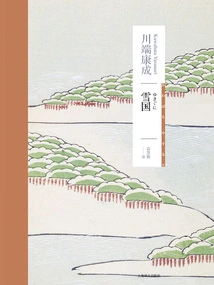
Snow Country (kawabata Yasunari's Works Series)
by G
About This Novel
Nothingness, cleanliness, sadness, the crystallization of Japanese beauty, has influenced the classic works of Mo Yan, Yu Hua and other literary giants. It is one of Kawabata Yasunari's most famous works, a Nobel Prize-winning work, and translated by the famous Japanese literature translator Gao Huiqin. "Snow Country" tells the story of Shimamura, who enjoys eating his ancestral property and studying imaginary Western dances. He visits a hot spring village in the northern snow country three times and meets the local geisha Komako and the girl Ye Zi who meets by chance on the train. Kawabata Yasunari meticulously painted a peaceful and pure picture of the Snow Country: thick layers of snow, low houses lying on the ground, the bright Milky Way in the northern night sky, and the Snow Country woman burning passionately with love. Although Shimamura is attracted to Komako, in his pursuit of the beauty of nothingness and the belief that everything is in vain, from his perspective, Komako's beauty, her love, and all her sacrifices for others are meaningless...
Official Sources
What Readers Think
Rating
Community(0)
Official(1)Scraped 1mo ago
The Milky Way extinguishes the fire of mortal world under the moon
Some philosophers say: People are either anxious or empty. For the island village in "Snow Country" that lives on its ancestral property, there is no external pressure to survive, and it is probably better to experience the existential crisis "without distractions". Because everything comes too easily, everything will turn out to be the opposite, so I feel that all efforts are in vain. Therefore, Shimamura also thinks that Komako, who is in love with him, is falling in love with an empty shell. But Juzi lived hard and vividly. She wrote a diary that no one read and practiced piano in a secluded mountain village. His devotion to Shimamura, who will ultimately have no results, and the tugging and refusing to return the favor all show that Komako grasps life greedily, almost gobbling it up. She is a person living in the world. She has fallen into the world, but she is not a person who has disappeared into the world. Otherwise, how could she insist on recording and practice piano with determination? Or perhaps it is this kind of self-persistence that puts her in a higher and richer realm than the economically prosperous Shimamura. Shimamura also has a hobby of commentating on dance, but in the sky loft, this hobby further isolates him from real life. Perhaps Juzi's passion and Ye Zi's ethereal beauty are metaphors for Shimamura's two spiritual needs and his struggle in an empty spiritual world. The gorgeous Milky Way in the final chapter is so beautiful that it touches your heart. A fire in the mortal world below the moon was annihilated by the vastness of the Milky Way above the moon. In addition, Komako's shy yet passionate female image in the book is so delicate that she seems to be ready to cry out. Kawabata Yasunari is indeed extremely delicate. Teacher Gao Huiqin's translation is really great. The meaningful brushstrokes really have the feeling of being held like snow and turning into water without leaving a trace. I hope that the publishing information of the book can highlight the role of the translator, who really made the Chinese reading experience of this book possible.
Rating
Community(0)
Official(1)Scraped 1mo ago
The Milky Way extinguishes the fire of mortal world under the moon
Some philosophers say: People are either anxious or empty. For the island village in "Snow Country" that lives on its ancestral property, there is no external pressure to survive, and it is probably better to experience the existential crisis "without distractions". Because everything comes too easily, everything will turn out to be the opposite, so I feel that all efforts are in vain. Therefore, Shimamura also thinks that Komako, who is in love with him, is falling in love with an empty shell. But Juzi lived hard and vividly. She wrote a diary that no one read and practiced piano in a secluded mountain village. His devotion to Shimamura, who will ultimately have no results, and the tugging and refusing to return the favor all show that Komako grasps life greedily, almost gobbling it up. She is a person living in the world. She has fallen into the world, but she is not a person who has disappeared into the world. Otherwise, how could she insist on recording and practice piano with determination? Or perhaps it is this kind of self-persistence that puts her in a higher and richer realm than the economically prosperous Shimamura. Shimamura also has a hobby of commentating on dance, but in the sky loft, this hobby further isolates him from real life. Perhaps Juzi's passion and Ye Zi's ethereal beauty are metaphors for Shimamura's two spiritual needs and his struggle in an empty spiritual world. The gorgeous Milky Way in the final chapter is so beautiful that it touches your heart. A fire in the mortal world below the moon was annihilated by the vastness of the Milky Way above the moon. In addition, Komako's shy yet passionate female image in the book is so delicate that she seems to be ready to cry out. Kawabata Yasunari is indeed extremely delicate. Teacher Gao Huiqin's translation is really great. The meaningful brushstrokes really have the feeling of being held like snow and turning into water without leaving a trace. I hope that the publishing information of the book can highlight the role of the translator, who really made the Chinese reading experience of this book possible.