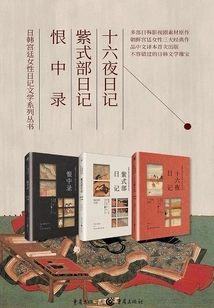
Japanese and Korean Court Women's Diary Literature Series (set of 3 Volumes)
About This Novel
This set of books is a series of Japanese and Korean court women's diary literature, including three volumes: "Record of Hate", "Murasaki Shikibu Diary" and "Izayoi Diary". "The Record of Hate" includes three major classics of women's literature in the Joseon Dynasty: "The Diary of Guichou", "The Biography of Queen Inhyun" and "The Record of Hate". The three heroines in the book are all concubines in the ancient Korean court. The three works all describe their arduous lives from the perspective of the protagonists themselves. As a work of a court person, this book comes from the protagonist's personal experience and is of great value to the study of the ancient Korean court system and court life. "The Diary of Murasaki Shikibu" includes the classic diary literary works of court women in the Heian period, "The Diary of the Dragonfly", "The Diary of Izumi Shikibu", "The Diary of Murasaki Shikibu", "The Diary of the Gensho" and "The Diary of Sanuki Noshima". Most of these literary works take palace life as the main theme. Some depict elegant court life, while others describe elegant or bitter love experiences with officials from the emperor down to the imperial court. "The Diary of Izayoi" includes "Between a Dream", "The Diary of Izayoi" and "The Diary of Zhu Xiang", which are classics of medieval palace women's diary literature. The four works selected in this book were created during the one hundred years from the middle of the thirteenth century to the middle of the fourteenth century, which is equivalent to the middle and late Kamakura period to the early Northern and Southern Dynasties. The samurai family's encroachment on political power and the division of the country caused by the division of the royal family (the two successive regimes in Japan's Southern and Northern Dynasties era) have all turned the elegant and aloof aristocratic life of the Heian period into a dream. The authors of the diary lived in the setting sun era of aristocratic society. Therefore, on the one hand, the works maintain the tradition of aristocratic literature, and on the other hand, they inevitably bear the mark of the new era. Although the romance between men and women, the love between parents and children and court life are still important themes in medieval diaries, they also present a completely different spiritual outlook from the works of the previous era.
Official Sources
What Readers Think
Rating
Community(0)
Rating
Community(0)