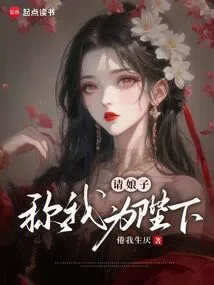
Please Call Me Your Majesty!
About This Novel
Chu Shizhao traveled through time. It also comes with a simulator called [Emperor Growth Plan], which can be used to deduce the current situation. You won't know if you don't try, but you'll be shocked if you try. What? I only have three years of state left in Zhou Dynasty? The prince's elder brother died of a serious illness, and his father was in the dark overnight. The second brother, who had just succeeded to the throne, encountered various uprising armies before he could do anything. The Huns from the north also took advantage of the situation and attacked. Seeing such a turbulent situation, Chu Shizhao must save himself! Control the soldiers and horses of the world! Damn it, let's just say... Find a father-in-law with background and strength to take over the situation first! ... My name is Li Fengning, and my father guards the Jinyang area with heavy troops and is on the governor's side. At this time, Li Fengning, who was living in Jinyang Mansion, looked blankly at a deduction screen that suddenly appeared, which would inform the future development step by step. She suddenly discovered that this seemingly 'unbreakable' and 'prosperous' Zhou dynasty would fall into chaos within a few years. Before Li Fengning could conduct an in-depth analysis, the fourth prince of the Zhou Dynasty, a man named Chu Shizhao, was in Jinyang, and then he became inexplicably close to her character? What's going on? And watching Chu Shizhao rise step by step, such as [The Legacy of the Great Ancestor], [Remaining Lieutenants of the Seventh Generation], [Emperor Zhaolie], and [Tian Khan], Li Fengning suddenly realized that her cheap husband was a bit extraordinary.
Official Sources
What Readers Think
Rating
Community(0)
Official(52)Scraped 1mo ago
The positive reviews for this novel are all negative, right?
Damn, the more I read, the angrier I get, all for the sake of the word count, right? Since the emperor is aware of the issue after death, is he all mute? Can't the emperor and the prince talk openly and honestly about the issue of vassalage? The emperor just held back and refused to let the protagonist join the feudal clan, and the author didn't give any reason. I have been the emperor for thirty years, but I still don't know the truth about internal death and external death? Could it be that the emperor wanted to be ruined, wanted to be exterminated, and did not want the dynasty to continue? Otherwise, why do you desperately pull the protagonist to the center of the stage and instil hatred for the protagonist? Is it because you feel that when the country is destroyed, too much blood is left behind? Are you planning to follow Chongzhen's example and send your son out just before the country's collapse? The emperor clearly knows that he has less than a year to live, and that he will be in a mess after his death. As an emperor, shouldn't he prepare for the worst? Don't you consider the path of neither destruction nor establishment? In addition, the overseas feudal system was also feasible in ancient times. Not to mention the Northeast, Siberia, Vietnam and Korea were all bitter and cold places. Forced with a knife, clans and aristocratic families were exiled, right? Is it difficult to assist the vassal king in governing the vassal territory if all the clans and aristocratic families move out? Then encourage the people to follow suit, reduce taxes, provide more land, and provide more policies. People with ideas will naturally follow. After more than two hundred years of dynasty, don't tell me, there are not even tens of thousands of clan members? The author's writing only knows how to kill, and nothing else, that's it?
Talent, the two dragons do not meet each other refers to the emperor and the prince. You, the prince, are not saying that the two dragons should not meet each other or you are seeking death. Also, Liu Bei worked under Gongsun Zan because of the favor order. You, a king named Pan, took the initiative to be the subordinate of a local magistrate. What kind of logic is this? You don't understand these normal things before you write a novel?
The score is very high, but the content is difficult to describe in one sentence. First of all, ancient times are about a country that governs the world with filial piety. You, a prince, use Hai Rui's public security to criticize your father? ? ? And that Li Xiefeng, even if she is the heroine, even if she has a system, even if she knows the future, how dare she dislike a prince? Why do you want to give a prince a blow? Even if you are demoted, the whole family is really not afraid of the emperor beheading you, right? The most important thing is that you are a prince! Even if you are demoted, you can decide by yourself if you want to get married? The emperor didn't even ask? Even if the emperor really doesn't care, then the protagonist's royal status still has a useless role? They still want to marry their daughter to you? It's really outrageous!
Must be eunuch
The prophet is here. The last books of this type that I have read are either eunuchs or bad. The same goes for this book.
This kind of simulation novel has a common problem, that is, there are too many simulations, and half of them are about reality and half of simulation. It feels a bit contrary to Tiangang. You should write more about the real-life activities of the protagonist and less about simulation. You will feel tired after reading simulations over and over again.
The plot is good and there are no big problems with the logic. The name of the military system is okay, some fools wrote an ancient name for TM and changed it to a modern military name. The place names are a bit inconsistent, so don't write them like this next time. People who read history generally know where these places are, or just explain where they are now. The famous battles or the deeds of characters were written a bit casually. For example, the battle against the Huns felt that the Huns were too weak. Huo Qubing also went on several expeditions, and it was only possible for various reasons. There are also too many lines in film and television works. Just once or twice occasionally is enough. Too many lines are a bit awkward. But that's it for this book. Overall, it's pretty good. Another thing is that the word "bad person" is not against the norm but a little alienating. Goldfinger is certainly good, but the realistic proportion is a bit small. It depends on the author how to control it. Just don't write it down.
This novel has serious bugs.
It stands to reason that the protagonist has such a smart character. He gathers skilled craftsmen and piles up the artillery. Regardless of the quality, it is at most bulky and can be loaded with shotguns to kill cavalry, or solid projectiles to kill cavalry. Don't beat the cavalry until they scream Inventing a matchlock gun with a bayonet, how many versions ahead of the times? As for heavy infantry and heavy cavalry? A large number of trained musketeers, plus spearmen, can completely crush the infantry in combat, and the cost is low enough And the protagonist also has visions of the future. Plus his mastery of the art of war It is not very easy to simply use a force composed of Vulcan guns and spearmen. As a result, I have been playing strategy and art of war, although it is also important. But the protagonist comes from the future and has a technology tree.
The content and plot are very interesting, update soon
After reading the introduction, I thought Li Fengning was the heroine, but except for the first simulation in which she became the queen, her roles became less and less after that, and she started to act like soy sauce!
If your level of classical Chinese is poor, don't write classical Chinese.
Rating
Community(0)
Official(52)Scraped 1mo ago
The positive reviews for this novel are all negative, right?
Damn, the more I read, the angrier I get, all for the sake of the word count, right? Since the emperor is aware of the issue after death, is he all mute? Can't the emperor and the prince talk openly and honestly about the issue of vassalage? The emperor just held back and refused to let the protagonist join the feudal clan, and the author didn't give any reason. I have been the emperor for thirty years, but I still don't know the truth about internal death and external death? Could it be that the emperor wanted to be ruined, wanted to be exterminated, and did not want the dynasty to continue? Otherwise, why do you desperately pull the protagonist to the center of the stage and instil hatred for the protagonist? Is it because you feel that when the country is destroyed, too much blood is left behind? Are you planning to follow Chongzhen's example and send your son out just before the country's collapse? The emperor clearly knows that he has less than a year to live, and that he will be in a mess after his death. As an emperor, shouldn't he prepare for the worst? Don't you consider the path of neither destruction nor establishment? In addition, the overseas feudal system was also feasible in ancient times. Not to mention the Northeast, Siberia, Vietnam and Korea were all bitter and cold places. Forced with a knife, clans and aristocratic families were exiled, right? Is it difficult to assist the vassal king in governing the vassal territory if all the clans and aristocratic families move out? Then encourage the people to follow suit, reduce taxes, provide more land, and provide more policies. People with ideas will naturally follow. After more than two hundred years of dynasty, don't tell me, there are not even tens of thousands of clan members? The author's writing only knows how to kill, and nothing else, that's it?
Talent, the two dragons do not meet each other refers to the emperor and the prince. You, the prince, are not saying that the two dragons should not meet each other or you are seeking death. Also, Liu Bei worked under Gongsun Zan because of the favor order. You, a king named Pan, took the initiative to be the subordinate of a local magistrate. What kind of logic is this? You don't understand these normal things before you write a novel?
The score is very high, but the content is difficult to describe in one sentence. First of all, ancient times are about a country that governs the world with filial piety. You, a prince, use Hai Rui's public security to criticize your father? ? ? And that Li Xiefeng, even if she is the heroine, even if she has a system, even if she knows the future, how dare she dislike a prince? Why do you want to give a prince a blow? Even if you are demoted, the whole family is really not afraid of the emperor beheading you, right? The most important thing is that you are a prince! Even if you are demoted, you can decide by yourself if you want to get married? The emperor didn't even ask? Even if the emperor really doesn't care, then the protagonist's royal status still has a useless role? They still want to marry their daughter to you? It's really outrageous!
Must be eunuch
The prophet is here. The last books of this type that I have read are either eunuchs or bad. The same goes for this book.
This kind of simulation novel has a common problem, that is, there are too many simulations, and half of them are about reality and half of simulation. It feels a bit contrary to Tiangang. You should write more about the real-life activities of the protagonist and less about simulation. You will feel tired after reading simulations over and over again.
The plot is good and there are no big problems with the logic. The name of the military system is okay, some fools wrote an ancient name for TM and changed it to a modern military name. The place names are a bit inconsistent, so don't write them like this next time. People who read history generally know where these places are, or just explain where they are now. The famous battles or the deeds of characters were written a bit casually. For example, the battle against the Huns felt that the Huns were too weak. Huo Qubing also went on several expeditions, and it was only possible for various reasons. There are also too many lines in film and television works. Just once or twice occasionally is enough. Too many lines are a bit awkward. But that's it for this book. Overall, it's pretty good. Another thing is that the word "bad person" is not against the norm but a little alienating. Goldfinger is certainly good, but the realistic proportion is a bit small. It depends on the author how to control it. Just don't write it down.
This novel has serious bugs.
It stands to reason that the protagonist has such a smart character. He gathers skilled craftsmen and piles up the artillery. Regardless of the quality, it is at most bulky and can be loaded with shotguns to kill cavalry, or solid projectiles to kill cavalry. Don't beat the cavalry until they scream Inventing a matchlock gun with a bayonet, how many versions ahead of the times? As for heavy infantry and heavy cavalry? A large number of trained musketeers, plus spearmen, can completely crush the infantry in combat, and the cost is low enough And the protagonist also has visions of the future. Plus his mastery of the art of war It is not very easy to simply use a force composed of Vulcan guns and spearmen. As a result, I have been playing strategy and art of war, although it is also important. But the protagonist comes from the future and has a technology tree.
The content and plot are very interesting, update soon
After reading the introduction, I thought Li Fengning was the heroine, but except for the first simulation in which she became the queen, her roles became less and less after that, and she started to act like soy sauce!
If your level of classical Chinese is poor, don't write classical Chinese.
Featured in 3 Booklists
Official(3)
💘💘💘💘💘 💘💘💘 Please give the book list a thumbs up! The book is good, if you don't have a book to read, you can read it, after all, it's not a big book.
The simulation text comes with a simulator called [The Great Emperor's Growth Plan], which can be used to deduce the current situation. The heroine in each simulation is different, which is very interesting. Highly recommended.
The simulation is well written, and you can clearly see the various establishment patterns of ancient feudal dynasties. At present, it is found that the bigger problem is that there is not enough balance between enjoyment and rationality. However, this problem is also explained later. The simulated protagonist does not care so much about weighing the pros and cons. But this returns to the old problem. The simulation is so exciting, but the reality has no feeling no matter how you write it.
You Might Also Like
Reborn Female General
Qianshan Tea Guest
From King Wu's Defeat of Zhou, a Thousand-year-old Family Was Established
Flowers Are Not Flowers On A Moonlit Night
I Really Just Want to Be a Dragon Master
Sorghum River Car God
Xianxia Version of Water Margin
Let The Bird Fly
My Violent Prince Just Wants to Be Deposed
I Know The Joy Of Fish
Stand-alone Northern and Southern Dynasties
Fat Bird Goes First
Can I Walk to the Other Side?
Love Spicy Pig Trotters
Father Liu Hong, I'm Lying Down
Dan Qianyu
Wait, Please Don't Call Me Emperor Zhaolie
The World Is A Little Salty
I'm Not Yuan Shu
Yuyan