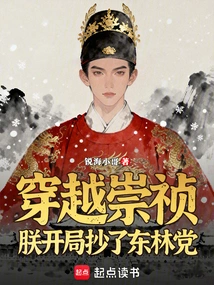
Traveling Through Chongzhen, I Copied the Donglin Party at the Beginning
About This Novel
When he woke up, Li Ce became Chongzhen. In front of me are hundreds of officials kneeling in the Qianqing Palace, and in my ears I hear the Chief Assistant asking: "Your Majesty, there are only 190,000 taels left in the national treasury, do you want to pay more?!" The history books roared in his mind - he knew that this was the fifteenth year of Chongzhen, Li Zicheng had conquered Xiangyang, Huang Taiji would enter the capital again, and seventeen months later, he would hang himself on Meishan. However, that was Chongzhen in history. And now, it's Li Ce. "Liao's salary? No more." He stood up from the throne and threw a corrupt account book secretly kept by the late emperor in front of the officials. "The money is in your homes; the soldiers are in chaos because of you; the people are forced to rebel by you." "I don't want pay now-I want to kill people." In seven days of fighting against corruption, the capital was bloodbathed and eight million taels were confiscated! The army was reorganized in January, the famous generals returned home, and the capital camp was all in their own hands! In the March restructuring, water transportation, salt and iron, and border trade are all under my control! The Donglin Party cries and remonstrates? I will kill his leader. Jiangnan gentry cut off the canal? I opened a sea route and established another source of wealth. The border generals mutinied? With an imperial edict and a hundred thousand silver coins, I ordered him to defect before the battle. When Huang Taiji's cavalry knocked on the gate again, what he saw was no longer a decaying empire, but an emperor holding the hilt of his sword tightly and with cold eyes. "The old Ming Dynasty would compromise." "But now, my rules are the rules." This is the story of a modern strategist who, as Chongzhen, used the coldest tactics and the most precise blade to change China's fate against the will of heaven. I am the country, I am the king's law, I am the last thunder.
Official Sources
What Readers Think
Rating
Community(0)
Official(10)Scraped 1mo ago
It's a mess, and the content jumps around to the point where the prince is poisoned, hanged, or beheaded.
In addition, your description of Hou Jin is also an exaggeration. The Hou Jin cavalry is strong, but the Ming army's cavalry was still powerful even in the late Ming Dynasty. It's not that they can't fight the so-called Hou Jin cavalry head-on. You also said that the heavy infantry of the Later Jin Dynasty could block muskets at a closer distance. In fact, it is not a big deal. During the Southern Song Dynasty, although the Iron Pagoda and the Kaizi Horse of the Jin Kingdom were described as difficult to resist, some armies such as the Yue Family Army successfully defeated these two heavy cavalry of the Jin Kingdom by setting traps and rationally using the Five Arms System to intercept and kill (you must not know the Chinese Five Arms System, right?). Co-author: Have you forgotten the five-army unity of the Han Dynasty since ancient times?
The type of this book is historical fiction~
Historical fiction + male frequency refreshing writing style, no complicated textual research, purely suitable for novel creation, not the Song, Yuan and Ming Dynasties.
And the author, let me say something here: You are suspected of over-strengthening the Qing army's combat effectiveness. As far as I know, Houjin's siege ability has never been very good. At Xiping Fort, tens of thousands of Houjin troops died until their corpses were as high as the wall, but they did not capture the small Xiping. They finally exhausted the defenders' ammunition before conquering it. But here, you have the Houjin casualties and the Xuanfu garrison to conquer, which is really inappropriate! Another question is about the combat effectiveness of the Later Jin Dynasty: At the peak of the Later Jin Dynasty, the Eight Banners of the Eight Banners (excluding the Han Army Banner and the Mongolian Banner) had more than 200,000 people. When they first entered the customs, there were only more than 50,000 people left. The remaining miscellaneous Han Army Eight Banners and Mongolian Eight Banners' coated slaves totaled only more than 300,000. How come you have become the Eight Banners of the Eight Banners of the Eight Banners of the Later Jin Dynasty, which is almost 100,000? All in all, your novel strengthens Houjin too much. In fact, if Li Liukou hadn't taken advantage of the crisis to attack Beijing, even if the original timeline (this world line) relied on the situation of the ICU patient at the end of the Ming Dynasty, then by shrinking the defense line and defending Shanhaiguan, it would have been enough to organize the force to consume and defeat the more than 50,000 Eight Banners-based Houjin outside or inside the pass. I really don't know why you became the protagonist and changed this and that to make the Ming Dynasty in the novel stronger than the late Ming Dynasty in the original timeline, and why the Ming army was forced to abandon Beijing even though the conditions of the Ming army had improved? Obviously, according to the strength of the current timeline, Hou Jin can fight against Hou Jin in the north (Hou Jin only had more than 50,000 tribal regular troops at that time, and he would not be able to suppress the Han Eight Banners and the Mongolian Eight Banners if they died too much, but you...), Making it seem like Hou Jin is so powerful, you overestimate the enemy and underestimate the Ming Dynasty court, right?
Good books丨丨丨丨丨丨丨
Author, it's too early to finish now, because you know that after the Hou Jin Dynasty, you have to go north to conquer Mongolia and Inner Mongolia (Mobei and South), and you have to develop again to the southeast and northwest. There are many chapters that can be written. I hope you will continue writing and revise this novel again when you are finished.
To readers: A little explanation about the creative logic and core ideas
Thank you for your discussions and criticisms of this book, especially those who pointed out specific historical details. Creating a novel based on historical facts is itself a process of dialogue with history. Regarding several issues that everyone is concerned about, I would like to share my creative logic here: 1. About "women take the front stage" and the role of Queen Zhou In history, Queen Zhou (Queen Xiaojielie) was famous for her virtues, frugality, and martyrdom. Some historians also commented that she "lacked a far-sighted strategy." This just leaves room for literary creation. In my story, the protagonist is an ordinary person who knows the ending of history. His first task is to "survive and save the crisis." He knows that he alone cannot turn things around. His core abilities lie in "knowing people" and "establishing institutions": Knowing people: that is, identifying and reusing loyal and good people in history (such as Sun Chuanting and Lu Xiangsheng), and using a perspective that transcends the times, "taming" those historically neutral or even problematic figures (such as Zuo Liangyu, Zheng Zhilong) through systems and tactics, and guiding their abilities in the direction of protecting the country and the people. Organization: setting the stage for these talents, formulating rules, and letting the system operate instead of charging into battle on their own. Letting the queen come forward to stabilize the Jiangnan economy and coordinate the interests of all parties is the embodiment of this logic - she represents the other side of imperial power: credibility, comfort and institutionalized authority. This is not about "no one in the Zhu family", but about establishing a more efficient and sustainable governance model. The growth and responsibility of the people around him are the best proof that the protagonist has successfully transformed the environment. 2. About financial data and the "Donglin Party" The specific financial figures in the novel serve narrative tension and dramatic conflict and are not strictly a treatise on economic history. Its purpose is to visually demonstrate the core theme of "how institutional corruption erodes an empire." Regarding the party struggle, my setting tries to go beyond simple labels of "loyalty and traitor" or "region". The resistance in the story is a "systemic decay" coupled by interests (Jiangnan Economic Group), concepts (solidified civil service system) and survival (warlords in troubled times). Historical concepts such as Donglin and Zhejiang Party are more code names for this kind of interest network in the story. What the protagonist has to fight is not a specific party, but the system that traps everyone, including the emperor himself, into self-destruction. 3. The ultimate idea of the story This is not an invincible story about "Chongzhen using modern knowledge to kill everyone". What I want to discuss is a heavier and more valuable question: When a system is fundamentally rotten, is it enough to just replace parts (kill corrupt officials, replace leaders and assistants)? If not, how difficult is it to change the "running code" (institutional, legal, economic foundations) of the system? The ultimate goal of the protagonist's "seven reincarnations" golden finger is not to make him the God of War or the God of Wealth, but to give him a "desperate sobriety": he has seen all the simple shortcuts leading to destruction, so in this life, he must take the most difficult path - starting from domesticating the people around him, to reconstructing the bones and flesh of the country, with the goal of building a civilization that can rely on the healthy operation of the system even without a "prophet" like him. Empress Zhou's virtue can be developed into wisdom in governing affairs; the selfishness of powerful generals can be channeled into meritorious service in defending the country; and the pursuit of profit by merchants can be standardized into the driving force for prosperity. This is the greatest and most difficult thing that the protagonist can do as a time traveler. In summary, what this novel attempts to depict is a difficult "system reinstallation" that begins with machinations and ends with the system. All plots and characterizations serve this core. Thank you all for reading and arguing. All these discussions make this fictional world and that real history more vivid.
I hope the author will change the part in Chapter 93, when the whole nation awakens, and Li Ce personally admits that he is a time traveler: What you wrote here is not very good. After all, it is too straightforward. You directly say that you are not Chongzhen. This may not be acceptable to the ancient people of the Ming Dynasty whose information transmission and average education level are not as good as modern China. You'd better change it to: I am both Chongzhen and Li Ce. Just change this sentence
Dear book friends: First of all, I sincerely thank you all for your follow-up reading and corrections. As an amateur author, I have a job during the day and my creative work depends on my spare time in the evenings and weekends. Although there is a general outline, the direction is often fine-tuned due to new historical inspiration or knowledge. In addition, occasionally I am interrupted for several days due to work. It is inevitable that there will be memory omissions when I pick up the pen again, resulting in deviations in details. I read every comment you make seriously. This is the greatest support for me. This is a free book in the early stage. I don't dare to expect perfection. I only hope to fully present my thoughts and enthusiasm for this period of history. If you find any inconsistencies while reading, I hope you will bear with me and give a friendly reminder in the comment area. I will definitely take the time to review and revise it. The journey of creation is long, write and cherish it. Thanks again!
I haven't even finished the first chapter yet. Didn't you travel through time? How many lives are there?
Rating
Community(0)
Official(10)Scraped 1mo ago
It's a mess, and the content jumps around to the point where the prince is poisoned, hanged, or beheaded.
In addition, your description of Hou Jin is also an exaggeration. The Hou Jin cavalry is strong, but the Ming army's cavalry was still powerful even in the late Ming Dynasty. It's not that they can't fight the so-called Hou Jin cavalry head-on. You also said that the heavy infantry of the Later Jin Dynasty could block muskets at a closer distance. In fact, it is not a big deal. During the Southern Song Dynasty, although the Iron Pagoda and the Kaizi Horse of the Jin Kingdom were described as difficult to resist, some armies such as the Yue Family Army successfully defeated these two heavy cavalry of the Jin Kingdom by setting traps and rationally using the Five Arms System to intercept and kill (you must not know the Chinese Five Arms System, right?). Co-author: Have you forgotten the five-army unity of the Han Dynasty since ancient times?
The type of this book is historical fiction~
Historical fiction + male frequency refreshing writing style, no complicated textual research, purely suitable for novel creation, not the Song, Yuan and Ming Dynasties.
And the author, let me say something here: You are suspected of over-strengthening the Qing army's combat effectiveness. As far as I know, Houjin's siege ability has never been very good. At Xiping Fort, tens of thousands of Houjin troops died until their corpses were as high as the wall, but they did not capture the small Xiping. They finally exhausted the defenders' ammunition before conquering it. But here, you have the Houjin casualties and the Xuanfu garrison to conquer, which is really inappropriate! Another question is about the combat effectiveness of the Later Jin Dynasty: At the peak of the Later Jin Dynasty, the Eight Banners of the Eight Banners (excluding the Han Army Banner and the Mongolian Banner) had more than 200,000 people. When they first entered the customs, there were only more than 50,000 people left. The remaining miscellaneous Han Army Eight Banners and Mongolian Eight Banners' coated slaves totaled only more than 300,000. How come you have become the Eight Banners of the Eight Banners of the Eight Banners of the Later Jin Dynasty, which is almost 100,000? All in all, your novel strengthens Houjin too much. In fact, if Li Liukou hadn't taken advantage of the crisis to attack Beijing, even if the original timeline (this world line) relied on the situation of the ICU patient at the end of the Ming Dynasty, then by shrinking the defense line and defending Shanhaiguan, it would have been enough to organize the force to consume and defeat the more than 50,000 Eight Banners-based Houjin outside or inside the pass. I really don't know why you became the protagonist and changed this and that to make the Ming Dynasty in the novel stronger than the late Ming Dynasty in the original timeline, and why the Ming army was forced to abandon Beijing even though the conditions of the Ming army had improved? Obviously, according to the strength of the current timeline, Hou Jin can fight against Hou Jin in the north (Hou Jin only had more than 50,000 tribal regular troops at that time, and he would not be able to suppress the Han Eight Banners and the Mongolian Eight Banners if they died too much, but you...), Making it seem like Hou Jin is so powerful, you overestimate the enemy and underestimate the Ming Dynasty court, right?
Good books丨丨丨丨丨丨丨
Author, it's too early to finish now, because you know that after the Hou Jin Dynasty, you have to go north to conquer Mongolia and Inner Mongolia (Mobei and South), and you have to develop again to the southeast and northwest. There are many chapters that can be written. I hope you will continue writing and revise this novel again when you are finished.
To readers: A little explanation about the creative logic and core ideas
Thank you for your discussions and criticisms of this book, especially those who pointed out specific historical details. Creating a novel based on historical facts is itself a process of dialogue with history. Regarding several issues that everyone is concerned about, I would like to share my creative logic here: 1. About "women take the front stage" and the role of Queen Zhou In history, Queen Zhou (Queen Xiaojielie) was famous for her virtues, frugality, and martyrdom. Some historians also commented that she "lacked a far-sighted strategy." This just leaves room for literary creation. In my story, the protagonist is an ordinary person who knows the ending of history. His first task is to "survive and save the crisis." He knows that he alone cannot turn things around. His core abilities lie in "knowing people" and "establishing institutions": Knowing people: that is, identifying and reusing loyal and good people in history (such as Sun Chuanting and Lu Xiangsheng), and using a perspective that transcends the times, "taming" those historically neutral or even problematic figures (such as Zuo Liangyu, Zheng Zhilong) through systems and tactics, and guiding their abilities in the direction of protecting the country and the people. Organization: setting the stage for these talents, formulating rules, and letting the system operate instead of charging into battle on their own. Letting the queen come forward to stabilize the Jiangnan economy and coordinate the interests of all parties is the embodiment of this logic - she represents the other side of imperial power: credibility, comfort and institutionalized authority. This is not about "no one in the Zhu family", but about establishing a more efficient and sustainable governance model. The growth and responsibility of the people around him are the best proof that the protagonist has successfully transformed the environment. 2. About financial data and the "Donglin Party" The specific financial figures in the novel serve narrative tension and dramatic conflict and are not strictly a treatise on economic history. Its purpose is to visually demonstrate the core theme of "how institutional corruption erodes an empire." Regarding the party struggle, my setting tries to go beyond simple labels of "loyalty and traitor" or "region". The resistance in the story is a "systemic decay" coupled by interests (Jiangnan Economic Group), concepts (solidified civil service system) and survival (warlords in troubled times). Historical concepts such as Donglin and Zhejiang Party are more code names for this kind of interest network in the story. What the protagonist has to fight is not a specific party, but the system that traps everyone, including the emperor himself, into self-destruction. 3. The ultimate idea of the story This is not an invincible story about "Chongzhen using modern knowledge to kill everyone". What I want to discuss is a heavier and more valuable question: When a system is fundamentally rotten, is it enough to just replace parts (kill corrupt officials, replace leaders and assistants)? If not, how difficult is it to change the "running code" (institutional, legal, economic foundations) of the system? The ultimate goal of the protagonist's "seven reincarnations" golden finger is not to make him the God of War or the God of Wealth, but to give him a "desperate sobriety": he has seen all the simple shortcuts leading to destruction, so in this life, he must take the most difficult path - starting from domesticating the people around him, to reconstructing the bones and flesh of the country, with the goal of building a civilization that can rely on the healthy operation of the system even without a "prophet" like him. Empress Zhou's virtue can be developed into wisdom in governing affairs; the selfishness of powerful generals can be channeled into meritorious service in defending the country; and the pursuit of profit by merchants can be standardized into the driving force for prosperity. This is the greatest and most difficult thing that the protagonist can do as a time traveler. In summary, what this novel attempts to depict is a difficult "system reinstallation" that begins with machinations and ends with the system. All plots and characterizations serve this core. Thank you all for reading and arguing. All these discussions make this fictional world and that real history more vivid.
I hope the author will change the part in Chapter 93, when the whole nation awakens, and Li Ce personally admits that he is a time traveler: What you wrote here is not very good. After all, it is too straightforward. You directly say that you are not Chongzhen. This may not be acceptable to the ancient people of the Ming Dynasty whose information transmission and average education level are not as good as modern China. You'd better change it to: I am both Chongzhen and Li Ce. Just change this sentence
Dear book friends: First of all, I sincerely thank you all for your follow-up reading and corrections. As an amateur author, I have a job during the day and my creative work depends on my spare time in the evenings and weekends. Although there is a general outline, the direction is often fine-tuned due to new historical inspiration or knowledge. In addition, occasionally I am interrupted for several days due to work. It is inevitable that there will be memory omissions when I pick up the pen again, resulting in deviations in details. I read every comment you make seriously. This is the greatest support for me. This is a free book in the early stage. I don't dare to expect perfection. I only hope to fully present my thoughts and enthusiasm for this period of history. If you find any inconsistencies while reading, I hope you will bear with me and give a friendly reminder in the comment area. I will definitely take the time to review and revise it. The journey of creation is long, write and cherish it. Thanks again!
I haven't even finished the first chapter yet. Didn't you travel through time? How many lives are there?
You Might Also Like
Reborn Female General
Qianshan Tea Guest
The Crown Prince of the Ming Dynasty, I, Zhu Yunxi, Am Trying to Force the Palace with Blood
Lanma Tundra
The Most Ruthless Prince in the Ming Dynasty Crossed the River to Grab Nanjing at the Beginning
Wait For Me To Eat The Twice-cooked Pork First
Datang: Traveling Through Li Chengqian Turned it Upside Down
Leeches In The Starlight
Ming Dynasty: Wanli Begged Me to Succeed to the Throne
Wang Liantian
Daming: His Voice Was Eavesdropped, and Lao Zhu Broke His Guard
The Bright Moon Shines In My Heart
Northern Song Dynasty: I Really Just Want to Be Demoted!
It's Raining. Put Away Your Clothes.
Late Ming Dynasty: Admonish During the Day and Appraise Treasures at Night
No Trace Of Historical Data
Han Wuhan Qi: Starting from Teaching the Prince to Be Arrogant
Boiling Water
Three Kingdoms: the Beginning of the Game is a Hard Hit by Guan Erye at the Peak
This Is Kirbymon