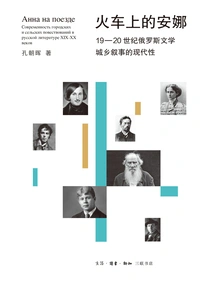
Anna on the Train: the Modernity of Urban and Rural Narratives in Russian Literature in the 19th and 20th Centuries
by Kong Zhaohui
About This Novel
Gogol, Goncharov, Tolstoy, Chekhov, Bely, Mayakovsky, Mandelstam, Akhmatova, Yesenin, Bulgakov... The 12 fates of 12 writers connect the urban and rural narratives in Russian literature in the 19th and 20th centuries. In the long and tortuous process of Russian modernity, the transformation of narrative space from countryside to city has constructed a network of relationships between literature and modernity. By summarizing the different strategies used by Russian intellectuals from all walks of life to write about cities and countryside over the past two centuries, this book shows that as a late-developing modernizing country, Russia's progress has been difficult and its path tortuous. This is precisely because the conflicts between the official and the private sector, political circles and ideological circles on fundamental issues of modernity such as "city and countryside", "peasants and land" and "Westernization and tradition" have never been reconciled. The awakening, passion and inertia, resistance, destruction and compromise of modern people in this vortex of conflict are typical experiences of modernity. Anna Karenina on the train is a perfect metaphor for this experience.
Official Sources
What Readers Think
Rating
Community(0)
Rating
Community(0)
