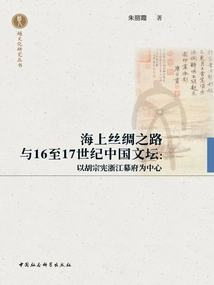
The Maritime Silk Road and the Chinese Literary Circle in the 16th and 17th Centuries: Centered on the Zhejiang Shogunate of Hu Zongxian
by Zhu Lixia
About This Novel
The mid-to-late 16th century was a historical period when China was "globalized". Closely related to naval warfare and maritime trade, the maritime situation provided opportunities for literati to display their talents. The maritime shogunate greatly attracted young scribes from the mainland. The anti-Japanese governor Hu Zongxian and the Zhejiang shogunate gathered a large number of elites from all walks of life. During the turbulent period of history, staff and scribes assisted the rulers in consolidating coastal defense and border areas and stabilizing the situation in the Ming Dynasty. The literary and cultural activities of the shogunate that were always associated with the naval war directly led the literary trend of the times. The needs of the cultural life of the shogunate and the singing and exchanges between the staff and scribes resulted in the production of a large amount of shogunate literature at this time. Operas, parallel prose, and novels competed with each other, and military literature also flourished. The most influential among them was Xu Wei, a famous scholar from Shaoxing. Xu Wei's creations represent the achievements of Hu Zongxian's shogunate literature and the development trend of the literary world of the times. After Xu Wei, many talented scribes joined the new coastal border shogunate after Hu Zongxian was killed and continued to engage in military and cultural activities. The Haijiang shogunate directly drew the literary map of China in the mid-to-late 16th century to a large extent, and since then changed the ecology of China's literary world.
Official Sources
What Readers Think
Rating
Community(0)
Rating
Community(0)