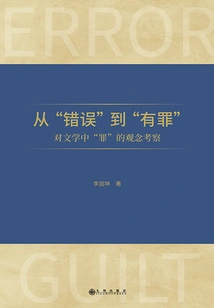
From "wrong" to "guilty": an Examination of the Concept of "sin" in Literature
by Li Tingkun
About This Novel
This book mainly discusses the issue of "sin" in literature. "Sin" is not only an ancient topic in human life, but also an eternal motif in literature. As the opposite of human "good", "sin" and "evil" precisely define the boundaries of human beings to a certain extent. The issue this book focuses on is, as the birthplace of Western literature, the "Two Greek" traditions, in the fusion of "Two Greek" cultures, from a literary perspective, how did the "errors" of ancient Greece "evolve" into "sins" in the Christian sense? In other words, how can the separation of man and Zeus in the Greek cultural context be unified with the unity of man and God in the Hebrew cultural context? A further question is, how did poets and city-state citizens gradually "turn" an ethical view of "sin" into a religious view in practice during the Hellenistic and ancient Roman periods? In contrast, "sin" in ancient Chinese literary works places more emphasis on conscience condemnation. The pursuit of "sin" does not focus on the "guilt" confession of the soul as in the West, but focuses on a functional elimination of "sin". The purpose is not to "take guilt" but to "mitigate sin" and thereby obtain peace of mind. This book will conduct a comparative analysis and study of the writing of "sin" in classic Chinese and Western literary works of various periods, trying to construct a history of the concept of "sin" in literature.
Official Sources
What Readers Think
Rating
Community(0)
Rating
Community(0)
