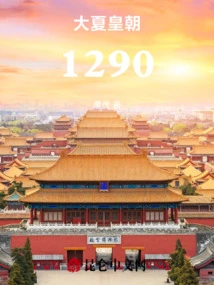
Daxia Dynasty 1290
by X
About This Novel
In the fictitious Daxia Dynasty, from 1205 to 1290, there were no handsome men and beautiful women traveling through polyamorous romances. There were only thrilling power struggles within the royal family, and the difficult respite of the lower class people under feudal oppression. Li Heyong hid the prince, but deliberately allowed party strife on the grounds that he had no children. The prince Li Shanyu grew up difficultly in the undercurrent. After finally ascending to the throne, he was suppressed by the powerful minister Li Xiao. He died suddenly and mysteriously after the reform failed. During Guangzong's short reign, the country fell into chaos. After Li Jianguo came to the throne, he eradicated traitors, implemented reforms, and ushered in the Hongzheng rule. Li Zhiheng inherited his father's business and created the "Tai Qing Dynasty". But even under the rule of these two wise kings, local officials still exploited the people wantonly. In Li Zhiheng's later years, his relatives took control of the government, and the court was full of chaos and conflicts were about to break out. By showing the cruel power struggle within the Li family, this book profoundly exposes the decadence and darkness of feudal society, and takes you to witness the true history behind the rise and fall of the feudal dynasty.
Official Sources
What Readers Think
Rating
Community(0)
Official(2)Scraped 1mo ago
A very excellent work
The author writes very carefully, with a heavy sense of history, and tells all this slowly and leisurely. Although this is an imaginary story, the content strives to be true. The words and deeds of the characters with different statuses are extremely humane - extremely kind. Everything in the article is full of immersion, from the suspicious and powerful emperor to the concubine whose life is as fast as pampas grass. The cruelty of imperial power is evident from the first scene of the book, and the following plot is even more exciting. Under the intentional guidance of the emperor, multiple forces check and balance each other, and in the dark underground, a matter of great importance is involved in the plot. This is a work that requires patience to read. The author's writing style is calm and sharp. In the first six chapters, he has created many characters with different personalities. Many of the characters are vivid and three-dimensional, such as the concubine Xiao De who loves her son, Li Shanyu who has a heavy responsibility, Li Renhuai who is obsessed with bronze figures... And most importantly, the emperor Li Heyong who is at the center of countless interpersonal relationships. The creation of this character is very successful. He fits the readers' understanding of the word "emperor" very well. He has the intimidating power of a superior, has high demands on the prince, and is constantly suspicious of the people around him.
Great Xia Quan Tu
Foreword: Emperor Shengwu Li Heyong, Taizu of Great Xia, was born in the year 1147 of the Jia Yuan Dynasty (which was the last year of the An Dynasty). He was the eldest son of Emperor Chun'an who was posthumously named Renzu. He has been a farmer since he was a child, living a poor life with his grandfather and father. In 1170, the 23-year-old Li Heyong joined the uprising army with his brothers and the Deng family after handling his grandfather's funeral (please note that the funeral expenses were paid by the Deng family). Due to the political corruption since the late An Dynasty, the people's livelihood was declining and the uprising was triggered. During the rebellion, Li Heyong relied on his intelligence, bravery and leadership ability. He was promoted to general in ten years (however, several of his sons also died in the war, resulting in the decline of Li Heyong's descendants and only one son, Li Shanyu). Five years later, he conquered Bei'an. In October 1192, Emperor An was deposed and the Great Xia Dynasty was established. In 1193, Tianyong was changed to Yuan Dynasty. He originally wanted his father to be the emperor, but he learned that his father passed away not long after he became the general. So Li Heyong posthumously named his great-great-grandfather as the ancestor Gao Wen, his grandfather as the ancestor Xiaojing, and his father as Emperor Renzu Chun'an. The tablets were placed in the Taimiao for sacrifice. The An Dynasty royal family was ordered to be granted the title of Duke and imprisoned in a deep palace. Later, they all died of illness. For the generals of the previous dynasty, they were assigned to the frontiers to make them effective. In the first year of Tianyong (1193 A. D.), The direct jurisdiction included one capital, two prefectures, and eighteen counties. The remaining ten prefectures and one hundred and sixty-eight counties were divided into twenty-six feudal kingdoms, and the clans were divided into kings (such as Beicheng Kingdom, Yi Kingdom, Da Kingdom, Ru Kingdom, Nan Kingdom, Wentian Kingdom, etc. However, some of them disappeared later, and some were split). Feng repeatedly rescued his cousin Li Xiao (Pingzhong), who knew his own heart, and became the king of the Qing Dynasty, allowing him to stay in the capital. At the same time, he rewarded the founding heroes and named Zhao Yi the Prime Minister of the West and Deng Yangduan the Prime Minister of the South. (Theoretically the highest is Prime Minister Dong, but basically it is not permanent) In June of the second year of Tianyong (1194 A. D.), Li Xiao was granted the title of Prime Minister of the North. He ordered the sea to be banned, but allowed the fishery and mucilage industries to be opened. People were allowed to go up the mountain to cut firewood and go down the river to fish. In the third year of Tianyong (1195), a general amnesty was granted to the whole country, and the clan was ordered to go to the feudal country to be the king. The following year, the Donglin Army was placed directly under the king, and Zhongshu Province was abolished, leaving only Menxia Province, Shangshu Province and six ministries (two provinces and six ministries system, different from the three provinces and six ministries system of the Tang Dynasty). All major national affairs must be decided by the vote of the monarch, two provinces and six ministries. From the fourth year of Tianyong (1196 AD) to the tenth year of Tianyong (1202 AD), Taizu established the Donglin Army, which was equivalent to the emperor's secretarial agency. However, it only had the right to arrest but not to interrogate. In addition, it developed national strength and expelled the remnants of the previous dynasty.
Rating
Community(0)
Official(2)Scraped 1mo ago
A very excellent work
The author writes very carefully, with a heavy sense of history, and tells all this slowly and leisurely. Although this is an imaginary story, the content strives to be true. The words and deeds of the characters with different statuses are extremely humane - extremely kind. Everything in the article is full of immersion, from the suspicious and powerful emperor to the concubine whose life is as fast as pampas grass. The cruelty of imperial power is evident from the first scene of the book, and the following plot is even more exciting. Under the intentional guidance of the emperor, multiple forces check and balance each other, and in the dark underground, a matter of great importance is involved in the plot. This is a work that requires patience to read. The author's writing style is calm and sharp. In the first six chapters, he has created many characters with different personalities. Many of the characters are vivid and three-dimensional, such as the concubine Xiao De who loves her son, Li Shanyu who has a heavy responsibility, Li Renhuai who is obsessed with bronze figures... And most importantly, the emperor Li Heyong who is at the center of countless interpersonal relationships. The creation of this character is very successful. He fits the readers' understanding of the word "emperor" very well. He has the intimidating power of a superior, has high demands on the prince, and is constantly suspicious of the people around him.
Great Xia Quan Tu
Foreword: Emperor Shengwu Li Heyong, Taizu of Great Xia, was born in the year 1147 of the Jia Yuan Dynasty (which was the last year of the An Dynasty). He was the eldest son of Emperor Chun'an who was posthumously named Renzu. He has been a farmer since he was a child, living a poor life with his grandfather and father. In 1170, the 23-year-old Li Heyong joined the uprising army with his brothers and the Deng family after handling his grandfather's funeral (please note that the funeral expenses were paid by the Deng family). Due to the political corruption since the late An Dynasty, the people's livelihood was declining and the uprising was triggered. During the rebellion, Li Heyong relied on his intelligence, bravery and leadership ability. He was promoted to general in ten years (however, several of his sons also died in the war, resulting in the decline of Li Heyong's descendants and only one son, Li Shanyu). Five years later, he conquered Bei'an. In October 1192, Emperor An was deposed and the Great Xia Dynasty was established. In 1193, Tianyong was changed to Yuan Dynasty. He originally wanted his father to be the emperor, but he learned that his father passed away not long after he became the general. So Li Heyong posthumously named his great-great-grandfather as the ancestor Gao Wen, his grandfather as the ancestor Xiaojing, and his father as Emperor Renzu Chun'an. The tablets were placed in the Taimiao for sacrifice. The An Dynasty royal family was ordered to be granted the title of Duke and imprisoned in a deep palace. Later, they all died of illness. For the generals of the previous dynasty, they were assigned to the frontiers to make them effective. In the first year of Tianyong (1193 A. D.), The direct jurisdiction included one capital, two prefectures, and eighteen counties. The remaining ten prefectures and one hundred and sixty-eight counties were divided into twenty-six feudal kingdoms, and the clans were divided into kings (such as Beicheng Kingdom, Yi Kingdom, Da Kingdom, Ru Kingdom, Nan Kingdom, Wentian Kingdom, etc. However, some of them disappeared later, and some were split). Feng repeatedly rescued his cousin Li Xiao (Pingzhong), who knew his own heart, and became the king of the Qing Dynasty, allowing him to stay in the capital. At the same time, he rewarded the founding heroes and named Zhao Yi the Prime Minister of the West and Deng Yangduan the Prime Minister of the South. (Theoretically the highest is Prime Minister Dong, but basically it is not permanent) In June of the second year of Tianyong (1194 A. D.), Li Xiao was granted the title of Prime Minister of the North. He ordered the sea to be banned, but allowed the fishery and mucilage industries to be opened. People were allowed to go up the mountain to cut firewood and go down the river to fish. In the third year of Tianyong (1195), a general amnesty was granted to the whole country, and the clan was ordered to go to the feudal country to be the king. The following year, the Donglin Army was placed directly under the king, and Zhongshu Province was abolished, leaving only Menxia Province, Shangshu Province and six ministries (two provinces and six ministries system, different from the three provinces and six ministries system of the Tang Dynasty). All major national affairs must be decided by the vote of the monarch, two provinces and six ministries. From the fourth year of Tianyong (1196 AD) to the tenth year of Tianyong (1202 AD), Taizu established the Donglin Army, which was equivalent to the emperor's secretarial agency. However, it only had the right to arrest but not to interrogate. In addition, it developed national strength and expelled the remnants of the previous dynasty.
You Might Also Like
Great Ming Chun
Dai Xiaolou
Hands and Eyes Reach the Sky
Dark Shape
Reborn Female General
Qianshan Tea Guest
Happy Little Governor
Mr. Guan
Start with Detective Li Yuanfang
Xingbatian
The Country's Surname is Qi Ming
People From Eastern Zhejiang
Uncle Lai of Red Mansion
Put Aside The Facts
Helpless Three Kingdoms
Wentian
Imperial Tide
Break Through The South Wall
Qin Yan
Bright Qin Shiyue