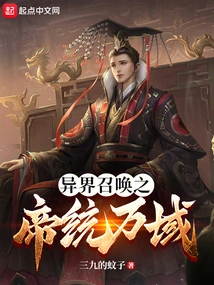
The Emperor Summoned from Another World Rules All Realms
About This Novel
Q group number: 194943768 Fang Chen traveled through another world, awakened the Divine Power of the Reincarnation Palace, and shocked all dynasties with the outstanding figures of China! Here the gods abdicated Jiang Taigong. Zhuang Zhou turned into a butterfly, heaven and earth coexisted with me, and all things became one with me. Xiang Yu, the overlord, is so powerful that he dominates the world. The ghost valley is vertical and horizontal, and the vertical and horizontal are connected. ...
Official Sources
What Readers Think
Rating
Community(0)
Official(4)Scraped 1mo ago
Let me talk about some famous generals. First, I will list the records of some famous figures and compare them with the powerful generals I want to talk about.
Jin Wushu captured and killed seven people and was called the most powerful in the Jin army. Fan Kuai killed ten people and Zhang Liang called him the most powerful person he had ever seen. Of course, Zhang Liang later met Xiang Yu who was even more powerful. Chang Yuchun had the highest record of killing dozens of enemies. Hu Yiqing, a native of Yunnan, was the Duke of Wei of the Southern Ming Dynasty. He killed hundreds of people. Hu Yiqing often rushed into the Qing army in battles and killed dozens of Qing soldiers before returning. He had the highest record of killing hundreds of people in the Qing army and returned. He was the best at using double spears and was good at long range. Cheng Chu then fought in close quarters. He joined the army during the Hongguang period of the Southern Ming Dynasty and led his army to defeat the Qing army many times with the weak defeating the strong. In the second year of Longwu, he defeated the tens of thousands of Qing troops led by the famous general Liu Liangzuo with fewer victories and more. He rescued Ji'an and won the title of Bo for his military exploits. Later, he defeated the Qing army with less victory and more. After the great victory at Beiguan, Guangxi was captured by the war god Kong Youde, the leader of the Han kings, and fought guerrillas on the border. Li Dingguo regained Guangxi and defected to Li Dingguo. Li Dingguo led an army of 80,000 to Huguang to fight against the main Qing army of hundreds of thousands. Guangxi was empty of troops. King Jingnan of the Manchu Qing Dynasty led hundreds of thousands of troops to attack Guangxi. Hu Yiqing led thousands of soldiers and horses and fought fiercely with tens of thousands of Qing troops for a long time and finally retreated. In the late Southern Ming Dynasty, Hu Yiqing became a monk and was found and killed by his former defeated Qing general Xian Guoan. The troops were assigned to the Yunnan camp, and were named by Emperor Yongli. Zhang Ling, Hundred-Man Killer (Hundred-Man Shooter), Divine Crossbow King, the best marksman in the Ming Dynasty. He can still shoot five stones at once (equivalent to nearly 800 kilograms in modern times) at the age of seventy. His crossbow hits hundreds of times. Zhang Ling has experienced hundreds of battles with few defeats and is powerful in Sichuan and Shaanxi. At the age of sixty-six, he was hit in the face by three arrows in a fierce battle with the rebels. The more he fought, the more brave he became in killing the enemy. More than a hundred people turned the tide and defeated the rebel army that was ten times their own. Zhang Ling was the second most famous general in Sichuan at that time after the female war goddess Qin Liangyu. In the 15th year of Chongzhen, Li Dingguo, who was about 20 years old at the time, wore a white robe and single-handedly charged Zhang Ling's army. Zhang Ling was shot dead by Li Dingguo with an arrow, and 50,000 elite Ming troops were wiped out. Dou fame , a hundred people were killed, a native of Hubei, the Marquis of Tai'an, the imperial city commander of Zhang Xianzhong, and later became the commander-in-chief of Li Dingguo's command. Sun Kewang, the king of Qin, led an army of 140,000 to a decisive battle with the army of 30,000, Li Dingguo, the king of Jin. The king of Qin was Li Dingguo defeated only a few hundred cavalry and fled. Dou Mingwang was the first to charge into the formation. The Qing army attacked the southwest in three directions. Coach Li Dingguo led 30,000 soldiers to fight against hundreds of thousands of Qing army leaders led by Qing army coach Hong Chengchou. Li Dingguo sent Dou Mingwang and Gongchang King Baiwen to select Qingyang King Feng Shuangli to lead an army of 40,000 to guard Qixing Pass to resist the 100,000 partial troops commanded by Wu Sangui. Under Wu Sangui's command was Zhang Yong, the leader of the four Han generals in Hexi, and Shun In the second year of Emperor Zhi's reign, he surrendered to the Qing Dynasty and put down the million-strong rebel army of Milayin and Ding Guodong. Shunzhi called him a rare good general in the world. The famous general went to fight against the southwest under Hong Chengchou, quelled the rebellion of the Three Feudatories, conquered more than 50 prefectures and counties, and defeated 100,000 Mongolian troops. He was awarded the titles of Sangu, Prince Taibao and Prince Taishi. He was the top famous general of the Qing Dynasty. Wang Jin Bao followed Zhang Yong in the battle. During the San Francisco Rebellion, Wang Jinbao chased thousands of Wu troops with dozens of cavalry for dozens of miles, and was granted the title of Crown Prince Taibao. Wang Fuchen repelled the attacks of Dorgon's nine princes and dozens of generals many times in Datong, and became angry. Dorgon and Wang Fuchen often wore white robes and beheaded generals to seize the flag, as if they were in a deserted area. Finally, the traitors opened the city gate, and Wang Fuchen killed more than 500 Qing troops alone and was captured. Azig admired his bravery and prayed for Wang Fuchen. Love, Li Dingguo defeated the strong, and Wang Fuchen was sent to deal with the southwest. Hong Chengchou praised him as a handsome man and vigorously trained him. In the Rebellion of the Three Feudatories, Wang Fuchen rebelled against the Qing Dynasty and defeated the strong. Tuhai and the four Han Dynasties in Hexi would fall into a bitter battle. , These famous generals attacked Qixing Guan, the Qing army suffered heavy casualties and could not capture it. Finally, the Shuixi An family, which had been dominated by the Han Dynasty for more than a thousand years, rebelled and took Wu Sangui to bypass Qixing Pass. In the bloody battle at Mopan Mountain, Li Dingguo used 6,000 elites to set up three ambushes. Dou Mingming was the second ambush. The army fought a bloody battle with Wu Sangui's more than 30,000 elite troops. After several hours of fierce fighting, Wu Sangui was on the verge of defeat. However, the Qing army arrived with 100,000 reinforcements, while several thousand Ming troops had no reinforcements. Dou Mingwang killed more than a hundred Qing troops and died from an arrow in his eye. In this battle, the Ming army lost two generals, Dou Mingwang and Wang Xi, and the Qing army killed more than 20 senior generals, including several princes. Dou Mingwang drinks a lot and likes to take off his armor and fight naked to kill the enemy. Wang Xing, who killed more than a hundred enemies when rescuing Guangzhou, was nicknamed Embroidery Needle. Once when Wang Xing was drinking, the Qing army came to attack him. Wang Xing took the head of the Qing general from the crowd of tens of thousands of troops and came back with the wine still warm. Therefore, Wang Xing was also called Living Pass. Gong, Weapon Ge, General Huben, Commander-in-Chief of the Left Army, Bo Guangning, was also proficient in water warfare. The leader of the rebel army was later captured by Zhao'an. He used thousands of troops to repel Li Chengdong, who was possessed by the God of War at the time, and led his army to recover several cities. Li Dingguo conquered Guangdong and Wang Xing He led his army to surrender. Li Dingguo was seriously ill and sent Wang Xing to lead his army to attack Xinhui at the gate of Guangzhou. There were tens of thousands of Qing troops. Wang Xing couldn't attack it. Li Dingguo sent Wu Zisheng to attack it, but it still couldn't be conquered. Li Dingguo could only attack in person despite his illness. Li Dingguo's momentum was like breaking bamboo trees. Xinhui was conquered in the first day of the day, but the Qing army in Xinhui seized the civilians as shields. Li Dingguo refused to harm the civilians and stopped attacking and besieged the city. A plague broke out in the Ming army and most of the Ming army fell ill. Two princes from the Manchu and Qing Dynasties led the main force of 100,000 Qing troops to come to the rescue. Li Dingguo led the Qing army The 40,000 Ming troops who were infected with the plague were defeated after four days of fierce fighting with 100,000 Qing troops. Wang Xing retreated to Xinning Village and built a city defense in Xinning Village. Wang Xing resisted the Qing troops for four years. In 1657, Shang Kexi led 100,000 Qing troops plus 100,000 militiamen and 200,000 The land and water armies stormed Wang Xing, and Chen Qice led his troops to support Wang Xing. The two fought fiercely for several months, and Shang Kexi lost more than half of his 200,000 Qing troops and retreated. In 1658, there was a severe drought and food shortage in Xinning, and Chen Qice was transferred to Guangxi. Shang Kexi once again led the army. An army of 200,000 attacked. The soldiers and civilians of Xinning Village ate grass roots and bark to resist the Qing army. After months of fierce fighting, Wang Xing faced a desperate situation. Shang Kexi's counselor Jin Guang came to persuade Wang Xing to surrender. Jin Guang was not willing to serve the Qing Dynasty, but Shang Kexi had his leg broken and stayed behind. On the side, Jin Guang and Wang Xing talked happily and became brothers, but Wang Xing refused to surrender to the Qing Dynasty and left his children in the care of Jin Guang. Wang Xing asked his wives and concubines to follow Jin Guang, but they were unwilling. Wang Xing's mother hanged herself, and Wang Xing and his sixteen wives and concubines set themselves on fire. Gan Hui, who beheaded hundreds of people and decapitated generals several times in the midst of tens of thousands of troops. Zheng Chenggong was the leader of the Five Tiger Generals. He killed a fierce general in the Qing army who was equivalent to Chang Yuchun. Zheng Chenggong summoned hundreds of martyrs to fight against the Qing Dynasty in Little Kinmen. Gan Hui defected to Zheng Chenggong. Gan Hui and other generals became brave and resourceful generals under Zheng Chenggong's training. The Manchu and Qing Dynasties launched a large-scale attack on the southwest. Zheng Chenggong prepared to attack the Manchu and Qing Dynasties to relieve the pressure on the southwest. Gan Hui proposed three strategies: attack Jiangnan to force the main force of the Qing army to rescue Jiangnan, and land in Tianjin to attack Beijing's encirclement point. Zheng Chenggong landed in the northeast and attacked Shenyang encirclement for reinforcements. Zheng Chenggong chose to attack Jiangnan to force the main force of the Qing army to attack the southwest to rescue Jiangnan. However, Zheng Chenggong encountered a super typhoon during his second northern expedition. Zheng's army suffered heavy losses. Zheng Chenggong was disheartened and lamented that God's will was inevitable and could only return to training. After one year of training, Zheng Chenggong launched his third northern expedition. At this time, Zheng Chenggong did not know Southwest Dao has been basically occupied by the Qing army. Emperor Shunzhi, who was overwhelmingly defeated by Zheng Chenggong, wanted to abandon the Central Plains and flee back to the northeast, but was stopped by Xiaozhuang. The Manchu and Qing dynasties mobilized elites from all over the country to support Jiangnan. Jiangning fought a bloody battle with hundreds of thousands of Qing troops for a large-scale counterattack. Before the Qing army's general attack, the Qing army accidentally discovered a secret passage leading to the top of the mountain where Zheng Chenggong's army was located. Because the Qing army intended Zheng Chenggong's spies discovered outside and did not know that thousands of Zheng's troops under Gan Hui were attacked by tens of thousands of Qing troops, including tens of thousands of cavalry. Zhang Ying, the leader of the fifth army, was killed in the battle. Gan Hui led his troops to break out of the encirclement. Finally, Gan Hui stayed behind. Gan Hui killed hundreds of enemies and was hit by dozens of arrows and fainted due to excessive bleeding. Gan Hui was killed after being captured and refused to kneel and stand. Qiu Hui, who killed hundreds of people, was famous for his resourcefulness and bravery. He invented the world-famous delicacy Dahao Fish Balls, which was originally a duck. Due to the brutality of the Manchu Qing Dynasty, Kangxi rebelled against the Qing Dynasty in the early years of Kangxi's reign. Menhe Dongshan Island, responsible for the Guangdong front during the San Francisco Rebellion, defeated many famous generals who had experienced hundreds of battles. Qiu Hui believed that the Zheng family's army had few troops and should take advantage of the Qing army's unstable foothold to take the initiative to annihilate Shi Lang. The coach Liu Guoxuan was known as the world's famous general. General, once defeated Pingnan Wang Shangzhixin's 100,000 Qing army with 10,000 Zheng Jiajun. He believed that there would be thirty-six typhoons in the Penghu Islands every year in this month, and the typhoon would be able to deal with Shi Lang. Qiu Hui suggested firmly, but Liu Guoxuan ignored the Ming Dynasty Qi. After all, Zheng Chenggong, Li Dingguo and other Ming armies encountered dozens of natural disasters. The Qing army took advantage of the weather. Sure enough, there were no typhoons in Penghu, which originally had 36 typhoons a month. When the Qing army was short of water, Taiwan, which had been dry for several years, immediately started to rain. Qiu Hui, Jiang Sheng and Lin Sheng defeated Shi Lang's tens of thousands of troops with thousands of Zheng troops. Shi Lang was shot and wounded by Qiu Hui. If Lan Li, who could lift eight hundred kilograms, had not led his troops to stop Qiu Hui, Shi Lang would have been killed. During this battle, Lan Li's stomach was broken. Lan Li dragged his own intestines into the bloody battle. Lan Li was the only general in history to drag his intestines. Shi Lang was killed After Qiu Hui's defeat, the Qing army increased its strength and launched another large-scale attack, blowing up a storm that was unfavorable to the Zheng army. Zheng's army was destroyed. Qiu Hui killed more than a hundred elite Qing troops, like the god of death. The Qing army did not dare to approach anymore. Qiu Hui lamented that the situation was over and committed suicide with his sword. Before general Wu Qian died for his country, he lamented that if Shi Lang had followed Qiu Hui's advice, Shi Lang's entire army would have been destroyed. Shi Jingyan, whose real name is Shi Dian, is a martial artist, the founder of Shijia Qiang, the first spearman in Jiangnan, and also proficient in double swords. In the eighth year of Chongzhen, Shi Dian, who was about seventy years old, was invited by officials to go out to fight against the rebels. Shen Ping was able to wield a 100-pound sledgehammer immediately. After the Manchus shaved their hair and changed their clothes, he and his brother Shen Xun led the villagers to resist the Qing Dynasty. They repelled the Qing army's attacks many times. In the first year of Yongli in the Southern Ming Dynasty, the village was breached by the Qing army. Shen Ping killed dozens of people with the hammer and killed them in battle.
The generals of Liangshan were rated too high, and I have no objection.
Created a QQ group
194943768 Hey guys, add it
When I saw this, I was reminded of the book "Winter Is Not Cold" written by "Call of the Alien Heroes of the Ages". The writing was really good. I don't know if the author has read it.
Rating
Community(0)
Official(4)Scraped 1mo ago
Let me talk about some famous generals. First, I will list the records of some famous figures and compare them with the powerful generals I want to talk about.
Jin Wushu captured and killed seven people and was called the most powerful in the Jin army. Fan Kuai killed ten people and Zhang Liang called him the most powerful person he had ever seen. Of course, Zhang Liang later met Xiang Yu who was even more powerful. Chang Yuchun had the highest record of killing dozens of enemies. Hu Yiqing, a native of Yunnan, was the Duke of Wei of the Southern Ming Dynasty. He killed hundreds of people. Hu Yiqing often rushed into the Qing army in battles and killed dozens of Qing soldiers before returning. He had the highest record of killing hundreds of people in the Qing army and returned. He was the best at using double spears and was good at long range. Cheng Chu then fought in close quarters. He joined the army during the Hongguang period of the Southern Ming Dynasty and led his army to defeat the Qing army many times with the weak defeating the strong. In the second year of Longwu, he defeated the tens of thousands of Qing troops led by the famous general Liu Liangzuo with fewer victories and more. He rescued Ji'an and won the title of Bo for his military exploits. Later, he defeated the Qing army with less victory and more. After the great victory at Beiguan, Guangxi was captured by the war god Kong Youde, the leader of the Han kings, and fought guerrillas on the border. Li Dingguo regained Guangxi and defected to Li Dingguo. Li Dingguo led an army of 80,000 to Huguang to fight against the main Qing army of hundreds of thousands. Guangxi was empty of troops. King Jingnan of the Manchu Qing Dynasty led hundreds of thousands of troops to attack Guangxi. Hu Yiqing led thousands of soldiers and horses and fought fiercely with tens of thousands of Qing troops for a long time and finally retreated. In the late Southern Ming Dynasty, Hu Yiqing became a monk and was found and killed by his former defeated Qing general Xian Guoan. The troops were assigned to the Yunnan camp, and were named by Emperor Yongli. Zhang Ling, Hundred-Man Killer (Hundred-Man Shooter), Divine Crossbow King, the best marksman in the Ming Dynasty. He can still shoot five stones at once (equivalent to nearly 800 kilograms in modern times) at the age of seventy. His crossbow hits hundreds of times. Zhang Ling has experienced hundreds of battles with few defeats and is powerful in Sichuan and Shaanxi. At the age of sixty-six, he was hit in the face by three arrows in a fierce battle with the rebels. The more he fought, the more brave he became in killing the enemy. More than a hundred people turned the tide and defeated the rebel army that was ten times their own. Zhang Ling was the second most famous general in Sichuan at that time after the female war goddess Qin Liangyu. In the 15th year of Chongzhen, Li Dingguo, who was about 20 years old at the time, wore a white robe and single-handedly charged Zhang Ling's army. Zhang Ling was shot dead by Li Dingguo with an arrow, and 50,000 elite Ming troops were wiped out. Dou fame , a hundred people were killed, a native of Hubei, the Marquis of Tai'an, the imperial city commander of Zhang Xianzhong, and later became the commander-in-chief of Li Dingguo's command. Sun Kewang, the king of Qin, led an army of 140,000 to a decisive battle with the army of 30,000, Li Dingguo, the king of Jin. The king of Qin was Li Dingguo defeated only a few hundred cavalry and fled. Dou Mingwang was the first to charge into the formation. The Qing army attacked the southwest in three directions. Coach Li Dingguo led 30,000 soldiers to fight against hundreds of thousands of Qing army leaders led by Qing army coach Hong Chengchou. Li Dingguo sent Dou Mingwang and Gongchang King Baiwen to select Qingyang King Feng Shuangli to lead an army of 40,000 to guard Qixing Pass to resist the 100,000 partial troops commanded by Wu Sangui. Under Wu Sangui's command was Zhang Yong, the leader of the four Han generals in Hexi, and Shun In the second year of Emperor Zhi's reign, he surrendered to the Qing Dynasty and put down the million-strong rebel army of Milayin and Ding Guodong. Shunzhi called him a rare good general in the world. The famous general went to fight against the southwest under Hong Chengchou, quelled the rebellion of the Three Feudatories, conquered more than 50 prefectures and counties, and defeated 100,000 Mongolian troops. He was awarded the titles of Sangu, Prince Taibao and Prince Taishi. He was the top famous general of the Qing Dynasty. Wang Jin Bao followed Zhang Yong in the battle. During the San Francisco Rebellion, Wang Jinbao chased thousands of Wu troops with dozens of cavalry for dozens of miles, and was granted the title of Crown Prince Taibao. Wang Fuchen repelled the attacks of Dorgon's nine princes and dozens of generals many times in Datong, and became angry. Dorgon and Wang Fuchen often wore white robes and beheaded generals to seize the flag, as if they were in a deserted area. Finally, the traitors opened the city gate, and Wang Fuchen killed more than 500 Qing troops alone and was captured. Azig admired his bravery and prayed for Wang Fuchen. Love, Li Dingguo defeated the strong, and Wang Fuchen was sent to deal with the southwest. Hong Chengchou praised him as a handsome man and vigorously trained him. In the Rebellion of the Three Feudatories, Wang Fuchen rebelled against the Qing Dynasty and defeated the strong. Tuhai and the four Han Dynasties in Hexi would fall into a bitter battle. , These famous generals attacked Qixing Guan, the Qing army suffered heavy casualties and could not capture it. Finally, the Shuixi An family, which had been dominated by the Han Dynasty for more than a thousand years, rebelled and took Wu Sangui to bypass Qixing Pass. In the bloody battle at Mopan Mountain, Li Dingguo used 6,000 elites to set up three ambushes. Dou Mingming was the second ambush. The army fought a bloody battle with Wu Sangui's more than 30,000 elite troops. After several hours of fierce fighting, Wu Sangui was on the verge of defeat. However, the Qing army arrived with 100,000 reinforcements, while several thousand Ming troops had no reinforcements. Dou Mingwang killed more than a hundred Qing troops and died from an arrow in his eye. In this battle, the Ming army lost two generals, Dou Mingwang and Wang Xi, and the Qing army killed more than 20 senior generals, including several princes. Dou Mingwang drinks a lot and likes to take off his armor and fight naked to kill the enemy. Wang Xing, who killed more than a hundred enemies when rescuing Guangzhou, was nicknamed Embroidery Needle. Once when Wang Xing was drinking, the Qing army came to attack him. Wang Xing took the head of the Qing general from the crowd of tens of thousands of troops and came back with the wine still warm. Therefore, Wang Xing was also called Living Pass. Gong, Weapon Ge, General Huben, Commander-in-Chief of the Left Army, Bo Guangning, was also proficient in water warfare. The leader of the rebel army was later captured by Zhao'an. He used thousands of troops to repel Li Chengdong, who was possessed by the God of War at the time, and led his army to recover several cities. Li Dingguo conquered Guangdong and Wang Xing He led his army to surrender. Li Dingguo was seriously ill and sent Wang Xing to lead his army to attack Xinhui at the gate of Guangzhou. There were tens of thousands of Qing troops. Wang Xing couldn't attack it. Li Dingguo sent Wu Zisheng to attack it, but it still couldn't be conquered. Li Dingguo could only attack in person despite his illness. Li Dingguo's momentum was like breaking bamboo trees. Xinhui was conquered in the first day of the day, but the Qing army in Xinhui seized the civilians as shields. Li Dingguo refused to harm the civilians and stopped attacking and besieged the city. A plague broke out in the Ming army and most of the Ming army fell ill. Two princes from the Manchu and Qing Dynasties led the main force of 100,000 Qing troops to come to the rescue. Li Dingguo led the Qing army The 40,000 Ming troops who were infected with the plague were defeated after four days of fierce fighting with 100,000 Qing troops. Wang Xing retreated to Xinning Village and built a city defense in Xinning Village. Wang Xing resisted the Qing troops for four years. In 1657, Shang Kexi led 100,000 Qing troops plus 100,000 militiamen and 200,000 The land and water armies stormed Wang Xing, and Chen Qice led his troops to support Wang Xing. The two fought fiercely for several months, and Shang Kexi lost more than half of his 200,000 Qing troops and retreated. In 1658, there was a severe drought and food shortage in Xinning, and Chen Qice was transferred to Guangxi. Shang Kexi once again led the army. An army of 200,000 attacked. The soldiers and civilians of Xinning Village ate grass roots and bark to resist the Qing army. After months of fierce fighting, Wang Xing faced a desperate situation. Shang Kexi's counselor Jin Guang came to persuade Wang Xing to surrender. Jin Guang was not willing to serve the Qing Dynasty, but Shang Kexi had his leg broken and stayed behind. On the side, Jin Guang and Wang Xing talked happily and became brothers, but Wang Xing refused to surrender to the Qing Dynasty and left his children in the care of Jin Guang. Wang Xing asked his wives and concubines to follow Jin Guang, but they were unwilling. Wang Xing's mother hanged herself, and Wang Xing and his sixteen wives and concubines set themselves on fire. Gan Hui, who beheaded hundreds of people and decapitated generals several times in the midst of tens of thousands of troops. Zheng Chenggong was the leader of the Five Tiger Generals. He killed a fierce general in the Qing army who was equivalent to Chang Yuchun. Zheng Chenggong summoned hundreds of martyrs to fight against the Qing Dynasty in Little Kinmen. Gan Hui defected to Zheng Chenggong. Gan Hui and other generals became brave and resourceful generals under Zheng Chenggong's training. The Manchu and Qing Dynasties launched a large-scale attack on the southwest. Zheng Chenggong prepared to attack the Manchu and Qing Dynasties to relieve the pressure on the southwest. Gan Hui proposed three strategies: attack Jiangnan to force the main force of the Qing army to rescue Jiangnan, and land in Tianjin to attack Beijing's encirclement point. Zheng Chenggong landed in the northeast and attacked Shenyang encirclement for reinforcements. Zheng Chenggong chose to attack Jiangnan to force the main force of the Qing army to attack the southwest to rescue Jiangnan. However, Zheng Chenggong encountered a super typhoon during his second northern expedition. Zheng's army suffered heavy losses. Zheng Chenggong was disheartened and lamented that God's will was inevitable and could only return to training. After one year of training, Zheng Chenggong launched his third northern expedition. At this time, Zheng Chenggong did not know Southwest Dao has been basically occupied by the Qing army. Emperor Shunzhi, who was overwhelmingly defeated by Zheng Chenggong, wanted to abandon the Central Plains and flee back to the northeast, but was stopped by Xiaozhuang. The Manchu and Qing dynasties mobilized elites from all over the country to support Jiangnan. Jiangning fought a bloody battle with hundreds of thousands of Qing troops for a large-scale counterattack. Before the Qing army's general attack, the Qing army accidentally discovered a secret passage leading to the top of the mountain where Zheng Chenggong's army was located. Because the Qing army intended Zheng Chenggong's spies discovered outside and did not know that thousands of Zheng's troops under Gan Hui were attacked by tens of thousands of Qing troops, including tens of thousands of cavalry. Zhang Ying, the leader of the fifth army, was killed in the battle. Gan Hui led his troops to break out of the encirclement. Finally, Gan Hui stayed behind. Gan Hui killed hundreds of enemies and was hit by dozens of arrows and fainted due to excessive bleeding. Gan Hui was killed after being captured and refused to kneel and stand. Qiu Hui, who killed hundreds of people, was famous for his resourcefulness and bravery. He invented the world-famous delicacy Dahao Fish Balls, which was originally a duck. Due to the brutality of the Manchu Qing Dynasty, Kangxi rebelled against the Qing Dynasty in the early years of Kangxi's reign. Menhe Dongshan Island, responsible for the Guangdong front during the San Francisco Rebellion, defeated many famous generals who had experienced hundreds of battles. Qiu Hui believed that the Zheng family's army had few troops and should take advantage of the Qing army's unstable foothold to take the initiative to annihilate Shi Lang. The coach Liu Guoxuan was known as the world's famous general. General, once defeated Pingnan Wang Shangzhixin's 100,000 Qing army with 10,000 Zheng Jiajun. He believed that there would be thirty-six typhoons in the Penghu Islands every year in this month, and the typhoon would be able to deal with Shi Lang. Qiu Hui suggested firmly, but Liu Guoxuan ignored the Ming Dynasty Qi. After all, Zheng Chenggong, Li Dingguo and other Ming armies encountered dozens of natural disasters. The Qing army took advantage of the weather. Sure enough, there were no typhoons in Penghu, which originally had 36 typhoons a month. When the Qing army was short of water, Taiwan, which had been dry for several years, immediately started to rain. Qiu Hui, Jiang Sheng and Lin Sheng defeated Shi Lang's tens of thousands of troops with thousands of Zheng troops. Shi Lang was shot and wounded by Qiu Hui. If Lan Li, who could lift eight hundred kilograms, had not led his troops to stop Qiu Hui, Shi Lang would have been killed. During this battle, Lan Li's stomach was broken. Lan Li dragged his own intestines into the bloody battle. Lan Li was the only general in history to drag his intestines. Shi Lang was killed After Qiu Hui's defeat, the Qing army increased its strength and launched another large-scale attack, blowing up a storm that was unfavorable to the Zheng army. Zheng's army was destroyed. Qiu Hui killed more than a hundred elite Qing troops, like the god of death. The Qing army did not dare to approach anymore. Qiu Hui lamented that the situation was over and committed suicide with his sword. Before general Wu Qian died for his country, he lamented that if Shi Lang had followed Qiu Hui's advice, Shi Lang's entire army would have been destroyed. Shi Jingyan, whose real name is Shi Dian, is a martial artist, the founder of Shijia Qiang, the first spearman in Jiangnan, and also proficient in double swords. In the eighth year of Chongzhen, Shi Dian, who was about seventy years old, was invited by officials to go out to fight against the rebels. Shen Ping was able to wield a 100-pound sledgehammer immediately. After the Manchus shaved their hair and changed their clothes, he and his brother Shen Xun led the villagers to resist the Qing Dynasty. They repelled the Qing army's attacks many times. In the first year of Yongli in the Southern Ming Dynasty, the village was breached by the Qing army. Shen Ping killed dozens of people with the hammer and killed them in battle.
The generals of Liangshan were rated too high, and I have no objection.
Created a QQ group
194943768 Hey guys, add it
When I saw this, I was reminded of the book "Winter Is Not Cold" written by "Call of the Alien Heroes of the Ages". The writing was really good. I don't know if the author has read it.
You Might Also Like
Chaos Emperor System
Prince Juechen

The Emperor of Chu Who Covers the Sky
Wisdom Sword Cuts Love
Reborn Female General
Qianshan Tea Guest

All Attribute Martial Arts
Don't Enter The World

My Tigress
Star Rain
My Attributes and Practicing Life
Get Away
The Dragon of Douluo Sings in the Sky
Thoughts On The Way Back
Covering the Sky: Demon Emperor Xue Yueqing
Tang Dynasty Assassin
Daming: Become a Royal Guard at the Beginning
Sorrowful

Yuan Tianzun
Fengxian