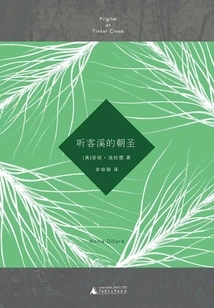
About This Novel
The flight of a bird is casual and spontaneous, like the curling of a stem or the lightening of a star. "Pilgrimage to Tinker Creek" records a year of life in the Dillard Mountains. Each page is a beautiful mystery, as if watching a whole year of secrets about creation: the birds in the sky, the plants on the ground, the stars in the universe, all written casually, but full of exquisite beauty everywhere. She writes about what she sees in her eyes, but often makes more profound and profound associations in her mind, starting from the big-eyed silkworm moth, writing about a cell in its wet heart, there will be a forest swaying inside; about the vitality of trees: a big elm tree can produce six million leaves in one season alone, all of which are very complicated, but also effortless. And she laughed at herself: "I can't even make one piece." She watched the cruelty of creation, the parasite eating the host out of the stomach, and the inheritance of life based on this life-and-death struggle. Or wasteful, those ephemeral bugs lay thousands of eggs, and countless of them die, and a species survives just by relying on the few that survive. In the author's writing, nature is both terrifying and full of infinite mercy. If you can have a pair of observant eyes, you have saved yourself a "good life". "Pilgrimage to Tinker Creek" can be regarded as a model of contemporary nature literature and has been widely selected as textbooks for American universities and middle schools. Critics believe that this book is better than Thoreau's "Walden", while others say it is comparable to Fabre's "Insects". For Dillard, it was a free and bold confrontation with the world's greatest themes of life and death with her young and unrestrained mind of twenty-six years old.
Official Sources
What Readers Think
Rating
Community(0)
Rating
Community(0)
