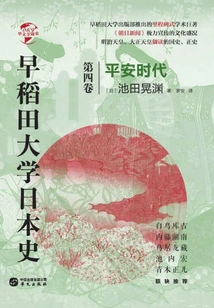
Waseda University Japanese History (volume 4): Heian Period (chinese Global History)
by L
About This Novel
This book is the representative work of Professor Kobuchi Ikeda. Professor Kobuchi Ikeda carefully researched the official history and connected the key nodes of historical turning points from a vast sea of classics. He analyzed in depth the construction of Heiankyo, the conquest of Ezo, the Yakuko Rebellion, the Otenmon Rebellion, the Shomon Juntomo Rebellion, the Homoto Heiji Rebellion and other major historical events. He comprehensively presented Emperor Kanmu, Sugawara Michizane, Fujiwara Michinaga, Goshirakawain, Taira Kiyomori and other figures in the whirlpool of power.
Official Sources
What Readers Think
Rating
Community(0)
Official(3)Scraped 14d ago
This book uses detailed and correct documentary records as historical evidence, discusses historical issues through rigorous research, and presents readers with many new facts that may subvert previous perceptions.
There is not much explanation of the administration of the academy, but it is summarized as follows: 1. Since the beginning of Saga, there have been many nobles and nobles, so there is a tradition of Zen. 2. There are less restrictions on power after separation from the law. 3. When people's hearts are unstable and the government is unstable, the emperor abdicates and begins to take over the government.
The Tang Dynasty envoys were sent to serve, and Buddhism and Tantra were mixed with Taoism in the East. The background of Huo Guang's style (posthumous Shoxuan) of Fujiwara Motosutra, the worship of the resentful spirit of Sugawara Michizane, and the posthumous palace of Lengquan called the Imperial Palace are worth reading.
Rating
Community(0)
Official(3)Scraped 14d ago
This book uses detailed and correct documentary records as historical evidence, discusses historical issues through rigorous research, and presents readers with many new facts that may subvert previous perceptions.
There is not much explanation of the administration of the academy, but it is summarized as follows: 1. Since the beginning of Saga, there have been many nobles and nobles, so there is a tradition of Zen. 2. There are less restrictions on power after separation from the law. 3. When people's hearts are unstable and the government is unstable, the emperor abdicates and begins to take over the government.
The Tang Dynasty envoys were sent to serve, and Buddhism and Tantra were mixed with Taoism in the East. The background of Huo Guang's style (posthumous Shoxuan) of Fujiwara Motosutra, the worship of the resentful spirit of Sugawara Michizane, and the posthumous palace of Lengquan called the Imperial Palace are worth reading.