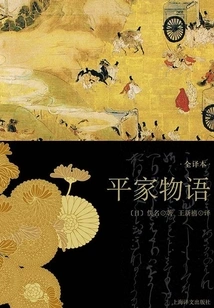
The Tale of the Heike (full Translation)
by H
About This Novel
Haruki Murakami's highly regarded historical masterpiece of the late Heian Dynasty, which panoramically displays the majestic scenes of Japan's medieval war, has been hailed by Japanese literary historians as "the nation's heroic narrative poem", "the highest achievement of Kamakura literature" and "Japan's national literature". The pinnacle of Japanese historical novels and military stories, the Japanese version of "The Romance of the Three Kingdoms" is, together with "The Tale of Genji", the two masterpieces of Japanese classical literature. The first truly complete Chinese translation, translator Wang Xinxi's nearly 60,000 words of detailed annotations fully explain the rise and fall of the Ping family. The precious color pictures visually show the magnificent historical picture and have extremely high literary, historical and ideological value. Finally, it comes with a rare "Initiation Scroll" on the market, which writes a final conclusion to the rise and fall of the Heike family over the past century. At the end of the 12th century, the Heian Dynasty came to an end. The centralized system in which the emperor and the nobles held real power was gradually declining, and the feudal samurai group with territories and private armed forces was on the rise. As two major samurai groups that held great power in the imperial court and the local government, the Minamotoji and the Heike clan finally broke out in a fierce war from 1156 to 1185 AD due to their intricate grievances and covetousness for ruling power. "The Tale of the Heike" takes the historical chronology as the main axis, and from the perspective of the Heike, it describes in detail the entire process of the Genji and Heike's struggle for power.
Official Sources
What Readers Think
Rating
Community(0)
Official(2)Scraped 1mo ago
Everything that flourishes will inevitably decline, retribution will not be satisfactory, success or failure will turn around in vain. A very Buddhist book that encourages people to be kind. The translation is very ancient and rhythmic. The whole book is a very magnificent historical picture composed of the ups and downs of life of various characters.
Everyone can understand this book, no need to comment. What needs to be said is that this version shows that the translator has a profound literary background, is more popular, and restores the ancient charm. However, it is a bit difficult to understand. I recommend the translation from the 1980s, which is easy to understand.
Rating
Community(0)
Official(2)Scraped 1mo ago
Everything that flourishes will inevitably decline, retribution will not be satisfactory, success or failure will turn around in vain. A very Buddhist book that encourages people to be kind. The translation is very ancient and rhythmic. The whole book is a very magnificent historical picture composed of the ups and downs of life of various characters.
Everyone can understand this book, no need to comment. What needs to be said is that this version shows that the translator has a profound literary background, is more popular, and restores the ancient charm. However, it is a bit difficult to understand. I recommend the translation from the 1980s, which is easy to understand.