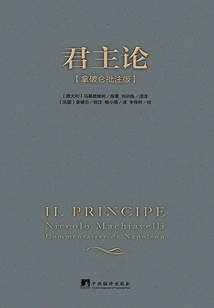
The Prince (napoleon's Annotated Edition)
About This Novel
On June 18, 1815, someone discovered some books and documents in Napoleon Bonaparte's carriage, including a manuscript... What is surprising is that this manuscript is not only a new translation of "The Prince", but also has comments written by Bonaparte on the margins. These comments cover the multiple periods when he served as a general, consul, emperor, and even when he was exiled on the island of Elba. Bonaparte's different commentaries are closely related to different social situations and political situations, and together they form a very valuable review, allowing one to discern without prejudice which of Machiavelli's words were addressed to the "new prince" and which to others... The essence of Machiavelli's thought will be presented in this edition of ours. This book adopts the authoritative English version of "The Prince" and the French text of Napoleon's annotations. The two translations are compared and compared to show in detail the different contents of Napoleon's annotations to "The Prince" in the four periods of general, consul, emperor, and exile. It helps people deepen their understanding of "The Prince" and Napoleon. It is a "governed book" particularly cherished by Western political circles.
Official Sources
What Readers Think
Rating
Community(0)
Official(1)Scraped 2mo ago
The Prince
"The prince must be a fox in order to recognize traps; he must also be a lion in order to frighten the jackals." ●From the perspective of the monarch, the people are easily satisfied. After the habitual life is broken, they can continue without making much changes, and people will not have much sense of resistance. ●In fact, in the collective interests of every era, generosity is a means, and stinginess is the norm. ●A monarch must never abuse his kindness. The best situation is to be a monarch who is both loved and feared. Many times, there is a choice between the two. It is safer to fear the monarch than to love him. ● People tend to seek advantages and avoid disadvantages. People are far less scrupulous about offending a person who is loved than someone who is feared. ●A manager needs to choose between being easy-going and being strict in management rules. I also prefer being strict within the scope of the rules. Because rules are usually formulated to protect the interests of most people, when the rules are blurred, the losses are actually much greater than the gains. ○In life, you should be "easy-going about small things and strict about big things." ●In fact, what is even more cruel is that when dealing with strangers, I still advocate a sense of boundaries. When there are no established principles and obligations, we should say "no" more and don't care if others call us people who are difficult to talk to. ●If a minister pursues his own interests more than the interests of the monarch, then he cannot be used. On the other hand, if he only cares about the monarch, he is a good minister. ●The Prince believes that "human nature is inherently evil": people are ungrateful, easily changeable, pretenders, evading danger and pursuing interests. When you do them good, they belong to you entirely. While the need is still far away, they express their readiness to shed their blood, sacrifice their property, their lives, and their children for you; but when the need is imminent, they turn their backs on you. ●The law is the bottom line for maintaining society. It stipulates that there are limits to a person's "evil", but it has never limited the height of "good". ○So we say that the law protects the weak. ●People love the monarch based on their own will, and feel fear based on the monarch's will. ○The weakest and unstable thing in the world is the reputation of power that is not based on one's own strength. ●A necessary war is a just war. ○There is no need for excuses to be strong, being small is the best reason! ○The armed prophets were victorious, and the unarmed prophets perished.
Rating
Community(0)
Official(1)Scraped 2mo ago
The Prince
"The prince must be a fox in order to recognize traps; he must also be a lion in order to frighten the jackals." ●From the perspective of the monarch, the people are easily satisfied. After the habitual life is broken, they can continue without making much changes, and people will not have much sense of resistance. ●In fact, in the collective interests of every era, generosity is a means, and stinginess is the norm. ●A monarch must never abuse his kindness. The best situation is to be a monarch who is both loved and feared. Many times, there is a choice between the two. It is safer to fear the monarch than to love him. ● People tend to seek advantages and avoid disadvantages. People are far less scrupulous about offending a person who is loved than someone who is feared. ●A manager needs to choose between being easy-going and being strict in management rules. I also prefer being strict within the scope of the rules. Because rules are usually formulated to protect the interests of most people, when the rules are blurred, the losses are actually much greater than the gains. ○In life, you should be "easy-going about small things and strict about big things." ●In fact, what is even more cruel is that when dealing with strangers, I still advocate a sense of boundaries. When there are no established principles and obligations, we should say "no" more and don't care if others call us people who are difficult to talk to. ●If a minister pursues his own interests more than the interests of the monarch, then he cannot be used. On the other hand, if he only cares about the monarch, he is a good minister. ●The Prince believes that "human nature is inherently evil": people are ungrateful, easily changeable, pretenders, evading danger and pursuing interests. When you do them good, they belong to you entirely. While the need is still far away, they express their readiness to shed their blood, sacrifice their property, their lives, and their children for you; but when the need is imminent, they turn their backs on you. ●The law is the bottom line for maintaining society. It stipulates that there are limits to a person's "evil", but it has never limited the height of "good". ○So we say that the law protects the weak. ●People love the monarch based on their own will, and feel fear based on the monarch's will. ○The weakest and unstable thing in the world is the reputation of power that is not based on one's own strength. ●A necessary war is a just war. ○There is no need for excuses to be strong, being small is the best reason! ○The armed prophets were victorious, and the unarmed prophets perished.
