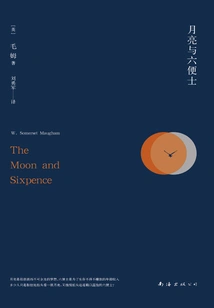
The Moon and Sixpence
About This Novel
You and I all have friends like this - ordinary office workers, middle-aged, married, with one child, working hard to earn a living. Maybe you yourself are such a person and have entered middle age unknowingly in such a life. The protagonist Charles in "The Moon and Sixpence" is exactly like this, but one day he suddenly responded to the call of his heart and left a note saying: Dinner is ready. He abandoned everything and ran away from home, pursuing his passion for painting. He went to Tahiti in the South Pacific to live with the indigenous people, and he never looked back despite poverty and illness. Charles dared to become an unreasonable madman in the eyes of others. Many people said that he was an idiot and even irresponsible. But only he knew the passion in his heart and the ideal he pursued, and chose his own life path in the way he liked! But in real life, how many people just timidly look up at the moon and continue to lower their heads to chase the sixpence they depend on for food and clothing?
What Readers Think
Rating
Community(0)
Official(317)Scraped 1d ago
The contradiction between ideal and reality
You may be thinking, what is the relationship between the moon and sixpence? Why did Maugham choose such a title for his book? In fact, there is an interesting origin of the title of this book. A friend joked with Maugham that people often forget the sixpence under their feet when looking up at the moon. Maugham thought this statement was quite interesting, so he decided on the title of the book half-jokingly. The moon represents lofty ideals, and sixpence represents reality. So with this sentence, we live humbly in the world of sixpence, but look up to the ideal life like the moon. The genius of Maugham is that there is no "moon and sixpence" in the book, but there is "moon and sixpence" everywhere. He tore the moon and sixpence, ideals and reality into pieces and blended them into the various characters he wrote, into every word spoken by the protagonist, and followed the protagonist's wandering destiny, throwing this bloody question to millions of readers, giving every reader who is torn between ideals and reality a tremor deep in their souls. Each of us will have our "moon" and our "sixpence". So when you read this, should you look up at the moon, or should you lower your head and pick up the sixpence at your feet?
The collision between ideal and reality
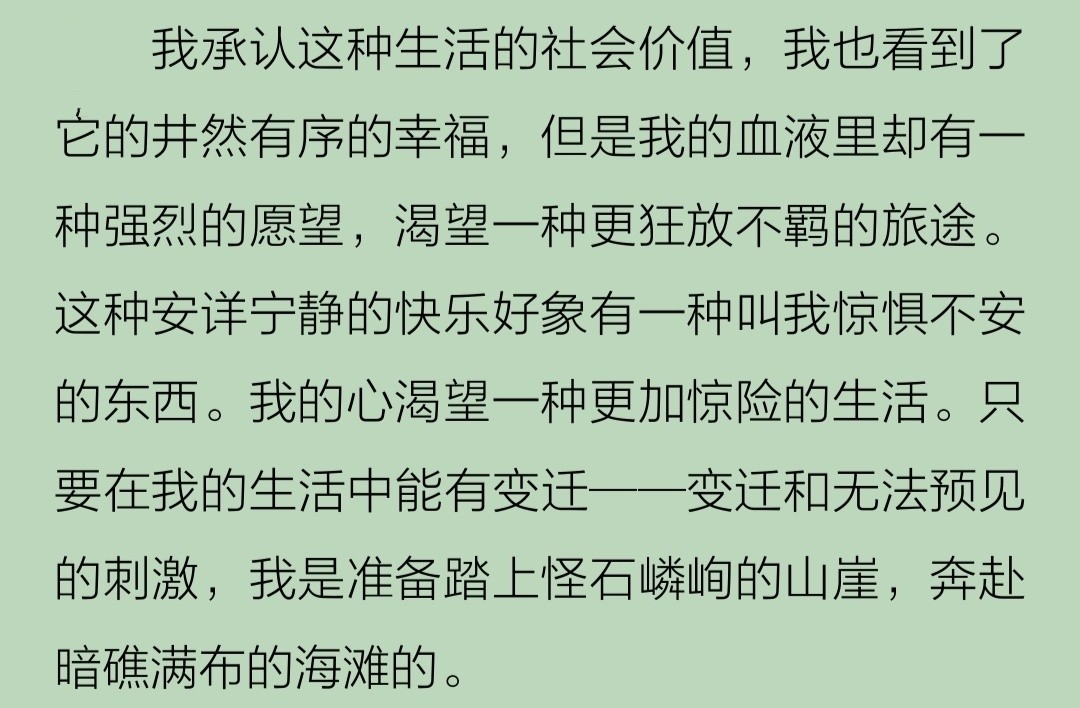
The uncle (Charles Strickland), who is nearly 40 years old, has a family that I yearn for (a son, a daughter, a good wife (Amy), and a generous salary, it can be said that he has everything a man should have), and lives a leisurely and quiet life, so happy. From the secular point of view of you and me, this kind of life seems to be the ideal life that most of us pursue. However, one day, on a whim, this uncle suddenly gave up his wife, children, and property, and decided to go to Paris, the capital of art, to practice his dream of painting skills that are incredible to you and me. Even though he knew that he had no talent for painting, and even though he knew that his wife and children were holding him back and calling him, he still ran resolutely on the road of pursuing art without looking back at them, leaving only a cruel farewell letter for his wife and children to endlessly reminisce and reverie about the past memories. Pursuing the path of art is not much easier than starting a business. Persistence always comes with a price. Along the way, the uncle was once penniless and unable to survive, barely surviving on charity from others. Forced to make a living, he mixed with the lowest class people in Paris, wandered in filthy places, and wandered on inaccessible desert islands. Once he almost died in a notorious Belgian hotel, but was saved by his friend (Delke Stover). All this happened just to buy a pair of painting supplies so that I could continue my unbearable art dream. Later, he drifted to Tahiti, where he also married again and had a son. His most perfect and most considerate masterpiece was also burned by his second wife at his request. At this moment, in this situation, are there bursts of sad and regretful undercurrents in my heart? We know well that great men with artistic flair often do not play according to routines. If we put aside these shackles of secular morality and human ethics, and jump to a higher ideal level to try to understand and adapt to this realm, it will definitely be much calmer. I can imagine this: an uncle with an artistic dream, after a protracted psychological battle, finally mustered up the courage to break through the constraints of family and secular morality on a day when the sky was clear and the wind was gentle, and he was reborn in the field of art. He stepped into this holy land of art with great pride. He was like a beloved son of God, practicing his painting skills devoutly in this noble soil. Although he often didn't have enough to eat, because of his love, he no longer felt so hungry when he saw his skills progressing so quickly. In order to buy painting tools, he once wandered into the lowest society in Paris, dealing with all kinds of people. I was lucky enough to sail across the ocean on a ship and stop in Tahiti, where I found my true soul mate, and finally died on this happy island. After reading it, although I cannot fully understand the uncle's great ideals in detail, I have to appreciate his pursuit. There is no doubt that what this uncle did was against moral ethics and common sense. But in terms of pure ideal life, this is undoubtedly a show that stands out and is impeccable. There are indeed sparks between ideal life and real life, but there is no right or wrong between the two. It's just that the pursuers have different positions and different choices.
I really like this "Only a few people in the world can finally achieve their ideals. Our life is very simple and simple. We are not ambitious. If we are proud, it is because we are proud of the fruits of labor obtained through our hands. We are neither jealous nor resentful of others." It is serious and smooth. It's not an excuse for mediocrity, it's an elegant and modest statement from someone who lives a good life.
Most people live in their own world. Others don't understand you, and you can't get out, so what. After all, life is what we experience ourselves, and we don't live it for others to see. I admire Strickland's courage to break through the world, step out of what others think is a comfortable environment, and follow his inner yearning, even if it is a future that no one is optimistic about. It is something that everyone yearns for but dare not change the status quo.
It's hard to imagine that there really is such a person in the world
A securities trader with a happy family and a successful career resolutely gave up everything and devoted himself to painting. He is not a good husband or a good father, but he is a painting genius. The author has said that Strickland is cruel, selfish, rough, and sensual... But on the contrary, he is such a person who has a very high spiritual realm. Just like a pilgrim who journeys throughout his life, he always longs for a holy land in his heart.

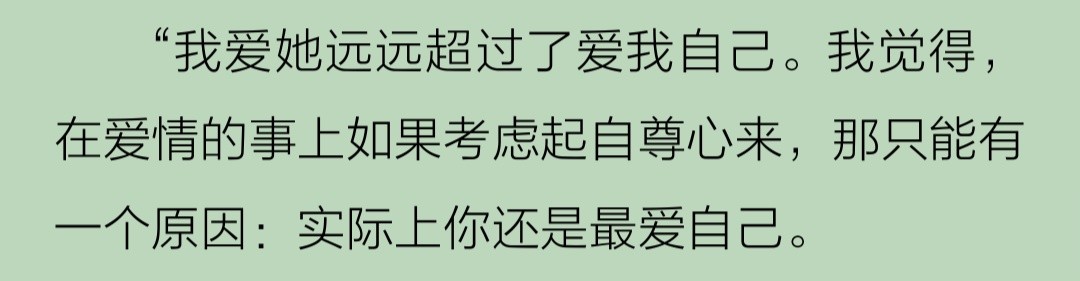
His son said in the Bible: The millstone turns slowly but very finely. It should be to condemn his father's decision to abandon the family and his son. The moon and sixpence: the former refers to art, pursuit, ideals, etc., While the latter refers to reality, responsibility, willingness, etc. Under normal circumstances, the two are at odds with each other. (To put it bluntly, the moon represents emptiness, and sixpence is pragmatic.) Can the conflict between the two be reconciled? Should it be reconciled? It's all in the eye of the beholder. If you reconcile success, you will get the best of both worlds and usher in a happy life, but you will inevitably have to face choices. Behind the simple words "harmony" and "choose", there is so much time lost, joys and sorrows, and all kinds of life! Maybe this is the ordinary life of us ordinary people. But Strickland was a genius, and he made a decisive choice. Because the talent in his heart drove him to pursue art very strongly. Strickland lives in poverty and contentment. The body is tired, but the spirit is better. To a certain extent, it also corresponds to the sentence: Heaven is about to give a great responsibility to this person, and he must first strain his mind, strain his muscles and bones, starve his body and skin, deplete his body, and mess up his actions - he must complete the transformation of the talent in his bones and show it in the way of painting, which is a great responsibility. What Strickland does in the real world is undoubtedly crazy, but at the end the author says: The devil will always quote the Bible to achieve his goals. Obviously, the author is refuting Strickland's son's evaluation of his father and endorsing Strickland. But I think the deeper meaning of the author is definitely not to let the world completely imitate Strickland. In the choice between reality and ideals, people often succumb to reality. (For material enjoyment, for commanding the dignity of others, for the vanity of being in the spotlight, etc. Of course, all of this started with just an excuse: to survive.) Precisely because there are very few people who persist in pursuing ideals, I think the author's original intention is to remind the public not to blindly and blindly pursue material things. When we have a day: those who are short of money are sitting on trillions of assets; everyone who is seeking fame is unknown; those who are greedy for power have everything in the world; and there are three thousand lustful beauties. When that time comes, will we definitely be happy? Surely it won't be boring?
I have tried my best for a long time and lived an ordinary life
people who swim against the current
The language of this book is very interesting. It can be seen that the author himself is also a humorous person, and he feels a bit like reading Wang Xiaobo. An ordinary citizen who had been imprisoned for half his life by a life of six pennies suddenly felt one day that living this way was like a road with a destination that could be seen at a glance, and the scenery on the roadside was unremarkable. How many people live a depressed, quiet and desperate life, but dare not take a step forward. This man who wanted to paint was unwilling to let the moonlight in his heart gradually wither. One day, he gave up everything, including his body and the people around him who loved him, and never looked back no matter what. Some people may think this is a stupid, stubborn, and incomprehensible behavior, because this behavior is like a little boy holding a plastic sword without an edge to slay a dragon. You ask him: "The dragon is approaching the Yuyuan, the God's Mansion in the Cloud. It is so big, how do you want to slay it?" ? Now put down your sword and go back. There is cooked horse meat and hot fish soup at home. As long as you are willing, you will be very happy!" He replied: "I want to, but I can't do it, because I am... Unwilling!" People swimming down the river are actually not much more comfortable than this young man. When night comes and you have insomnia, you will look up and see the bright moonlight. Everyone has their own way of living, and we have no right to make value judgments on others. There are many such young boys around us. Most of them are dissatisfied with life and are not convinced by the tall, strong, powerful, angry-eyed Heavenly King Bodhisattva, Vajra Pagoda, and God's Mansion in the Clouds. Even if it breaks down and sinks into the sand, there is no turning back.
Life is not about leaving, but living in this world with ideals and pursuing the beauty in your heart.
If the moon represents freedom and the true desire and thoughts about life in the heart, then the author's answer is that this is wonderful and charming, but also unrealistic and painful. Horrible, tragic behavior. This is not most people's moon, but sixpence is most people's sixpence. The iron cavalry of civilization is invincible, and as the soul of the universe, there are a few people who can persist in the cultivation of the soul and stick to the reed of the soul!
Rating
Community(0)
Official(317)Scraped 1d ago
The contradiction between ideal and reality
You may be thinking, what is the relationship between the moon and sixpence? Why did Maugham choose such a title for his book? In fact, there is an interesting origin of the title of this book. A friend joked with Maugham that people often forget the sixpence under their feet when looking up at the moon. Maugham thought this statement was quite interesting, so he decided on the title of the book half-jokingly. The moon represents lofty ideals, and sixpence represents reality. So with this sentence, we live humbly in the world of sixpence, but look up to the ideal life like the moon. The genius of Maugham is that there is no "moon and sixpence" in the book, but there is "moon and sixpence" everywhere. He tore the moon and sixpence, ideals and reality into pieces and blended them into the various characters he wrote, into every word spoken by the protagonist, and followed the protagonist's wandering destiny, throwing this bloody question to millions of readers, giving every reader who is torn between ideals and reality a tremor deep in their souls. Each of us will have our "moon" and our "sixpence". So when you read this, should you look up at the moon, or should you lower your head and pick up the sixpence at your feet?
The collision between ideal and reality
The uncle (Charles Strickland), who is nearly 40 years old, has a family that I yearn for (a son, a daughter, a good wife (Amy), and a generous salary, it can be said that he has everything a man should have), and lives a leisurely and quiet life, so happy. From the secular point of view of you and me, this kind of life seems to be the ideal life that most of us pursue. However, one day, on a whim, this uncle suddenly gave up his wife, children, and property, and decided to go to Paris, the capital of art, to practice his dream of painting skills that are incredible to you and me. Even though he knew that he had no talent for painting, and even though he knew that his wife and children were holding him back and calling him, he still ran resolutely on the road of pursuing art without looking back at them, leaving only a cruel farewell letter for his wife and children to endlessly reminisce and reverie about the past memories. Pursuing the path of art is not much easier than starting a business. Persistence always comes with a price. Along the way, the uncle was once penniless and unable to survive, barely surviving on charity from others. Forced to make a living, he mixed with the lowest class people in Paris, wandered in filthy places, and wandered on inaccessible desert islands. Once he almost died in a notorious Belgian hotel, but was saved by his friend (Delke Stover). All this happened just to buy a pair of painting supplies so that I could continue my unbearable art dream. Later, he drifted to Tahiti, where he also married again and had a son. His most perfect and most considerate masterpiece was also burned by his second wife at his request. At this moment, in this situation, are there bursts of sad and regretful undercurrents in my heart? We know well that great men with artistic flair often do not play according to routines. If we put aside these shackles of secular morality and human ethics, and jump to a higher ideal level to try to understand and adapt to this realm, it will definitely be much calmer. I can imagine this: an uncle with an artistic dream, after a protracted psychological battle, finally mustered up the courage to break through the constraints of family and secular morality on a day when the sky was clear and the wind was gentle, and he was reborn in the field of art. He stepped into this holy land of art with great pride. He was like a beloved son of God, practicing his painting skills devoutly in this noble soil. Although he often didn't have enough to eat, because of his love, he no longer felt so hungry when he saw his skills progressing so quickly. In order to buy painting tools, he once wandered into the lowest society in Paris, dealing with all kinds of people. I was lucky enough to sail across the ocean on a ship and stop in Tahiti, where I found my true soul mate, and finally died on this happy island. After reading it, although I cannot fully understand the uncle's great ideals in detail, I have to appreciate his pursuit. There is no doubt that what this uncle did was against moral ethics and common sense. But in terms of pure ideal life, this is undoubtedly a show that stands out and is impeccable. There are indeed sparks between ideal life and real life, but there is no right or wrong between the two. It's just that the pursuers have different positions and different choices.
I really like this "Only a few people in the world can finally achieve their ideals. Our life is very simple and simple. We are not ambitious. If we are proud, it is because we are proud of the fruits of labor obtained through our hands. We are neither jealous nor resentful of others." It is serious and smooth. It's not an excuse for mediocrity, it's an elegant and modest statement from someone who lives a good life.
Most people live in their own world. Others don't understand you, and you can't get out, so what. After all, life is what we experience ourselves, and we don't live it for others to see. I admire Strickland's courage to break through the world, step out of what others think is a comfortable environment, and follow his inner yearning, even if it is a future that no one is optimistic about. It is something that everyone yearns for but dare not change the status quo.
It's hard to imagine that there really is such a person in the world
A securities trader with a happy family and a successful career resolutely gave up everything and devoted himself to painting. He is not a good husband or a good father, but he is a painting genius. The author has said that Strickland is cruel, selfish, rough, and sensual... But on the contrary, he is such a person who has a very high spiritual realm. Just like a pilgrim who journeys throughout his life, he always longs for a holy land in his heart.
His son said in the Bible: The millstone turns slowly but very finely. It should be to condemn his father's decision to abandon the family and his son. The moon and sixpence: the former refers to art, pursuit, ideals, etc., While the latter refers to reality, responsibility, willingness, etc. Under normal circumstances, the two are at odds with each other. (To put it bluntly, the moon represents emptiness, and sixpence is pragmatic.) Can the conflict between the two be reconciled? Should it be reconciled? It's all in the eye of the beholder. If you reconcile success, you will get the best of both worlds and usher in a happy life, but you will inevitably have to face choices. Behind the simple words "harmony" and "choose", there is so much time lost, joys and sorrows, and all kinds of life! Maybe this is the ordinary life of us ordinary people. But Strickland was a genius, and he made a decisive choice. Because the talent in his heart drove him to pursue art very strongly. Strickland lives in poverty and contentment. The body is tired, but the spirit is better. To a certain extent, it also corresponds to the sentence: Heaven is about to give a great responsibility to this person, and he must first strain his mind, strain his muscles and bones, starve his body and skin, deplete his body, and mess up his actions - he must complete the transformation of the talent in his bones and show it in the way of painting, which is a great responsibility. What Strickland does in the real world is undoubtedly crazy, but at the end the author says: The devil will always quote the Bible to achieve his goals. Obviously, the author is refuting Strickland's son's evaluation of his father and endorsing Strickland. But I think the deeper meaning of the author is definitely not to let the world completely imitate Strickland. In the choice between reality and ideals, people often succumb to reality. (For material enjoyment, for commanding the dignity of others, for the vanity of being in the spotlight, etc. Of course, all of this started with just an excuse: to survive.) Precisely because there are very few people who persist in pursuing ideals, I think the author's original intention is to remind the public not to blindly and blindly pursue material things. When we have a day: those who are short of money are sitting on trillions of assets; everyone who is seeking fame is unknown; those who are greedy for power have everything in the world; and there are three thousand lustful beauties. When that time comes, will we definitely be happy? Surely it won't be boring?
I have tried my best for a long time and lived an ordinary life
people who swim against the current
The language of this book is very interesting. It can be seen that the author himself is also a humorous person, and he feels a bit like reading Wang Xiaobo. An ordinary citizen who had been imprisoned for half his life by a life of six pennies suddenly felt one day that living this way was like a road with a destination that could be seen at a glance, and the scenery on the roadside was unremarkable. How many people live a depressed, quiet and desperate life, but dare not take a step forward. This man who wanted to paint was unwilling to let the moonlight in his heart gradually wither. One day, he gave up everything, including his body and the people around him who loved him, and never looked back no matter what. Some people may think this is a stupid, stubborn, and incomprehensible behavior, because this behavior is like a little boy holding a plastic sword without an edge to slay a dragon. You ask him: "The dragon is approaching the Yuyuan, the God's Mansion in the Cloud. It is so big, how do you want to slay it?" ? Now put down your sword and go back. There is cooked horse meat and hot fish soup at home. As long as you are willing, you will be very happy!" He replied: "I want to, but I can't do it, because I am... Unwilling!" People swimming down the river are actually not much more comfortable than this young man. When night comes and you have insomnia, you will look up and see the bright moonlight. Everyone has their own way of living, and we have no right to make value judgments on others. There are many such young boys around us. Most of them are dissatisfied with life and are not convinced by the tall, strong, powerful, angry-eyed Heavenly King Bodhisattva, Vajra Pagoda, and God's Mansion in the Clouds. Even if it breaks down and sinks into the sand, there is no turning back.
Life is not about leaving, but living in this world with ideals and pursuing the beauty in your heart.
If the moon represents freedom and the true desire and thoughts about life in the heart, then the author's answer is that this is wonderful and charming, but also unrealistic and painful. Horrible, tragic behavior. This is not most people's moon, but sixpence is most people's sixpence. The iron cavalry of civilization is invincible, and as the soul of the universe, there are a few people who can persist in the cultivation of the soul and stick to the reed of the soul!