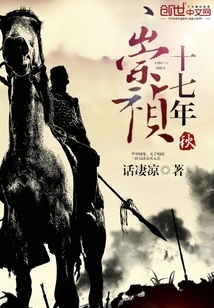
Autumn of the Seventeenth Year of Chongzhen
About This Novel
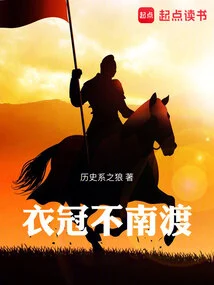
The Jiashen Kingdom rebelled, the emperor died for his country, and Wu Sangui led Qing troops into the pass. When the world is in turmoil and the barbarians are trying to find a magical weapon, will there be no loyal ministers in the land of China? Qingzhou City was surrounded by captive soldiers. He Tuo persuaded him to surrender and said: "Wang Shiheng, surrender! At this point in the battle, you must do your best!" In the isolated city of Yangzhou, Duduo sent a letter of persuasion to surrender in the city, saying: "If the general surrenders, you may pay homage to the duke!" In the city of Nanjing, Qian Qianyi said: "The situation is over now. A gentleman will not stand under a dangerous wall. Scholars should know the rise and fall. For their own sake, it is better to surrender early. Such a high official can be obtained!" Wang Yan said angrily: "This is not the change of the Han dynasty, but the invasion of the Hu barbarians from the south. It is not the subjugation of the country, but the subjugation of the world! I, a scholar-official, have been favored by the country, lived on the salary of the court, and acted loyal to the emperor. How can I care about my personal life and death, and ignore the survival of my clothes?" Penguin colony 541938403
Official Sources
What Readers Think
Rating
Community(0)
Official(1060)Scraped 2mo ago
Haha, a good historical novel. I love history and respect history. The author has worked hard. The mighty Ming Dynasty strengthens China. See how Wang Yan rewrites history, defends his country, conquers northern invaders, quells foreign aggression, quells internal strife, expands the South Seas, and writes a great epic. I highly recommend it. I also hope that the author will continue writing, come on! Come on! Come on!
Historical novel classics worth reading
The structure of the book is rigorous, the characters are vivid, and the plot unfolds slowly. It tells the prosperous Jiangnan in the late Ming Dynasty and the tragic military disasters. Especially the various characters in the article are all real historical figures. It shows that the author's writing attitude is serious and the research materials are rigorous. It is significantly higher than all kinds of cool articles at the moment. It has a strong sense of substitution. It can be regarded as a high-level historical work in recent years and is worth savoring.
After reading historical novels for so many years, I really think this book is great. The characters are well created. Everyone has flesh and blood and the historical data is sufficient. I like it very much. I hope the author will continue to work hard.
I think a lot
After reading this book, I thought a lot about where China's political system would go without the Manchu Qing Dynasty and the intervention of Western civilization. After thinking about it, I think it will definitely not be a presidential system first, because without this foundation, the era of great ideological collision in the late Ming Dynasty obviously did not produce the spark of democracy, so the presidential system must be eliminated first. So, what else can be done? Is it a constitutional monarchy? I think it is impossible. First of all, China has always been a country where the emperor is respected. There is no soil for a constitutional monarchy like Japan, because the emperor in Japan has no real power. If you insist that China can go this way, it is possible, but it is too late. It was possible during the Spring and Autumn Period and the Warring States Period, and Cao Pi was able to do it, but it will not be possible in the future, because Because they could all vacate the royal family, but then there was no ground for it. Zhu Wen directly killed the emperor, and Neo-Confucianism in the Song Dynasty had taken shape. That is to say, unless you become the emperor, you are going against the scholars all over the world. In fact, it is impossible for powerful ministers to appear. There were several powerful ministers in the Ming Dynasty, but they all died miserably, especially Zhang Juzheng. The Japanese model is impossible. As for the British model, after thinking about it, it is also unlikely. The British are indeed a constitutional monarchy, but in fact they follow the route of violent revolution only because the feudal forces at home and abroad are too great, especially abroad. The constitutional system was forced to follow. In China, there was a rebellion by domestic businessmen. And please note that although China had a great collision of ideas in the late Ming Dynasty, it was not thorough enough. So I thought about the result of the merchants' final rebellion. There is only one possibility, that is, a businessman becomes the emperor. This will be a concrete example. There is a capital bureaucracy with Chinese characteristics. Rebellious merchants become emperors, and after becoming emperor, they will inevitably start to suppress business, such as collecting more taxes. However, this suppression will not lead to stagnant development of business, but will correct the abnormal development model of the Ming Dynasty. It is possible to nationalize large-scale chambers of commerce and impose a sea ban on trade, etc., But it will definitely inhibit the development of small and medium-sized private chambers of commerce to varying degrees. When new large-scale chambers of commerce threaten the imperial power in a few generations, China will usher in a rebirth. As for how to proceed, it is related to social development. The above is one situation, but are there other situations? Can a constitutional monarchy be realized? The answer is yes, but it must be in the Ming Dynasty. Even if the Ming Dynasty falls, as I said before, it is impossible for China to establish a constitutional monarchy after a violent revolution. It is meaningless, so it can only evolve peacefully. In fact, looking at the entire Ming Dynasty, it is entirely possible to evolve into a constitutional monarchy. However, this constitutional monarchy will be different from that of Japan and Britain. It will be a constitutional monarchy with Chinese characteristics. We assume that in the Ming Dynasty, the monarchy Fighting with the ministers, the monarch loses, but the emperor has great justice. If the ministers want to take the throne, they will inevitably be counterattacked. If the ministers win, they no longer need to be ministers, so they can only carry out peaceful evolution, and the emperor will not lose power. At least he has the power to appoint and remove cabinet ministers. Since there are many parties in the Ming Dynasty, parties will definitely form, but there will never be an electoral system. Instead, they will try their best to win the emperor's consent to obtain cabinet seats. But this kind of political system with obvious shortcomings will not exist for long, and its subsequent development is difficult to predict. Going back to the novel, I think carrying the throne is the best choice, because at this moment, Wang Yan is already a prisoner of the country. It makes little difference whether he is the emperor or not. It can be said that he is already the political head of a country, but why should he carry the throne? Because as a national leader, the stability of the country must always come first. If he chooses not to be the emperor, then Wang Yan will inevitably have to fight against the imperial power for his whole life. This is the internal friction of the country, even if the little emperor has already done so. If there is no resistance anymore, what about Wang Yan's death? What will happen to Wang Yan's descendants? There will definitely be a catastrophe at that time. Will the selection of civil servants in the future be loyal to the Wang family or the Zhu family? There are many ways to realize the ambition, and you can also limit the power of the future emperor. After you become the emperor, you can establish a constitution, so that no one will jump out and say anything. Otherwise, establishing the constitution as a minister will be considered treason. Later generations can use this point to attack the constitution, because it is a constitution established by treason, and the legality is controversial. The best way is for the emperor to establish a constitution, which is more conducive to long-term social stability and ensures the legitimacy of the constitution.
Check in
The update is so slow, I should be blushing
It's already reached this point. The main character won't be the emperor in the end, so I won't watch it.
Either just say that the protagonist has traveled through time, or that the protagonist is from that era.
The beginning of the writing was okay. I subconsciously thought that the protagonist had traveled through the soul and was just slowly remembering the history of the Ming Dynasty in the future. It was all one-off. It is also understandable that there are no gods and demons. It is a normal historical time-traveling story. But what is the destiny for me? God let the protagonist know the future situation? Isn't that nonsense? Why don't you just descend to earth? This failure to accept is not a one-time thing and cannot be based on the scientific concept of development. What you write is a normal world, not a fantasy world. Secondly, a person who knows the future situation gives up a great situation because of someone else's order. Author, you have been foreshadowing the protagonist a moment ago. He is a patriot and has a sense of nationality. The great situation will immediately lead tens of thousands of people to launch an attack in the empty area of the Qing army. Just because of an order? Just gone? Haha, don't tell me that the protagonist is not the leader of tens of thousands of people. Can't you find reasons to persuade? In addition, you have demonized the guard too much. When the master dies, the guard will die? When the Ming Dynasty fell, how many guards died? How many officials died?
What would the cavalry do if they fight in the plains and then go to the garrison in Lintong City? Just to let the Jin army block it?
To tamper or not to tamper, that is the question
At present, it seems that this book is gradually coming to an end. Some people say that if Wang Yan does not usurp the throne, the nine tribes will be exterminated. Some people say that if Wang Yan usurps the throne, he will enter the endless cycle of history. Judging from the content of these chapters, the author is probably also struggling. Should he be an idealist literary youth and let Wang Yan push history out of the cycle of rise and fall of Chinese history? Or should he conform to the law of the endless cycle of Chinese historical development, so that the work of these thousands and hundreds of chapters only satisfies everyone's Han chauvinism plot to expel the Tartars, but has no achievements in the historical perspective and makes the entire work eclipse? The author is asked to think twice and everyone will wait and see.
It's okay╮( ̄▽ ̄)╭
Wang Yan was foolish and loyal, and he saw half of it. Although the emperor was capable, he was too weak. Although the ministers were loyal and incompetent, the king of the Tang Dynasty knew the virtuous ministers, so why did he use foolish ministers? The world still had doubts about the lack of achievements.
Rating
Community(0)
Official(1060)Scraped 2mo ago
Haha, a good historical novel. I love history and respect history. The author has worked hard. The mighty Ming Dynasty strengthens China. See how Wang Yan rewrites history, defends his country, conquers northern invaders, quells foreign aggression, quells internal strife, expands the South Seas, and writes a great epic. I highly recommend it. I also hope that the author will continue writing, come on! Come on! Come on!
Historical novel classics worth reading
The structure of the book is rigorous, the characters are vivid, and the plot unfolds slowly. It tells the prosperous Jiangnan in the late Ming Dynasty and the tragic military disasters. Especially the various characters in the article are all real historical figures. It shows that the author's writing attitude is serious and the research materials are rigorous. It is significantly higher than all kinds of cool articles at the moment. It has a strong sense of substitution. It can be regarded as a high-level historical work in recent years and is worth savoring.
After reading historical novels for so many years, I really think this book is great. The characters are well created. Everyone has flesh and blood and the historical data is sufficient. I like it very much. I hope the author will continue to work hard.
I think a lot
After reading this book, I thought a lot about where China's political system would go without the Manchu Qing Dynasty and the intervention of Western civilization. After thinking about it, I think it will definitely not be a presidential system first, because without this foundation, the era of great ideological collision in the late Ming Dynasty obviously did not produce the spark of democracy, so the presidential system must be eliminated first. So, what else can be done? Is it a constitutional monarchy? I think it is impossible. First of all, China has always been a country where the emperor is respected. There is no soil for a constitutional monarchy like Japan, because the emperor in Japan has no real power. If you insist that China can go this way, it is possible, but it is too late. It was possible during the Spring and Autumn Period and the Warring States Period, and Cao Pi was able to do it, but it will not be possible in the future, because Because they could all vacate the royal family, but then there was no ground for it. Zhu Wen directly killed the emperor, and Neo-Confucianism in the Song Dynasty had taken shape. That is to say, unless you become the emperor, you are going against the scholars all over the world. In fact, it is impossible for powerful ministers to appear. There were several powerful ministers in the Ming Dynasty, but they all died miserably, especially Zhang Juzheng. The Japanese model is impossible. As for the British model, after thinking about it, it is also unlikely. The British are indeed a constitutional monarchy, but in fact they follow the route of violent revolution only because the feudal forces at home and abroad are too great, especially abroad. The constitutional system was forced to follow. In China, there was a rebellion by domestic businessmen. And please note that although China had a great collision of ideas in the late Ming Dynasty, it was not thorough enough. So I thought about the result of the merchants' final rebellion. There is only one possibility, that is, a businessman becomes the emperor. This will be a concrete example. There is a capital bureaucracy with Chinese characteristics. Rebellious merchants become emperors, and after becoming emperor, they will inevitably start to suppress business, such as collecting more taxes. However, this suppression will not lead to stagnant development of business, but will correct the abnormal development model of the Ming Dynasty. It is possible to nationalize large-scale chambers of commerce and impose a sea ban on trade, etc., But it will definitely inhibit the development of small and medium-sized private chambers of commerce to varying degrees. When new large-scale chambers of commerce threaten the imperial power in a few generations, China will usher in a rebirth. As for how to proceed, it is related to social development. The above is one situation, but are there other situations? Can a constitutional monarchy be realized? The answer is yes, but it must be in the Ming Dynasty. Even if the Ming Dynasty falls, as I said before, it is impossible for China to establish a constitutional monarchy after a violent revolution. It is meaningless, so it can only evolve peacefully. In fact, looking at the entire Ming Dynasty, it is entirely possible to evolve into a constitutional monarchy. However, this constitutional monarchy will be different from that of Japan and Britain. It will be a constitutional monarchy with Chinese characteristics. We assume that in the Ming Dynasty, the monarchy Fighting with the ministers, the monarch loses, but the emperor has great justice. If the ministers want to take the throne, they will inevitably be counterattacked. If the ministers win, they no longer need to be ministers, so they can only carry out peaceful evolution, and the emperor will not lose power. At least he has the power to appoint and remove cabinet ministers. Since there are many parties in the Ming Dynasty, parties will definitely form, but there will never be an electoral system. Instead, they will try their best to win the emperor's consent to obtain cabinet seats. But this kind of political system with obvious shortcomings will not exist for long, and its subsequent development is difficult to predict. Going back to the novel, I think carrying the throne is the best choice, because at this moment, Wang Yan is already a prisoner of the country. It makes little difference whether he is the emperor or not. It can be said that he is already the political head of a country, but why should he carry the throne? Because as a national leader, the stability of the country must always come first. If he chooses not to be the emperor, then Wang Yan will inevitably have to fight against the imperial power for his whole life. This is the internal friction of the country, even if the little emperor has already done so. If there is no resistance anymore, what about Wang Yan's death? What will happen to Wang Yan's descendants? There will definitely be a catastrophe at that time. Will the selection of civil servants in the future be loyal to the Wang family or the Zhu family? There are many ways to realize the ambition, and you can also limit the power of the future emperor. After you become the emperor, you can establish a constitution, so that no one will jump out and say anything. Otherwise, establishing the constitution as a minister will be considered treason. Later generations can use this point to attack the constitution, because it is a constitution established by treason, and the legality is controversial. The best way is for the emperor to establish a constitution, which is more conducive to long-term social stability and ensures the legitimacy of the constitution.
Check in
The update is so slow, I should be blushing
It's already reached this point. The main character won't be the emperor in the end, so I won't watch it.
Either just say that the protagonist has traveled through time, or that the protagonist is from that era.
The beginning of the writing was okay. I subconsciously thought that the protagonist had traveled through the soul and was just slowly remembering the history of the Ming Dynasty in the future. It was all one-off. It is also understandable that there are no gods and demons. It is a normal historical time-traveling story. But what is the destiny for me? God let the protagonist know the future situation? Isn't that nonsense? Why don't you just descend to earth? This failure to accept is not a one-time thing and cannot be based on the scientific concept of development. What you write is a normal world, not a fantasy world. Secondly, a person who knows the future situation gives up a great situation because of someone else's order. Author, you have been foreshadowing the protagonist a moment ago. He is a patriot and has a sense of nationality. The great situation will immediately lead tens of thousands of people to launch an attack in the empty area of the Qing army. Just because of an order? Just gone? Haha, don't tell me that the protagonist is not the leader of tens of thousands of people. Can't you find reasons to persuade? In addition, you have demonized the guard too much. When the master dies, the guard will die? When the Ming Dynasty fell, how many guards died? How many officials died?
What would the cavalry do if they fight in the plains and then go to the garrison in Lintong City? Just to let the Jin army block it?
To tamper or not to tamper, that is the question
At present, it seems that this book is gradually coming to an end. Some people say that if Wang Yan does not usurp the throne, the nine tribes will be exterminated. Some people say that if Wang Yan usurps the throne, he will enter the endless cycle of history. Judging from the content of these chapters, the author is probably also struggling. Should he be an idealist literary youth and let Wang Yan push history out of the cycle of rise and fall of Chinese history? Or should he conform to the law of the endless cycle of Chinese historical development, so that the work of these thousands and hundreds of chapters only satisfies everyone's Han chauvinism plot to expel the Tartars, but has no achievements in the historical perspective and makes the entire work eclipse? The author is asked to think twice and everyone will wait and see.
It's okay╮( ̄▽ ̄)╭
Wang Yan was foolish and loyal, and he saw half of it. Although the emperor was capable, he was too weak. Although the ministers were loyal and incompetent, the king of the Tang Dynasty knew the virtuous ministers, so why did he use foolish ministers? The world still had doubts about the lack of achievements.
Featured in 45 Booklists
Official(45)
[History] 1. The momentum is good, and the selection of materials is good. It describes the hesitation of defeat all the way, the constraints of pig teammates, and the sadness of a country without a general. The protagonist started out as pedantic, foolish and loyal, and gradually became the Optimus Prime who revitalized the Ming Dynasty. The shortcoming is: the dialogue is too plain and too verbal. . The protagonist's butt is too crooked, and he acts like a spokesman for the wealthy gentry and landlord. Disgusting. Only go to the state capital to set fire, and don't allow people to light lamps! Unable to uphold justice and serve the country and the people, they look like an ugly big landlord class. Everything is done with the interests of one's own small group first, which is said to be a way to save the world. In fact, it is to smash a decadent interest group and rebuild a new self-interested interest group. Changing the soup without changing the medicine, just under the guise of saving the country and the people, but apart from benefiting their own group and fighting for power and position, they have not done anything to benefit the country and the people. Bao Ming is just a means for him to stay in power. 2. The emotional drama is a failure, but there are no problems in other aspects. Non-traveler protagonist, good! Don't open the golden finger, okay! It has a strong sense of history like a Dahe drama, great! Escape all the way south, the atmosphere is depressing, desolate and tragic; after that, it is very peaceful, with twists and turns, changes in history and rationality, which is better than ordinary cool articles. Of course, there are some shortcomings. Many places are taken for granted and lack a sense of reality, but these are also flaws.

The background is that after Wu Sangui released the Qing soldiers and entered the customs, although the protagonists worked hard to save it, Nan Ming, who could not hold up the wall, kept making mistakes, causing the country to fall. It showed a story of a country in ruins, and the sons and daughters of the Han family who were strong in resisting the Qing (if you are mentally fragile, don't enter, some plot lines in the book are really scolding)

A historical novel about the late Ming Dynasty. The protagonist is a scholar in the late Ming Dynasty who has absorbed a bit of the memory of a loser who has traveled through time.

Completed IQ online book A good book about Nanming, which unfolds the true history of Nanming from the perspective of the local indigenous people in the late Ming Dynasty. It is a bit toxic in the early stage, but after all, the perspective is from the indigenous perspective, and the ideological consciousness is not from the perspective of God in time travel. The middle and later stages are very exciting! Personally, I think it's quite in line with old bookworms. The later layout is getting better and better. I will give dry food in the early stage, grain and grass in the middle stage, and I will give grass jelly in the later stage! The author's original intention should be to write a Cromwell-like character! In the end, the protagonist's death was first denied! Then the monarch is restored! Then the ruling class copies! The protagonist becomes a saint! To be honest, aside from the so-called poisonous points in the early stage, the struggle of the Nanming scholar-bureaucrats is described as a whole! Infighting! Surrender! Then anyway! The integrity of scholar-bureaucrats sometimes needs someone to guide and drive them! But ordinary people at that time had only one belief! To live!
You Might Also Like

Reborn Female General
Qianshan Tea Guest
Tomorrow
Jie And 2
Why Did the Emperor Rebel?
Yue Qilin
I
Wang Zijun
Sweep Yuan
Savages
Hengdao Sixteen Kingdoms
Fish Of The Sky
Anti-clearance
Proud And Iron-hearted
Anti-qing: Starting from the Reincarnation of the Ming Dynasty
Listen To The Wind And Cook The Rainy Night
Not Well-dressed
History Wolf
Traitor
Futian