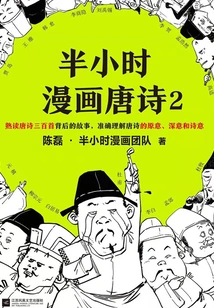
Half-hour Comic Tang Poetry 2
by Chen Lei·half Hour Comics Team
About This Novel
The final chapter of "Half-hour Comic Tang Poetry 2"! "Half-Hour Comics Tang Poems 2" is a new work by Chen Lei (pseudonym: Erhuanzi), the founder of the knowledge public account group with 7 million fans on the Internet. It is another popular science masterpiece after "Half-Hour Comics History of China" and "Half-Hour Comics World History"! Familiarize yourself with the stories behind 300 Tang poems and accurately understand the original meaning, profound meaning and poetic flavor of Tang poems. It all looks like a joke, but in fact it's all a test point! The much-anticipated poet Du Fu finally makes his appearance. In the first half of his life, he was a wild young man who "could be at the top of the mountain and could see all the small mountains." In the second half of his life, he was a sad old man who "the country is broken, the mountains and rivers are there, and the city is springy and has deep vegetation." Liu Zongyuan, a great poet, is actually the king of Duanzi. "Thousands of mountains and birds are gone, and thousands of people are gone" is just his daily practice. The change in the style of Bai Juyi's works is related to the change in his life attitude. When he was filled with righteous indignation in the court, he wrote "The Charcoal Seller" which exposed the darkness of reality. After staying away from the party strife, he wrote "Indiscriminate flowers gradually become charming, and Asakusa can have no horse hooves" while enjoying a leisurely life. Put aside complicated annotations and formulaic appreciation, and use a humorous way to tell serious knowledge. It may seem like a joke, but in fact it is all a test point, making you fall in love with Tang poetry again while laughing. Open this book to understand the joys and sorrows of the great poet's life, and feel the joy, anger, sorrow and joy behind the eternal famous lines!
Official Sources
What Readers Think
Rating
Community(0)
Official(6)Scraped 2mo ago
Wine enters the intestines Seven points turned into moonlight There are still three points that roar into sword energy Show off your words Just half of the prosperous Tang Dynasty
E-books are more expensive than paper books
The book is nice, but the price of e-books on QQ Reading is more expensive than paper books
Excellent
After reading one chapter, I just want to say one thing - hahahahahahaha my head is over. It's excellent. It tells a lot of complex literati knowledge in a vivid and interesting way using comics and text. (I want to read it all... But the coupon package is empty...)
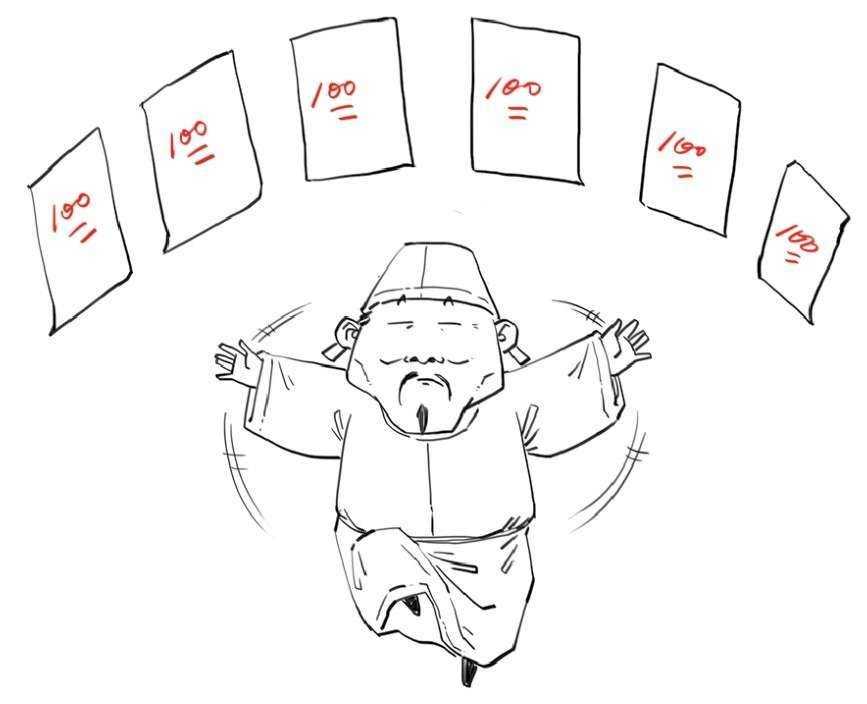
"The spring breeze is so exciting that horses are hoofed, and I can see all the flowers in Chang'an in one day." Meng Jiao, who passed the imperial examination three times and passed the imperial examination, described his joy in this way. The eternal famous saying "Whoever speaks of a blade of grass will reap three rays of spring light" is his reflection on his long-term wandering and no fixed abode.
Wearing suits and ties in the first half and rags in the second half is an appropriate way to describe Du Fu's life. However, all the good times and bad times are not reasons for us to be happy or desperate. It is precisely because of Du Fu's experience in the second half that he " The wine and meat in Zhumen stinks, and there are frozen bones on the road." "The country is broken by mountains and rivers, and the spring grass and trees are deep in the city." "There are tens of thousands of vast buildings, and the poor people all over the world are happy." Such feelings of concern for the country and the people became great and achieved the reputation of "the sage of poetry".
This book talks mostly about poets from the mid-Tang Dynasty and the late Tang Dynasty, such as Han Yu, Bai Juyi, Yuan Zhen, Meng Jiao, Liu Yuxi, Liu Zongyuan, Du Mu, Li Shangyin, etc. They are all the poets I was most familiar with when I was studying.
Rating
Community(0)
Official(6)Scraped 2mo ago
Wine enters the intestines Seven points turned into moonlight There are still three points that roar into sword energy Show off your words Just half of the prosperous Tang Dynasty
E-books are more expensive than paper books
The book is nice, but the price of e-books on QQ Reading is more expensive than paper books
Excellent
After reading one chapter, I just want to say one thing - hahahahahahaha my head is over. It's excellent. It tells a lot of complex literati knowledge in a vivid and interesting way using comics and text. (I want to read it all... But the coupon package is empty...)
"The spring breeze is so exciting that horses are hoofed, and I can see all the flowers in Chang'an in one day." Meng Jiao, who passed the imperial examination three times and passed the imperial examination, described his joy in this way. The eternal famous saying "Whoever speaks of a blade of grass will reap three rays of spring light" is his reflection on his long-term wandering and no fixed abode.
Wearing suits and ties in the first half and rags in the second half is an appropriate way to describe Du Fu's life. However, all the good times and bad times are not reasons for us to be happy or desperate. It is precisely because of Du Fu's experience in the second half that he " The wine and meat in Zhumen stinks, and there are frozen bones on the road." "The country is broken by mountains and rivers, and the spring grass and trees are deep in the city." "There are tens of thousands of vast buildings, and the poor people all over the world are happy." Such feelings of concern for the country and the people became great and achieved the reputation of "the sage of poetry".
This book talks mostly about poets from the mid-Tang Dynasty and the late Tang Dynasty, such as Han Yu, Bai Juyi, Yuan Zhen, Meng Jiao, Liu Yuxi, Liu Zongyuan, Du Mu, Li Shangyin, etc. They are all the poets I was most familiar with when I was studying.