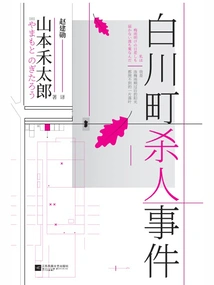
Shirakawa Town Murder Incident
About This Novel
In the 1930s, the sensational "Case of Four Murders in Shirakawa Town" occurred in Japan. The author narrates the entire process of the case in the form of a novel, including forensic identification, on-site inspection reports, autopsy identification, and court defense. It is real and gruesome. Four people died mysteriously in the incident, including Xiao Di, her goddaughter, and two neighbor children. It is a typical secret room murder case, and the only suspect is Xiao Di's lover, Guangchuan. On the day the four Xiao Di died, Guangchuan was with them and had no alibi. Xiao Di wrote in her suicide note that she and Guangchuan committed suicide. However, according to the on-site inspection results and expert appraisals, the deceased died in a strange manner and it was almost impossible to commit suicide. Therefore, the police arrested Guangchuan and conducted an investigation and trial that lasted nearly two years. In the end, Guangchuan was acquitted due to insufficient evidence. It is still unclear whether it was suicide or homicide.
Official Sources
What Readers Think
Rating
Community(0)
Official(1)Scraped 1mo ago
This is not "a clear conscience", but the judge believed the wrong evidence.
Let me start with the conclusion: it's still good-looking and deserves five stars; Interesting points: real case records in 1926 + photos of the scene and corpses + a large number of original case materials, which can give people a glimpse into the lives of the lower class people in Japan in the 1930s; Points to clear up: There are a lot of behaviors that stigmatize women, stigmatize the dead, and beautify crimes in the book. If you are particularly concerned about it, don't read it; Point of emotion: It turns out that Japanese lawyers had this litigious behavior nearly a hundred years ago Since a large amount of information in this book was provided by the suspect's lawyer (the lawyer later became the mayor), the author's position is definitely biased in favor of the suspect. It cannot even be said to be "biased". He is completely on the side of the suspect. Going back to the title, many people describe this case as "a clear-cut case," which is actually inaccurate because the forensic doctor who conducted the autopsy had given the most correct evidence at the earliest. However, several other expert witnesses muddied the waters, and the judge believed the wrong evidence. The case is still unsolved and there may be no chance to find out the truth in the future.
Rating
Community(0)
Official(1)Scraped 1mo ago
This is not "a clear conscience", but the judge believed the wrong evidence.
Let me start with the conclusion: it's still good-looking and deserves five stars; Interesting points: real case records in 1926 + photos of the scene and corpses + a large number of original case materials, which can give people a glimpse into the lives of the lower class people in Japan in the 1930s; Points to clear up: There are a lot of behaviors that stigmatize women, stigmatize the dead, and beautify crimes in the book. If you are particularly concerned about it, don't read it; Point of emotion: It turns out that Japanese lawyers had this litigious behavior nearly a hundred years ago Since a large amount of information in this book was provided by the suspect's lawyer (the lawyer later became the mayor), the author's position is definitely biased in favor of the suspect. It cannot even be said to be "biased". He is completely on the side of the suspect. Going back to the title, many people describe this case as "a clear-cut case," which is actually inaccurate because the forensic doctor who conducted the autopsy had given the most correct evidence at the earliest. However, several other expert witnesses muddied the waters, and the judge believed the wrong evidence. The case is still unsolved and there may be no chance to find out the truth in the future.