Spanish Empire
About This Novel
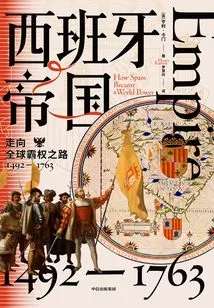
In 1492, Queen Isabella of Castile and King Ferdinand II of Aragon entered Granada, and the last Islamic state in the Iberian Peninsula fell. In the same year, Columbus, the navigator sponsored by Queen Isabella, landed in the New World. Spain, a kingdom composed of Castile and Aragon located in the southwestern corner of Europe, began to embark on the road to the rise of a great power. In the 16th century, Spain expanded aggressively in both the Old World and the New World. After the 17th century, the empire began to face a series of crises. Dutch and Portuguese independence and Native American resistance tore the empire apart from within. Externally, the rise of France ended Spanish hegemony on the European continent, and the rise of the Netherlands and Britain caused Spain to lose its maritime superiority. After the War of the Spanish Succession, the empire became a vassal of France. After the Seven Years' War, Spain was forced to cede land east of the Mississippi River to Britain. The empire began to retreat in America, and the afterglow of empire was approaching. This book reviews Spain's imperial path from 1492 to 1763, showing us a full picture of a composite maritime commercial empire established through marriage, conquest, trade and missionary work. The book holds a unique anti-Hispanocentric view and believes that the Spanish Empire is a common cause of the Spaniards, Italians, Germans, Belgians, Portuguese, Filipinos, American Indians and even the Chinese. Spain did not create the empire, but the empire created Spain. It is a new interpretation of the Spanish Empire in the 21st century.
Official Sources
What Readers Think
Rating
Community(0)
Official(1)Scraped 1mo ago
Learn about Spain
I went to Spain once and became interested in this country. I searched for this book and started reading it. This book is not a systematic introduction to Spain. It mainly tells the story of the development of the empire in the Middle Ages. However, it can also understand the character and culture of this country. It is worth reading.
Rating
Community(0)
Official(1)Scraped 1mo ago
Learn about Spain
I went to Spain once and became interested in this country. I searched for this book and started reading it. This book is not a systematic introduction to Spain. It mainly tells the story of the development of the empire in the Middle Ages. However, it can also understand the character and culture of this country. It is worth reading.