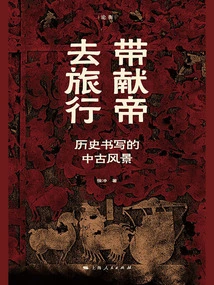
Traveling with Emperor Xian: Medieval Landscapes Written in History
by Xu Chong
About This Novel
After the Wei and Jin Dynasties, although the Western Jin Dynasty still regarded Cao Wei as the official orthodoxy, the situation began to change. Chen Shou's "Three Kingdoms" juxtaposed the three kingdoms of Wei, Shu, and Wu, but it was accepted by the elites of both the government and the public. This is a dangerous signal in itself. The destruction of Wu in the Western Jin Dynasty completed the unification of the north and the south, and provided a stage for the circulation of many rumors written from the standpoint of an enemy country during the Sun Wu era, making them gradually enter the mainstream field of vision. When they arrived at the southern crossing of Yongjia, the Jiankang elite repeatedly reviewed Zhongzhou's past, and the situation was finally completely reversed. Xi Chizhi's "Han, Jin, Spring and Autumn" traces its origins, and Fan Ye's "Book of the Later Han" establishes its origins. We have witnessed the decline of Cao Wei's royal power in historical writing; Emperor Xian himself was sacrificed to this belated "revenge" in a dramatic tragic image. Focusing on the two major themes of "Han and Wei Revolutions" and "Northern Wei Epitaphs", this book conducts a multi-level exploration of Chinese history from the 3rd to 6th centuries. The so-called "taking Xian Emperor to travel" focuses not on Xian Emperor Liu Xie's personal travel experience, but on the path and scenery of the journey itself. The author wanders between the "surface", "inside", "inside" and "outside" of the text, trying to liberate the "landscape" from the multiple constraints of historical writing and reproduce the "blind tone".
Official Sources
What Readers Think
Rating
Community(0)
Rating
Community(0)