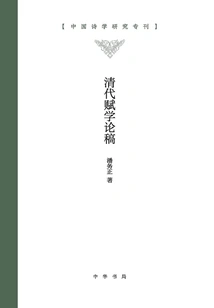
Essays on Fu Studies in the Qing Dynasty
by Pan Wuzheng
About This Novel
The field of research on Ci and Fu has always focused on the great Fu of the Han Dynasty and the Tang and Song Dynasties. Although there was attention paid to Ci and Fu in the Ming and Qing Dynasties, it could not be compared with the previous generations. This book focuses on Fu studies in the Qing Dynasty, with a view to promoting the deepening of research in this field. This book discusses from five aspects: First, the cultural policy and the revival of Fu studies in the early Qing Dynasty, especially the Bo Xue Hong Ci examination held in the 18th year of Kangxi's reign, in order to attract Han scholars to become officials and use poems to compose propositions. This move stimulated the flourishing of fu-study creation and theory. Second, in the Qing Dynasty, Fu was emphasized in Guange Hanyuan, and Fu was tested in court examinations, official classes, loose examinations, and major examinations. Therefore, the study of Fu was an important lesson for people at that time. For this reason, various collections of poems from museums and pavilions emerged, and the style of Hanyuan poems led the trend in the literary world. Third, due to Hanyuan's examination of Fu, the discussion of Fu studies became the focus of Fu theory in the Qing Dynasty, and the selection of Fu paid special attention to the revelation of Fu methods. Fourthly, compared with previous generations, Fu studies in the Qing Dynasty were not only popular in palaces and pavilions, but also highlighted a strong regional flavor. Fifth, the relationship between Fu studies and other art forms in the Qing Dynasty was extremely close. The phenomenon of calligraphy Fu, painting Fu and writing novels using Fu was relatively popular, and Fu style branched into various art categories. This book combines literature research with theoretical explanation, reveals the development patterns of Fu studies in the Qing Dynasty through case studies, and strives to make up for the shortcomings of Fu studies.
What Readers Think
Rating
Community(0)
Rating
Community(0)