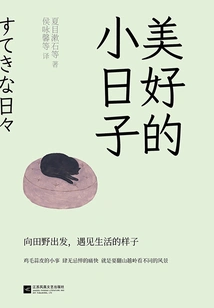
Beautiful Little Days (full Collection)
by (japan) Ryunosuke Akutagawa, Osamu Dazai, Soseki Natsume, Etc.
About This Novel
Shopping around town, watching competitions, climbing mountains, doing flowers and plants, and appreciating people's feelings. The simpler the day, the more delicious it is. This book contains the five themes mentioned above, each theme has a single book, namely: "Nostalgic Slow Time", "Holiday Fun Competition", "Longing for the Mountain Style", "Just Love to Make Flowers and Plants", and "The Flavor of Life".
Official Sources
What Readers Think
Rating
Community(0)
Official(3)Scraped 2mo ago
All good things begin with creation, with the beginning, with oneself. The beautiful little days have come quietly. All the good things in the book will become the past, and the present is the future. Life is created by oneself, and so is a beautiful life. Work hard and create beauty.
The author is Nagai Kafeng, a literary giant who is good at depicting the scenery of Tokyo. While he was nostalgic for the Sumida River in the past, he also described the current appearance of the Sumida River, which shows Hefeng's deep feelings for the Sumida River. While looking at the new city streets, I also remember, sigh and reminisce about the past customs.
Tokyo, Kyoto and Osaka, three big cities with very different personalities, play an extremely important role in Japanese history. They are sometimes in opposition, sometimes complementary, and sometimes echoing. Countless sparks collided between them, but they would not be separated in the end.
Rating
Community(0)
Official(3)Scraped 2mo ago
All good things begin with creation, with the beginning, with oneself. The beautiful little days have come quietly. All the good things in the book will become the past, and the present is the future. Life is created by oneself, and so is a beautiful life. Work hard and create beauty.
The author is Nagai Kafeng, a literary giant who is good at depicting the scenery of Tokyo. While he was nostalgic for the Sumida River in the past, he also described the current appearance of the Sumida River, which shows Hefeng's deep feelings for the Sumida River. While looking at the new city streets, I also remember, sigh and reminisce about the past customs.
Tokyo, Kyoto and Osaka, three big cities with very different personalities, play an extremely important role in Japanese history. They are sometimes in opposition, sometimes complementary, and sometimes echoing. Countless sparks collided between them, but they would not be separated in the end.