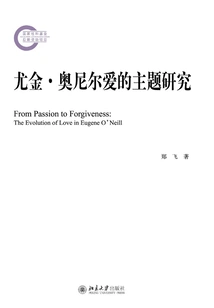
A Study on the Theme of Love by Eugene O'neill
by Zheng Fei
About This Novel
The play "Mourning" by Eugene O'Neill, a leading American dramatist in the 20th century, has always been the focus of drama criticism. The academic circles have explored the source of the tragedy of the Mennan family in the trilogy from various angles and with novel methods. However, among the numerous reviews, there are relatively few works that systematically analyze the origins of the Meng family's tragedy from the perspective of normal love. Looking at Eugene O'Neill's drama creations, more than 40 of his 50 or so works describe love from the front or side. What O'Neill describes is not the naked desires between people, but what he pursues and deeply explores is the true feelings between people. This book aims to unearth the tragic roots of the Mennan family in "Mourning" and explore O'Neill's original intention to replace the "external supernatural view of fate believed by the Greeks" with the modern psychological view of "internal factors" of people, that is, to find out the essence of this "psychological factor" that affects the fate of modern people. In view of this, the author of this book compares and analyzes the "Lamentation" trilogy with the "Oresteia" trilogy of the ancient Greek tragic poet Aeschylus, pointing out that while the characters and structures in the two trilogies are basically similar, Aeschylus highlights the theme of "fate"; correspondingly, the modern playwright Eugene O'Neill places more emphasis on "psychological factors." This "psychological factor" is expressed as "love" in "Mourning". It is the mishandling of love by the Meng family: a series of love distortion processes from the beauty of love → the lack and suppression of love → the distortion and mutation of love → love turning into hate, which led to the tragedy of love in the Meng Nan family and became the "mourning of love", which is the theme of this book.
Official Sources
What Readers Think
Rating
Community(0)
Rating
Community(0)