Suitable For: Understand Emerging Practical Economics from School Selection, Blind Matching, and License Auctions
About This Novel
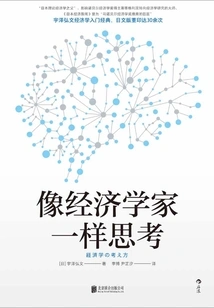
How to get things into the right hands has long been a problem economists have grappled with. In the general commodity market, price determines the distribution of commodities: if you can afford the price, you can get what you want. However, due to ethical or fair considerations, some markets do not or cannot mark prices. At this time, the task of economists is to design reasonable "game rules" to guide participants to truly express their wishes and allocate resources effectively. In 2012, the Nobel Prize in Economics finally pointed to the field of "market design" that creatively solved the above problems. This theory is of great practical value, saving the lives of many patients with kidney failure, improving the troublesome school selection system for city managers, and even bringing up to 78 billion US dollars in license auction revenue for the U. S. Government... The author is a new leader in the Japanese economics circle, easily picking out the skeleton of real problems, simplifying them into cases that can be analyzed, and sequentially revealing the inner logic of unilateral matching, bilateral matching and auction problems. Immersing yourself in the book, you will be amazed that such a seemingly "simple" method can release such huge energy, and you will also be impressed by the layeredness and creativity of economists' thinking.
Official Sources
What Readers Think
Rating
Community(0)
Rating
Community(0)