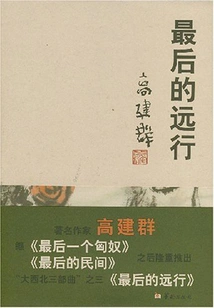
The Final Journey
by Gao Jianqun
About This Novel
CCTV's original folk songs are popular all over the country, and the original novels in northwest China will make people have endless aftertaste. This book is the third part of the author's "Great Northwest Trilogy". It is a long masterpiece that combines traditional novels, martial arts novels, and detective novels with strong readability and literary appreciation value. The novel uses a folk contract called "Return Agreement" as an opportunity to tell the story of a female corpse being stolen from a tomb, traveling on an ancient plateau road for seven days and seven nights, and finally being returned to her ex-husband. That which stands quietly under the sky, that which is noisy in the flow of time, that which shouts earth-shattering songs with the voices of sheep in response to the sounds of cattle, is this my northern Shaanxi, the land of my dear parents? Oh, this desolate, barren, pale, heroic, restless, and sacrificial land, this miraculous product of nature, this inconspicuous corner of the vast land of 9.6 Million square kilometers, this golden plateau. Oh, Shaanbei, my harp plays so passionately for you, my footsteps are so hasty, do you feel the throbbing of my heart? Do you see the tears hanging on my cheeks? Oh, Northern Shaanxi, with the same deep affection as a son for his mother, I pay my respects to you who come from far away and then go away from far away. You are like a graceful and magnificent celestial car driven by the sun god, marching majestically in the long river of history and the process of time. You roll forward with a hidden smile, revealing your figure in the middle of the clouds. All living things are like ants infesting your huge and fragmented body, hoping and disappointed, disappointed and hoping. Oh, Northern Shaanxi! --Quoted from "The Last Huns". Tradition is disappearing, classical spirit is disappearing, and yesterday's culture is disappearing. People like Zhang Jiashan may be the last knights wandering on the plateau. Decades and hundreds of years later, children will probably only see this kind of characters from fairy tales told by their grandmothers. This is a man of great wisdom, great humor, and a man with the mark of tragedy on his forehead. His chest is filled with something compassionate and worthy of our respect. This kind of thing is called "kindness". Because of this, all smiles have a bitter connotation. The character Zhang Jiashan is reminiscent of Don Quixote on the desolate Spanish plateau. Yes, they have a lot in common. They are both noble and kind, shrewd and stupid. They all try to correct society with medieval dreams. However, compared with Don Quixote, in our Zhangjiashan era, there are no horses that can take his place - not even horses that are skinny and angular and can fall down when the wind blows. Therefore, he seems more humble and practical, with more mud on his round-top cloth shoes. "Today, the whole city is dressed in festive costumes, the blacksmith is hammering out the music in the steel, the girls are dancing, and everyone is passing on a touching message: one of them is going to set off and conquer the world!" - These are the words people use for Don Quixote. If people apply the same words to Zhang Jiashan, I will be grateful to him. --Quoted from "The Last Folk" Gao Jianqun, born in December 1953, his ancestral home is Lintong, Shaanxi Province. Famous contemporary writers. A rare author with a sense of sublimity, classical spirit and ideal attention in the Chinese literary world. His main representative works include "The Last Huns", "Sixty-Six Towns", "Secrets of the Ancient Road", "Sad Face Knight", "Distant White House", "Dashundian", "Huma Beifong Desert", etc. In 2004, he was named the most influential contemporary Chinese writer by "Chinese Writers".
Official Sources
What Readers Think
Rating
Community(0)
Rating
Community(0)
