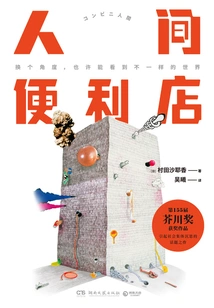
Human Convenience Store
by K
About This Novel
This book is a self-reflective realist novel. It mainly tells the story of Furukura Keiko, a thirty-six-year-old single woman who did not find a job after graduating from college and worked in a convenience store for eighteen years. During this period, many store employees came and went, and the store manager was replaced by the eighth one. Only Keiko was always there. She eats bentos sold in convenience stores every day, listens to the clicking sound of the cash register every day, looks at the clean storefront every day, greets customers with welcome words every day, and lives such a peaceful and happy life every day. Keiko's family, colleagues, and friends of the same age all found it incredible. Only Keiko knows that everything is changing, and only the convenience store that remains unchanged can give herself comfort. Suddenly one day, the new clerk Bai Yu broke into Keiko's life. "It's too strange for you to live like this," he said. Keiko began to think, is her life abnormal? To interrogate modern social life and analyze the dividing line between normal and abnormal, a realistic novel was born.
Official Sources
What Readers Think
Rating
Community(0)
Official(26)Scraped 1mo ago
Everyone has pain that is destined to be incomprehensible to others
The protagonist of the story, Keiko, started working in a convenience store when she was in college. She has been working in a convenience store for eighteen years. Not only did she lose many clerks, but she also changed store managers several times. Now she is the eighth. She is a really smooth store manager and a tough-as-nails Keiko. In the process of working in a convenience store, she often used her parents or her own poor health as excuses to try to make others feel that doing this job was excusable. However, it was not a big deal if people did not understand her job. What was more important was that Keiko lacked perception and lost human emotions. When Keiko saw a dead bird, she threatened to eat it; her classmates hit the bird on the head with a shovel during a fight; the teacher got angry in class and Keiko pulled the teacher's skirt. When she was working in a convenience store, she had a chance to visit her sister. Her sister said she would pay more attention to her little nephew when she had time, but she felt very strange. Why should she pay more attention to this little guy? When her nephew was crying, Keiko looked at the knife beside her and thought, why did he need to be coaxed when he could simply calm him down? Seeing this scene reminded me of Ye Zang, who was unqualified in the world. I don't know if it's my preconceived notions that always lump people with such personality defects together, or maybe it's because Dazai Osamu's literary influence was so profound that many later writers unconsciously imitated him. Both Keiko and Ye Zang are borderline personalities. They don't have much perception of people, and they even have extreme ways of dealing with them. For people like Keiko, the vast majority of normal people choose to reject her. Whether it is her colleagues at home or convenience stores, they will think that there is something wrong with her and that she is an anomaly. This world is an ancient society wearing the skin of modern society. As long as you wear the skin of ordinary people and act according to the employee manual, you will not be kicked out of the group, nor will you be treated as a burden. In other words, the tolerance of this society is too low. People who do not conform to modern values are destined to be criticized. A normal person's greatest interest is to criticize abnormal people. Because of an accident, Keiko and Bai Yu live together, but they attract the attention of people around them. It seems that only in this way can Keiko be regarded as a normal person. Faced with the world's incomprehension, she can't understand others, and others can't understand her. In her eyes, only by working wholeheartedly can she be passionate and find the meaning of her life. This is probably why she has worked in a convenience store for so long, and she has also placed her own emotions in it. After Keiko left her job, she was confused day and night. She lost the habit of living in a convenience store and everything became unnatural. Later, during the interview process, she entered a convenience store and was able to listen to the voice of the convenience store. She could sense the soul of the convenience store, know how items should be placed, how services should be provided, etc. This may be the result of her many years of work. She cannot do without convenience stores, and convenience stores also need her. No one can work in this industry conscientiously for eighteen years and devote their youth to convenience stores. As for being said to be eliminated by society, being self-isolated and unwilling to step out of the comfort zone, but what does it matter? Isn't it important for a person to do work that he thinks is meaningful and maintain it throughout his life? After reading the last letter written by Keiko to the convenience store, the emotions revealed have surpassed normal human emotions in some aspects. I remember watching The Shape of Water not long ago, in which a marginalized person falls in love with someone who is considered an alien by everyone. This kind of love is inherently transcendent. Isn't this the case for Keiko? Nothing is more important than finding one's own value in a convenience store. When everyone thinks there is something wrong with her, only the convenience store never abandons her. This is probably the greatest trust and encouragement for her. I think Keiko will still go back to work in the convenience store. She feels that her hands and feet exist for the convenience store, and she feels that for the first time, she on the glass has become a meaningful creature. Keiko could clearly feel that all the cells in her body were echoing the music echoing on the other side of the glass, ready to move under her skin. This is the third book about borderline personality that I have read this year. The first two were "Disqualified from the World" and "Abandoned Songzi". Although they are both borderline personalities, they are different. Ye Zang is a person who has hated human beings since he was a child and believes that human beings are ugly. He actively hopes to be excluded, but is afraid of offending others, so he can only play a clown to please others. Over time, this mask cannot be taken off, which also leads to his tragedy. Song Zi is a person who has lacked love since childhood, or is unable to perceive his own love. He has been pursuing his own love all his life. In the constant pursuit, he lost himself, and in the end it was a fruitless love. Keiko's problem is that she doesn't know what love is, so she can't understand it. In her eyes, all emotions are like a stranger talking to her. The first two died with pain, but only Keiko found his own meaning in the end and lived a brand new self. Even though he was different from ordinary people in many ways, as long as he pursued what he wanted, what did the worldly concepts mean? In fact, from another perspective, when she understands the meaning of life, she becomes normal, understands what emotions are, and finds a true self.
Diversity of life, bullying the few with more
As the most powerful animal among all spirits, man's greatest characteristic is choice. There are thousands of ways to live, and it doesn't matter what is right or wrong. As long as it suits you and does not harm the public, you have the right to be respected. It's a pity that there are too many self-righteous people who think they are right, but their own lives are unclear, and they also point fingers and criticize the lives of others. This is just the victory of the majority over the minority. If it were the other way around, would we also be accused of why we need to work, why we need to get married, and why we need to have children? The foundation of respect is to respect each individual, not the rights and wrongs of the majority.
Why can't we live in our own way without affecting others?
Society should tolerate all kinds of people, so what if they are different from ordinary people? Everyone should have the right to choose their own life, and the same goes for Keiko. Just because she didn't find a regular job, didn't follow the lifestyle of the people around her, get married and have children, will she definitely be excluded from society? I thought a lot about it. As a store clerk, Keiko is undoubtedly an excellent running part. There is a place for her in this city. However, she cannot be a store clerk for the rest of her life! What should she do in the future? Want to know the continuation of this story. . . . . .
The amazing thing is that she has worked in a convenience store for eighteen years, and she has been the store manager for eight times and it has never been her turn😓
In Japan, there seems to be no concept of retirement.
You can live your own way, but in the end more people will choose to compromise, because humans have to live a hundred years, while most animals only have a dozen years.
No money to buy
Can't be divided into chapters?
The world is just a convenience store made up of gears and patients, right?
Read carefully, savor carefully
There really are people like this in society, who repeat this kind of work every day that does not consume too many brain cells and can make themselves happy. Personally, I don't think it's a big deal. Just be happy. After all, you can still support yourself, which is much better than that man who is just a freeloader!
Ha ha
Very novel, loving one thing wholeheartedly, regardless of worldly opinions
It feels good!
Rating
Community(0)
Official(26)Scraped 1mo ago
Everyone has pain that is destined to be incomprehensible to others
The protagonist of the story, Keiko, started working in a convenience store when she was in college. She has been working in a convenience store for eighteen years. Not only did she lose many clerks, but she also changed store managers several times. Now she is the eighth. She is a really smooth store manager and a tough-as-nails Keiko. In the process of working in a convenience store, she often used her parents or her own poor health as excuses to try to make others feel that doing this job was excusable. However, it was not a big deal if people did not understand her job. What was more important was that Keiko lacked perception and lost human emotions. When Keiko saw a dead bird, she threatened to eat it; her classmates hit the bird on the head with a shovel during a fight; the teacher got angry in class and Keiko pulled the teacher's skirt. When she was working in a convenience store, she had a chance to visit her sister. Her sister said she would pay more attention to her little nephew when she had time, but she felt very strange. Why should she pay more attention to this little guy? When her nephew was crying, Keiko looked at the knife beside her and thought, why did he need to be coaxed when he could simply calm him down? Seeing this scene reminded me of Ye Zang, who was unqualified in the world. I don't know if it's my preconceived notions that always lump people with such personality defects together, or maybe it's because Dazai Osamu's literary influence was so profound that many later writers unconsciously imitated him. Both Keiko and Ye Zang are borderline personalities. They don't have much perception of people, and they even have extreme ways of dealing with them. For people like Keiko, the vast majority of normal people choose to reject her. Whether it is her colleagues at home or convenience stores, they will think that there is something wrong with her and that she is an anomaly. This world is an ancient society wearing the skin of modern society. As long as you wear the skin of ordinary people and act according to the employee manual, you will not be kicked out of the group, nor will you be treated as a burden. In other words, the tolerance of this society is too low. People who do not conform to modern values are destined to be criticized. A normal person's greatest interest is to criticize abnormal people. Because of an accident, Keiko and Bai Yu live together, but they attract the attention of people around them. It seems that only in this way can Keiko be regarded as a normal person. Faced with the world's incomprehension, she can't understand others, and others can't understand her. In her eyes, only by working wholeheartedly can she be passionate and find the meaning of her life. This is probably why she has worked in a convenience store for so long, and she has also placed her own emotions in it. After Keiko left her job, she was confused day and night. She lost the habit of living in a convenience store and everything became unnatural. Later, during the interview process, she entered a convenience store and was able to listen to the voice of the convenience store. She could sense the soul of the convenience store, know how items should be placed, how services should be provided, etc. This may be the result of her many years of work. She cannot do without convenience stores, and convenience stores also need her. No one can work in this industry conscientiously for eighteen years and devote their youth to convenience stores. As for being said to be eliminated by society, being self-isolated and unwilling to step out of the comfort zone, but what does it matter? Isn't it important for a person to do work that he thinks is meaningful and maintain it throughout his life? After reading the last letter written by Keiko to the convenience store, the emotions revealed have surpassed normal human emotions in some aspects. I remember watching The Shape of Water not long ago, in which a marginalized person falls in love with someone who is considered an alien by everyone. This kind of love is inherently transcendent. Isn't this the case for Keiko? Nothing is more important than finding one's own value in a convenience store. When everyone thinks there is something wrong with her, only the convenience store never abandons her. This is probably the greatest trust and encouragement for her. I think Keiko will still go back to work in the convenience store. She feels that her hands and feet exist for the convenience store, and she feels that for the first time, she on the glass has become a meaningful creature. Keiko could clearly feel that all the cells in her body were echoing the music echoing on the other side of the glass, ready to move under her skin. This is the third book about borderline personality that I have read this year. The first two were "Disqualified from the World" and "Abandoned Songzi". Although they are both borderline personalities, they are different. Ye Zang is a person who has hated human beings since he was a child and believes that human beings are ugly. He actively hopes to be excluded, but is afraid of offending others, so he can only play a clown to please others. Over time, this mask cannot be taken off, which also leads to his tragedy. Song Zi is a person who has lacked love since childhood, or is unable to perceive his own love. He has been pursuing his own love all his life. In the constant pursuit, he lost himself, and in the end it was a fruitless love. Keiko's problem is that she doesn't know what love is, so she can't understand it. In her eyes, all emotions are like a stranger talking to her. The first two died with pain, but only Keiko found his own meaning in the end and lived a brand new self. Even though he was different from ordinary people in many ways, as long as he pursued what he wanted, what did the worldly concepts mean? In fact, from another perspective, when she understands the meaning of life, she becomes normal, understands what emotions are, and finds a true self.
Diversity of life, bullying the few with more
As the most powerful animal among all spirits, man's greatest characteristic is choice. There are thousands of ways to live, and it doesn't matter what is right or wrong. As long as it suits you and does not harm the public, you have the right to be respected. It's a pity that there are too many self-righteous people who think they are right, but their own lives are unclear, and they also point fingers and criticize the lives of others. This is just the victory of the majority over the minority. If it were the other way around, would we also be accused of why we need to work, why we need to get married, and why we need to have children? The foundation of respect is to respect each individual, not the rights and wrongs of the majority.
Why can't we live in our own way without affecting others?
Society should tolerate all kinds of people, so what if they are different from ordinary people? Everyone should have the right to choose their own life, and the same goes for Keiko. Just because she didn't find a regular job, didn't follow the lifestyle of the people around her, get married and have children, will she definitely be excluded from society? I thought a lot about it. As a store clerk, Keiko is undoubtedly an excellent running part. There is a place for her in this city. However, she cannot be a store clerk for the rest of her life! What should she do in the future? Want to know the continuation of this story. . . . . .
The amazing thing is that she has worked in a convenience store for eighteen years, and she has been the store manager for eight times and it has never been her turn😓
In Japan, there seems to be no concept of retirement.
You can live your own way, but in the end more people will choose to compromise, because humans have to live a hundred years, while most animals only have a dozen years.
No money to buy
Can't be divided into chapters?
The world is just a convenience store made up of gears and patients, right?
Read carefully, savor carefully
There really are people like this in society, who repeat this kind of work every day that does not consume too many brain cells and can make themselves happy. Personally, I don't think it's a big deal. Just be happy. After all, you can still support yourself, which is much better than that man who is just a freeloader!
Ha ha
Very novel, loving one thing wholeheartedly, regardless of worldly opinions
It feels good!