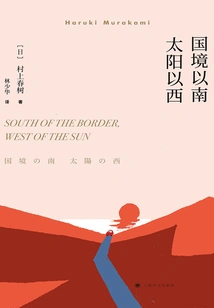
South of the Border West of the Sun
by H
About This Novel
"The day when the pursuit is gained is the day when it ends, and the process of searching is also the process of loss." "South of the Border, West of the Sun" tells the story of the thirty-seven-year-old "I" who not only has a successful career, but also has a beautiful wife and a lovely daughter. But "I" always miss my childhood sweetheart Shimamoto. The two missed each other by mistake when they were young. Twenty years later, Shimamoto, who had experienced a failed marriage, appeared in front of "me" again, and the two quickly fell in love. However, just when "I" was ready to risk everything and abandon everything to be with Shimamoto, Shimamoto was nowhere to be found. Fortunately, the already broken marriage was supported and repaired with the forgiveness of his wife. After going round and round, my childhood memories were finally stored somewhere in my heart, and everything returned to normal.
Official Sources
What Readers Think
Rating
Community(0)
Official(5)Scraped 14d ago
South of the border, west of the sun The first work I read by Haruki Murakami was "Norwegian Wood", and then I read "Kafka on the Shore". This is the third book. In Murakami's books, the age of the characters seems to be irrelevant. Whether they are "the toughest fifteen-year-old boy in the world" or a twenty-year-old college student involved in a love tragedy, they all seem to be facing the same dilemma as the protagonist of this book - how to discover themselves and recover the afterimages of the past. Kafka Tamura found another side of himself in Saeki, and the "I" in "South of the Border, West of the Sun" also found his past in the "non-existent" childhood playmate. But when the story comes to an end, everything starts again. Perhaps as he wrote in another book, "Soon, you fall asleep. When you wake up, you will become part of a new world." The protagonist achieves self-consistency after escaping from the so-called illusion, and everything is different. But only the future has changed, but the pain in the past still exists. This seems to be the answer he gave. Thanks to Haruki Murakami for bringing another interpretation of life to an ordinary person. This answer may not be correct, but it is also precious. I am also grateful to Teacher Lin Shaohua for his translation, which opened the door to understanding Japanese literature for us.
This is by far the best novel by Murakami that I have discovered. Delicate descriptions, exquisite metaphors, and very real inner monologues made me linger. 🤑🤑🤑
ruthless
Hard, hard, hard, hard, hard, hard, hard
Not bad, so-so.
The protagonist is a **, cowardly and disgusting, and the harm he caused to other people can be ignored by just saying, "I am such a person." Brief review, disgusting stuff
Rating
Community(0)
Official(5)Scraped 14d ago
South of the border, west of the sun The first work I read by Haruki Murakami was "Norwegian Wood", and then I read "Kafka on the Shore". This is the third book. In Murakami's books, the age of the characters seems to be irrelevant. Whether they are "the toughest fifteen-year-old boy in the world" or a twenty-year-old college student involved in a love tragedy, they all seem to be facing the same dilemma as the protagonist of this book - how to discover themselves and recover the afterimages of the past. Kafka Tamura found another side of himself in Saeki, and the "I" in "South of the Border, West of the Sun" also found his past in the "non-existent" childhood playmate. But when the story comes to an end, everything starts again. Perhaps as he wrote in another book, "Soon, you fall asleep. When you wake up, you will become part of a new world." The protagonist achieves self-consistency after escaping from the so-called illusion, and everything is different. But only the future has changed, but the pain in the past still exists. This seems to be the answer he gave. Thanks to Haruki Murakami for bringing another interpretation of life to an ordinary person. This answer may not be correct, but it is also precious. I am also grateful to Teacher Lin Shaohua for his translation, which opened the door to understanding Japanese literature for us.
This is by far the best novel by Murakami that I have discovered. Delicate descriptions, exquisite metaphors, and very real inner monologues made me linger. 🤑🤑🤑
ruthless
Hard, hard, hard, hard, hard, hard, hard
Not bad, so-so.
The protagonist is a **, cowardly and disgusting, and the harm he caused to other people can be ignored by just saying, "I am such a person." Brief review, disgusting stuff
