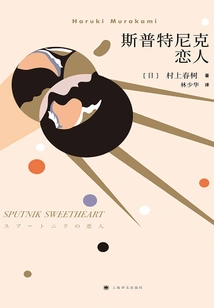
Sputnik Lovers
About This Novel
"This artificial satellite, which means 'travel companion', uses people's loneliness as nourishment to maintain its operation." "Sputnik Lovers" is a novel written by Japanese writer Haruki Murakami, which explores the nature of human loneliness. "I" like the girl Sumire who is addicted to writing, but Sumire is in love with her fellow musician, Min, who is 17 years older, and becomes Min's traveling companion in Europe with a heart of love. But after her confession to Min was rejected, Sumire mysteriously disappeared on a Greek island. Because she discovered that the "lover" turned out to be just a body, and the soul had already disappeared in a thrilling night. Girls who are desperate for heterosexual love also cannot pursue same-sex love. In the end, only the young man who had been searching for her in vain was left to mutter the question: "Why do people have to be so lonely?" The young man who had unrequited love for Sumire also muttered to himself, "Isn't it possible that this planet relies on people's loneliness as nourishment to maintain its operation?"
What Readers Think
Rating
Community(0)
Official(2)Scraped 3d ago
After reading "Norwegian Wood", I then read "Sputnik Lovers". Compared with "Norwegian Wood", "Sputnik Lovers" has a more ambiguous treatment of the image of "I", from a participant in the plot to a "spectator", and the images of the two heroines are closer, making it impossible to tell whether they are the same person. The whole work reveals a more non-story, and even love is vague, like the mist in the morning, the sun rises, but the scenery behind can't be seen.
I like Harukami Muraki's works. The writer's profound brushwork makes you feel like you are on the scene, the writing is vivid and the structure is novel.
Rating
Community(0)
Official(2)Scraped 3d ago
After reading "Norwegian Wood", I then read "Sputnik Lovers". Compared with "Norwegian Wood", "Sputnik Lovers" has a more ambiguous treatment of the image of "I", from a participant in the plot to a "spectator", and the images of the two heroines are closer, making it impossible to tell whether they are the same person. The whole work reveals a more non-story, and even love is vague, like the mist in the morning, the sun rises, but the scenery behind can't be seen.
I like Harukami Muraki's works. The writer's profound brushwork makes you feel like you are on the scene, the writing is vivid and the structure is novel.