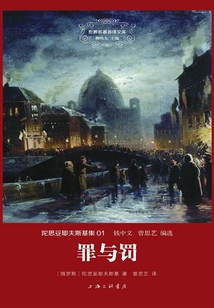
P
by G
About This Novel
In a five-story apartment in the Petersburg slums, Raskolnikov, a poor student, lived. He originally studied in the law department, but was forced to drop out because he could not afford the tuition fees. Now he relies on the money saved by his mother and sister from their tight living expenses to survive. He hasn't paid rent for a long time. Recently, the landlady not only stopped providing him with food, but also pressed for rent. At this time he met Marmeladov, a young civil servant. Marmeladov fell into a desperate situation due to unemployment, and his eldest daughter Sonia was forced to become a street prostitute. Raskolnikov did not want to be manipulated like Marmeladov, and he planned to use "experiments" to prove that he was an "extraordinary person." After Raskolnikov committed the murder, he was in a painful conflict and could not get rid of his inner fear. He felt that all his original good feelings were wiped out. This is a punishment of conscience that is more severe than legal punishment. He realized that his "experiment" had failed. So he came to Sonia with a painful heart. Inspired by Sonia's religious thoughts, he told her the truth and motives of the crime. Under Sonia's persuasion, he surrendered to the police. Raskolnikov was sentenced to eight years of hard labor and came to Siberia. Soon, Sonia also came there. One morning, the two met by the river. They were determined to believe in God, endure all suffering with repentance, and gain spiritual rebirth.
Official Sources
What Readers Think
Rating
Community(0)
Official(29)Scraped 2mo ago
Suffering and Redemption--Comments on "Crime and Punishment"
Hugo described such a world for us in his "Les Misérables" - poverty makes men miserable, hunger makes women degraded, and darkness makes children weak. Such a tragic world also appears in Dostoevsky's "Crime and Punishment". The corruption and pathology of society will inevitably lead to the distortion and depravity of human nature. Everyone living in it will be more or less contaminated with the bad habits of that society, and everyone also has his own crime and punishment in his heart. Both depict the distortion and depravity of human nature, as well as the recovery of human nature through redemption. The difference is that the former is only a one-way redemption, while the latter is a two-way redemption. Raskolnikov witnessed the darkness in Petersburg: the Neva River was rolling with dirty water, and female workers were desperate and drowned themselves in the river; impoverished government employees were hit and killed by carriages; women who were driven crazy forced their children to sell and sing on the street... And he It seems that killing the old widow who smells of copper and wants to squeeze the last drop of blood from the poor seems to be the only way out, otherwise his ending will be as tragic as Marmeladov's death under the wheel of the carriage, but his conscience is tormenting him all the time. If you read the text of "Crime and Punishment" carefully, you will see that Raskolnikov is first of all a Russian youth who thinks actively but is in pain and uneasiness, who devotes himself to the resistance struggle but has not found the ideal path. Committed to challenging the inhumane social reality and "crossing over" the inhumane laws of survival is the purpose of this character's entire life. He searched for this "crossover" path in the double blow of "crime and punishment"; his conscience did not admit that he had committed crimes against society, but he suffered endlessly because his theory started from humanism but ended up being anti-humanism. Crossing passion and superhuman will, denying cannibalism and killing oneself, asking society to recognize himself and "anything is allowed", as well as the awareness of all these conflicting and incredibly entangled consciousnesses, and the clear awareness that these "cells" of consciousness with various directions can coexist in a person's mind. These difficult-to-dissolve complexes make Raskolnikov extremely unfortunate. From this point of view, the artistic image of Raskolnikov is multi-dimensional and profound: he is a modern personality with strong spiritual energy, quick to think and dare to challenge; a rebel committed to transcending the "alienated" survival laws and inhumane real social value standards; a tragic hero who transcends his own lofty ideals and encounters loss in the transcendence of society; an explorer who constantly pursues the ideal path of transcendence in the fusion of various consciousnesses, that is, a completely humanistic transformation of real life. The three levels of resistance, loss, and exploration are intertwined with each other and constitute the aesthetic connotation of Raskolnikov's "this" character. The three different directions of consciousness, resistance, loss, and exploration, are like three voices, which are contradictory and conflicting but also interactive and mutually reinforcing, composing the "one" character of Raskolnikov. The heroine Sonia in the book appears as the embodiment of suffering. Her father was weak and incompetent, her mother was unreasonable, and she had three underage siblings. The burden of the family fell on her early. In order to make ends meet, she had to put aside her dignity as a woman and embarked on the path of prostitution in humiliation. However, she did not complain about all this unfair treatment, but endured it silently. The darkness of society did not allow her to cry out sadly. God became the only comfort in her soul. Sonia's experience was the sharpest indictment of the world. In the novel, Raskolnikov cannot escape the punishment of his conscience. He is lost on the road of denying goodness. He is denying goodness for the sake of goodness. He asks himself why not everyone is happy? But while he destroyed others, he also destroyed himself. As Raskolnikov was dragged into the abyss step by step, he heard the call from Sonia, which was like a ray of light in the dark kingdom, lighting up Raskolnikov's path to redemption. Under Sonia's guidance, Raskolnikov took the cross of suffering and embarked on a path of redemption that uses suffering to purify the soul. Throughout the entire novel, this is not only a story about crime and punishment, but more about redemption. From this we can feel the severity of self-examination and the difficulty of redemption. However, this is solemn and great, embodying the highest meaning of human existence.
Commentary
I opened this book at random, but I couldn't put it down when I picked it up. The translated text fits the Chinese context very well. By describing a student's poverty-stricken life world and his imaginative spiritual world, the author depicts a flesh-and-blood but pale character, and carefully describes his events and psychology before, during and after the crime, making him feel It is as if we are immersed in the situation, and it turns out that the torture of conscience is so painful. This can be understood why the people who made mistakes in some news said in interviews that they had not slept for many years, and were frightened when they heard the sirens whistling by. The article also depicts a woman who desperately severed ties with her parents for the sake of love. After her lover passed away, she took her three children with her and married a civil servant. She was entrusted to an evil person and fell into a miserable situation for the rest of her life. This civil servant was an alcoholic who drank to relieve his sorrows when he was unhappy at work. He exchanged all the household supplies for alcohol and turned his biological daughter into a prostitute to help his stepmother and her three children. Such an alcoholic cannot be called a man anymore, as it has tarnished the title of a man. The perpetrator had a mother who loved her so much that she later became insane and depressed due to her son's imprisonment. The criminal had a friend who worked hard for him when he was sick, poor, and in prison. The criminal had a younger sister. When she heard that her brother was sick and her mother was anxious, she was also anxious. Later, she took care of her sick mother until her death and wrote to him in prison to express her condolences. The criminal had a lover who listened to his troubles and followed him to the place where he was serving his sentence to take care of his life, arousing his yearning for life and forcing him to give up complex meditation. In addition to describing an alcoholic, the article also depicts a pretentious, low-character villain who framed kind people in an attempt to save love, a stingy man who was not even willing to part with his fiancée and mother-in-law's travel expenses to visit relatives. He was notorious and of low character, and provoked unanimous criticism. There is also a man in the article who married his wife for a certain purpose, became inseparable, fell in love with her, caused his wife to die, and obtained an inheritance. In terms of the use of property, what he did was commendable, and he helped orphans, weak girls and loved ones. In the end, he chose to commit suicide because of his love and torture of conscience. His death finally prompted the criminal to surrender. In this book, there are men who have no sense of responsibility, there are young people who are physically and mentally poor and want to take shortcuts, there are friends who are enthusiastic about helping others, there are iron roosters who never pull out their hair, and there is love that lasts life and death. It is worth reading.
Crime and Punishment Thoughts
When a person commits a crime, no matter what the motive is, no matter how you defend yourself, you will be constantly condemned and tormented by your conscience and thoughts. This condemnation and torment is more exhausting than physical pain. Instead of arguing, it is better to be humble and determined to repent. When a person decides to repent, all psychological burdens will immediately disappear. Therefore, the best way to relieve pain is to confess your sins.
This book is good everywhere. I just can't remember the names of people🤤🤤
What is he living for? What are the goals? What are you pursuing? Live to survive? However, he had been willing to sacrifice his life for an idea, a hope, or even a fantasy thousands of times before. He always believed that just living was not enough; he always hoped for a higher pursuit. Perhaps it was simply because he felt the power of hope that he saw himself as a person with more rights than others.
crime and punishment
Despicable people like this can get used to anything! My only concern is whether our lives tomorrow will be worthy of the suffering we endure today.
When reading in the dead of night, the shock is even more inspiring...
A classic is a classic, and you will have different feelings after reading it!
This is an introduction to Dostoyevsky.
What clear spring? I wish the clear spring would flow.
Rating
Community(0)
Official(29)Scraped 2mo ago
Suffering and Redemption--Comments on "Crime and Punishment"
Hugo described such a world for us in his "Les Misérables" - poverty makes men miserable, hunger makes women degraded, and darkness makes children weak. Such a tragic world also appears in Dostoevsky's "Crime and Punishment". The corruption and pathology of society will inevitably lead to the distortion and depravity of human nature. Everyone living in it will be more or less contaminated with the bad habits of that society, and everyone also has his own crime and punishment in his heart. Both depict the distortion and depravity of human nature, as well as the recovery of human nature through redemption. The difference is that the former is only a one-way redemption, while the latter is a two-way redemption. Raskolnikov witnessed the darkness in Petersburg: the Neva River was rolling with dirty water, and female workers were desperate and drowned themselves in the river; impoverished government employees were hit and killed by carriages; women who were driven crazy forced their children to sell and sing on the street... And he It seems that killing the old widow who smells of copper and wants to squeeze the last drop of blood from the poor seems to be the only way out, otherwise his ending will be as tragic as Marmeladov's death under the wheel of the carriage, but his conscience is tormenting him all the time. If you read the text of "Crime and Punishment" carefully, you will see that Raskolnikov is first of all a Russian youth who thinks actively but is in pain and uneasiness, who devotes himself to the resistance struggle but has not found the ideal path. Committed to challenging the inhumane social reality and "crossing over" the inhumane laws of survival is the purpose of this character's entire life. He searched for this "crossover" path in the double blow of "crime and punishment"; his conscience did not admit that he had committed crimes against society, but he suffered endlessly because his theory started from humanism but ended up being anti-humanism. Crossing passion and superhuman will, denying cannibalism and killing oneself, asking society to recognize himself and "anything is allowed", as well as the awareness of all these conflicting and incredibly entangled consciousnesses, and the clear awareness that these "cells" of consciousness with various directions can coexist in a person's mind. These difficult-to-dissolve complexes make Raskolnikov extremely unfortunate. From this point of view, the artistic image of Raskolnikov is multi-dimensional and profound: he is a modern personality with strong spiritual energy, quick to think and dare to challenge; a rebel committed to transcending the "alienated" survival laws and inhumane real social value standards; a tragic hero who transcends his own lofty ideals and encounters loss in the transcendence of society; an explorer who constantly pursues the ideal path of transcendence in the fusion of various consciousnesses, that is, a completely humanistic transformation of real life. The three levels of resistance, loss, and exploration are intertwined with each other and constitute the aesthetic connotation of Raskolnikov's "this" character. The three different directions of consciousness, resistance, loss, and exploration, are like three voices, which are contradictory and conflicting but also interactive and mutually reinforcing, composing the "one" character of Raskolnikov. The heroine Sonia in the book appears as the embodiment of suffering. Her father was weak and incompetent, her mother was unreasonable, and she had three underage siblings. The burden of the family fell on her early. In order to make ends meet, she had to put aside her dignity as a woman and embarked on the path of prostitution in humiliation. However, she did not complain about all this unfair treatment, but endured it silently. The darkness of society did not allow her to cry out sadly. God became the only comfort in her soul. Sonia's experience was the sharpest indictment of the world. In the novel, Raskolnikov cannot escape the punishment of his conscience. He is lost on the road of denying goodness. He is denying goodness for the sake of goodness. He asks himself why not everyone is happy? But while he destroyed others, he also destroyed himself. As Raskolnikov was dragged into the abyss step by step, he heard the call from Sonia, which was like a ray of light in the dark kingdom, lighting up Raskolnikov's path to redemption. Under Sonia's guidance, Raskolnikov took the cross of suffering and embarked on a path of redemption that uses suffering to purify the soul. Throughout the entire novel, this is not only a story about crime and punishment, but more about redemption. From this we can feel the severity of self-examination and the difficulty of redemption. However, this is solemn and great, embodying the highest meaning of human existence.
Commentary
I opened this book at random, but I couldn't put it down when I picked it up. The translated text fits the Chinese context very well. By describing a student's poverty-stricken life world and his imaginative spiritual world, the author depicts a flesh-and-blood but pale character, and carefully describes his events and psychology before, during and after the crime, making him feel It is as if we are immersed in the situation, and it turns out that the torture of conscience is so painful. This can be understood why the people who made mistakes in some news said in interviews that they had not slept for many years, and were frightened when they heard the sirens whistling by. The article also depicts a woman who desperately severed ties with her parents for the sake of love. After her lover passed away, she took her three children with her and married a civil servant. She was entrusted to an evil person and fell into a miserable situation for the rest of her life. This civil servant was an alcoholic who drank to relieve his sorrows when he was unhappy at work. He exchanged all the household supplies for alcohol and turned his biological daughter into a prostitute to help his stepmother and her three children. Such an alcoholic cannot be called a man anymore, as it has tarnished the title of a man. The perpetrator had a mother who loved her so much that she later became insane and depressed due to her son's imprisonment. The criminal had a friend who worked hard for him when he was sick, poor, and in prison. The criminal had a younger sister. When she heard that her brother was sick and her mother was anxious, she was also anxious. Later, she took care of her sick mother until her death and wrote to him in prison to express her condolences. The criminal had a lover who listened to his troubles and followed him to the place where he was serving his sentence to take care of his life, arousing his yearning for life and forcing him to give up complex meditation. In addition to describing an alcoholic, the article also depicts a pretentious, low-character villain who framed kind people in an attempt to save love, a stingy man who was not even willing to part with his fiancée and mother-in-law's travel expenses to visit relatives. He was notorious and of low character, and provoked unanimous criticism. There is also a man in the article who married his wife for a certain purpose, became inseparable, fell in love with her, caused his wife to die, and obtained an inheritance. In terms of the use of property, what he did was commendable, and he helped orphans, weak girls and loved ones. In the end, he chose to commit suicide because of his love and torture of conscience. His death finally prompted the criminal to surrender. In this book, there are men who have no sense of responsibility, there are young people who are physically and mentally poor and want to take shortcuts, there are friends who are enthusiastic about helping others, there are iron roosters who never pull out their hair, and there is love that lasts life and death. It is worth reading.
Crime and Punishment Thoughts
When a person commits a crime, no matter what the motive is, no matter how you defend yourself, you will be constantly condemned and tormented by your conscience and thoughts. This condemnation and torment is more exhausting than physical pain. Instead of arguing, it is better to be humble and determined to repent. When a person decides to repent, all psychological burdens will immediately disappear. Therefore, the best way to relieve pain is to confess your sins.
This book is good everywhere. I just can't remember the names of people🤤🤤
What is he living for? What are the goals? What are you pursuing? Live to survive? However, he had been willing to sacrifice his life for an idea, a hope, or even a fantasy thousands of times before. He always believed that just living was not enough; he always hoped for a higher pursuit. Perhaps it was simply because he felt the power of hope that he saw himself as a person with more rights than others.
crime and punishment
Despicable people like this can get used to anything! My only concern is whether our lives tomorrow will be worthy of the suffering we endure today.
When reading in the dead of night, the shock is even more inspiring...
A classic is a classic, and you will have different feelings after reading it!
This is an introduction to Dostoyevsky.
What clear spring? I wish the clear spring would flow.
