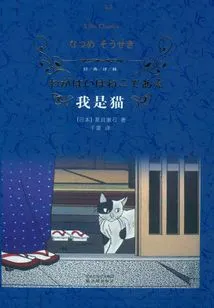
I Am a Cat (classic Translation)
by H
About This Novel
This book is the representative work of the Japanese literary master Natsume Soseki and has always been regarded as one of the world's masterpieces. The novel observes Japanese society after the Meiji Restoration through the eyes of a cat. It uses humorous and pungent language to ridicule and criticize the inherent weaknesses of human beings and the social ills of the world of money. It also quotes a lot of famous sayings from ancient and modern philosophers from the East and the West. It is full of wit and literary talent, and it is full of laughter and curses. The language of the work is a mixture of classics and slang, which can be appreciated by both refined and popular people. When reading it, one can't help but marvel in laughter.
Official Sources
What Readers Think
Rating
Community(0)
Official(8)Scraped 2mo ago
I can't stand the electronic version
I still feel that reading this kind of text requires careful reading. Printing it on paper and holding it in your hand is more realistic, and you can better understand the state of mind.
Don't really like it. I read one article and deleted it.
This version is very charming
There were only novice monks and a few friends discussing issues, and unlike ancient Greeks like Plato, they were just talking nonsense... Kusama likes to show off his knowledge. His best friend likes to fool people and enjoys it. Mizushima Kanzuki's doctoral thesis is about the mechanics of useless hangings. And Mrs. Nose is the most philistine and superficial person among them. Others may still be knowledgeable and have a sarcastic look. The Kaneda family is just vulgar. There's a lot of irony, and there really isn't a coherent plot. If you're pursuing this, I wouldn't recommend watching it. But it's very imaginative, the metaphors are wonderful, and it has more literary significance. There is also the mourning of things that is very characteristic of Japanese culture, the fleeting sense of fragmentation, and the decadence of doing nothing and hating mountain climbing and being near the water. At that time, it was just before World War I and during the Russo-Japanese War, there was a lot of turmoil to think about.
In my spare time, I watch. This book is good.
Why can't I buy it in the bookstore?
The ideological content of the whole book is relatively clear, reflecting the money-based society and general social problems in Japan at that time, and the darkness of society. However, the book is relatively boring, and there is a lot of nonsense. For example, one chapter can be written about the pockmarks on the face, and many pages are written about the origin of the big nose. Anyway, it is relatively boring.
Among several translations, I think this one is the best, and Yu Lei is probably the most suitable for translating this type of book. Personal opinion.
Rating
Community(0)
Official(8)Scraped 2mo ago
I can't stand the electronic version
I still feel that reading this kind of text requires careful reading. Printing it on paper and holding it in your hand is more realistic, and you can better understand the state of mind.
Don't really like it. I read one article and deleted it.
This version is very charming
There were only novice monks and a few friends discussing issues, and unlike ancient Greeks like Plato, they were just talking nonsense... Kusama likes to show off his knowledge. His best friend likes to fool people and enjoys it. Mizushima Kanzuki's doctoral thesis is about the mechanics of useless hangings. And Mrs. Nose is the most philistine and superficial person among them. Others may still be knowledgeable and have a sarcastic look. The Kaneda family is just vulgar. There's a lot of irony, and there really isn't a coherent plot. If you're pursuing this, I wouldn't recommend watching it. But it's very imaginative, the metaphors are wonderful, and it has more literary significance. There is also the mourning of things that is very characteristic of Japanese culture, the fleeting sense of fragmentation, and the decadence of doing nothing and hating mountain climbing and being near the water. At that time, it was just before World War I and during the Russo-Japanese War, there was a lot of turmoil to think about.
In my spare time, I watch. This book is good.
Why can't I buy it in the bookstore?
The ideological content of the whole book is relatively clear, reflecting the money-based society and general social problems in Japan at that time, and the darkness of society. However, the book is relatively boring, and there is a lot of nonsense. For example, one chapter can be written about the pockmarks on the face, and many pages are written about the origin of the big nose. Anyway, it is relatively boring.
Among several translations, I think this one is the best, and Yu Lei is probably the most suitable for translating this type of book. Personal opinion.
