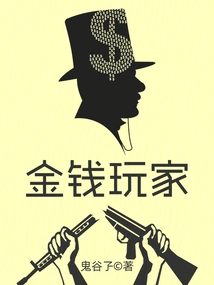
Money Player
by Ghost Valley
About This Novel
A story about a second-generation chaebol traveling through Hong Kong in the 1950s. The male protagonist is unusual and the story is also unusual. On the way to the rise of the chaebol, there is only bloodshed.
Official Sources
What Readers Think
Rating
Community(0)
Official(52)Scraped 1mo ago
About Hong Kong Flavor
A book friend just said that my novels about Hong Kong and Macao have a bad taste. They also said that when I write about Hong Kong, I don't even bother to refer to Hong Kong movies. Because of this review and some previous Hong Kong reviews, I have something to say about Hong Kong flavor. I won't debate whether the writing is good or not. The results are here. I boast that not many book friends will criticize me, and there will be more book friends who will spit in my face. I will skip this question. I have watched a lot of Hong Kong movies. Although I am not a Cantonese, I can speak some vernacular. It is enough to fool people who do not speak vernacular. I will at most be laughed at by people from Guangdong and Guangxi who speak vernacular. But is the Hong Kong flavor in Hong Kong films? For those who have never been to Hong Kong, the Hong Kong flavor in the public's impression actually comes from Hong Kong movies. Refining the language and environmental descriptions in Hong Kong movies will give you a Hong Kong flavor. If the background of my book was the 1970s and 1980s, I would have written "Hong Kong flavor" like this, but in the 1950s, Hong Kong's "hodgepodge" was the true face of Hong Kong, with food, language, customs, and a great fusion of indigenous people (people from the surrounding villages in the New Territories) and outsiders (people from Guangfu, Sihui, Chaozhou, Shandong, Shanghai, Hunan, and Jiangxi). In Hong Kong in the 1950s, there were many kinds of accents, but the number of people speaking vernacular (Cantonese) was slightly higher than that of other languages. The unification of vernacular was only after the great escape from Hong Kong. Out of political needs, the Hong Kong government vigorously promoted vernacular, and this was how the vernacular world came into being. "The Yan family is rich and powerful, do you understand?" The economic base determines the superstructure. From 1949 to 1953 (maybe a few years later), the Shanghai Gang (people who went to Hong Kong from Shanghai, mainly people from Jiangsu and Zhejiang) were the main consumer force in Hong Kong. The money and technology they brought with them supported Hong Kong's consumption and industrial development. If the staff in nightclubs and high-end restaurants can't speak a few simple words in Shanghainese, they won't be able to do their jobs. If it were limited to the upper class of Hong Kong at that time, speaking English was Hong Kong style, speaking Shanghainese was Hong Kong style, and speaking vernacular... Little bastard, go to the Kowloon squatter area (an exaggeration). Forget it... If you don't write too much, no one may read it if you write too much. In short, Hong Kong in the 1950s did not have the public impression that "Hong Kong flavor" is the real flavor.
It's too taxing on the brain, and it's too generous to those who cooperate. It's crazy to divide the shares at every turn.
There are too many details about the background description in the book, and there is no finishing touch through a few strokes. The protagonists are too versatile and there is no room for supporting characters to play. The plot of the story seems to be a running story. Writing a Hong Kong novel is about gangs and business. How can it be attractive without conflict? All novels in the Hong Kong context should take "Rebirth to Prominence" as the benchmark. Not only does the young outshine the old, they must at least have some color.
What are you writing about?
I can't understand what the hell they write, the knowledge is too profound.
What are you writing? It's messy, here and there, just for the sake of the word count? Build a factory for half your life?
It's too confusing. Let's do less popular science and just advance the plot.
I only see spending money but not near money. It's like a feeling of defeat with only expectations and no results. Novels, like movies, should have a sense of excitement. If you don't understand a thing clearly, you'll talk about the golden fruit stock market. It's like getting the first pot of gold neatly, but later on you only see spending money and giving away money, but not the near-money. There is no sense of involvement from the women involved, they are all original.
The author has the skill but used it in the wrong place
The author writes in a way that ordinary people can't feel the pleasure, and everything is laid out. I know you are awesome, but where is the plot of pretending to be cool and slapped in the face? Your dialogue has depth, but too few points of conflict. We are not here to see you become the world's biggest boss behind the scenes. Use your writing style to design something cool. A bookshelf with 4,000 bookshelves is not worthy of your writing style and knowledge.
Tiantianshui writes about stallions, which are vulgar and pornographic.
Too much inner drama, serious self-praising, not doing much is all drama, simple things become complicated
Rating
Community(0)
Official(52)Scraped 1mo ago
About Hong Kong Flavor
A book friend just said that my novels about Hong Kong and Macao have a bad taste. They also said that when I write about Hong Kong, I don't even bother to refer to Hong Kong movies. Because of this review and some previous Hong Kong reviews, I have something to say about Hong Kong flavor. I won't debate whether the writing is good or not. The results are here. I boast that not many book friends will criticize me, and there will be more book friends who will spit in my face. I will skip this question. I have watched a lot of Hong Kong movies. Although I am not a Cantonese, I can speak some vernacular. It is enough to fool people who do not speak vernacular. I will at most be laughed at by people from Guangdong and Guangxi who speak vernacular. But is the Hong Kong flavor in Hong Kong films? For those who have never been to Hong Kong, the Hong Kong flavor in the public's impression actually comes from Hong Kong movies. Refining the language and environmental descriptions in Hong Kong movies will give you a Hong Kong flavor. If the background of my book was the 1970s and 1980s, I would have written "Hong Kong flavor" like this, but in the 1950s, Hong Kong's "hodgepodge" was the true face of Hong Kong, with food, language, customs, and a great fusion of indigenous people (people from the surrounding villages in the New Territories) and outsiders (people from Guangfu, Sihui, Chaozhou, Shandong, Shanghai, Hunan, and Jiangxi). In Hong Kong in the 1950s, there were many kinds of accents, but the number of people speaking vernacular (Cantonese) was slightly higher than that of other languages. The unification of vernacular was only after the great escape from Hong Kong. Out of political needs, the Hong Kong government vigorously promoted vernacular, and this was how the vernacular world came into being. "The Yan family is rich and powerful, do you understand?" The economic base determines the superstructure. From 1949 to 1953 (maybe a few years later), the Shanghai Gang (people who went to Hong Kong from Shanghai, mainly people from Jiangsu and Zhejiang) were the main consumer force in Hong Kong. The money and technology they brought with them supported Hong Kong's consumption and industrial development. If the staff in nightclubs and high-end restaurants can't speak a few simple words in Shanghainese, they won't be able to do their jobs. If it were limited to the upper class of Hong Kong at that time, speaking English was Hong Kong style, speaking Shanghainese was Hong Kong style, and speaking vernacular... Little bastard, go to the Kowloon squatter area (an exaggeration). Forget it... If you don't write too much, no one may read it if you write too much. In short, Hong Kong in the 1950s did not have the public impression that "Hong Kong flavor" is the real flavor.
It's too taxing on the brain, and it's too generous to those who cooperate. It's crazy to divide the shares at every turn.
There are too many details about the background description in the book, and there is no finishing touch through a few strokes. The protagonists are too versatile and there is no room for supporting characters to play. The plot of the story seems to be a running story. Writing a Hong Kong novel is about gangs and business. How can it be attractive without conflict? All novels in the Hong Kong context should take "Rebirth to Prominence" as the benchmark. Not only does the young outshine the old, they must at least have some color.
What are you writing about?
I can't understand what the hell they write, the knowledge is too profound.
What are you writing? It's messy, here and there, just for the sake of the word count? Build a factory for half your life?
It's too confusing. Let's do less popular science and just advance the plot.
I only see spending money but not near money. It's like a feeling of defeat with only expectations and no results. Novels, like movies, should have a sense of excitement. If you don't understand a thing clearly, you'll talk about the golden fruit stock market. It's like getting the first pot of gold neatly, but later on you only see spending money and giving away money, but not the near-money. There is no sense of involvement from the women involved, they are all original.
The author has the skill but used it in the wrong place
The author writes in a way that ordinary people can't feel the pleasure, and everything is laid out. I know you are awesome, but where is the plot of pretending to be cool and slapped in the face? Your dialogue has depth, but too few points of conflict. We are not here to see you become the world's biggest boss behind the scenes. Use your writing style to design something cool. A bookshelf with 4,000 bookshelves is not worthy of your writing style and knowledge.
Tiantianshui writes about stallions, which are vulgar and pornographic.
Too much inner drama, serious self-praising, not doing much is all drama, simple things become complicated
You Might Also Like
Reborn Female General
Qianshan Tea Guest
My Investment Era
The Scenery On The Bridge Is Unique
The Birth of the Hong Kong Island Family
Let The Pig Fly
America 1919
A Red And Yellow Mountain
Once Upon a Time in America 1988
Think Quietly
A Reborn Industrial Giant
Underwater Wild Fish
Rebirth 88: Become Rich from Rejecting Ex-wife
Hepburn Downstairs
1990i'm Back
Four Seasons Leeks
Hong Kong Island 1980: Barbaric Times
Life Missed
The Years When I Was Forced to Reach the Top of Forbes
Mr. Big Eats Potatoes