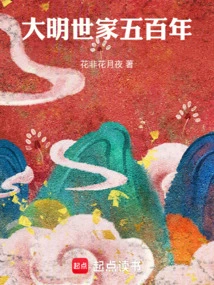
Five Hundred Years of the Ming Dynasty
by Flowers Are Not Flowers On A Moonlit Night
About This Novel
In the twenty-third year of Hongwu, Li Qi traveled through time and became Li Shanchang's son. His family was overthrown, and he was exiled to Jiangpu. Fortunately, he has a system that allows him to transform into the ancestral spirit to protect his family after his death. From the sinners of the Hongwu Dynasty to the upstarts of the Yongle Dynasty, over hundreds of years, the Li family restored the power of the prime minister, promoted science, dug up feudalism, regent the world, established a secret party, and finally overcame the imperial power, leading the Ming Dynasty to rule the entire world, and even to the boundless starry sky. The Ming Dynasty is not the Ming Dynasty of the emperor alone, but the Ming Dynasty of all Han people. When the crown fell, some people said that the Li family was still secretly controlling all politics and economy, and was the royal family in the dark. No one spoke. Only generations of tribesmen continue to inherit and lead civilization. Power is hidden behind the scenes, and only the sun and stars know our greatness!
Official Sources
What Readers Think
Rating
Community(0)
Official(22)Scraped 2mo ago
There is a prerequisite for reading this book, which is to understand Hei Hei. Zhu Yuanzhang Hei cannot read it. After reading it, my heart collapsed, because the structure of the article is ingenious and the logic is clear, which is beyond the comparison of ordinary historical texts. Only after reading this book did I understand why, although I am from Pujiang, Zhejiang, I have always disliked Song Lian, including his eternal masterpiece "Preface to Ma Sheng in Dongyang". The reason was due to his stance. Baidu's introduction to Song Lian said that he came from a poor family, but was known as a child prodigy. This was obviously over the top. There are many similar allusions. Whew. Bing begging for carps, cutting through walls to steal light, Kong Rong giving away pears, etc. Those who have the ability to do such things are not something ordinary ordinary people can do. They don't even have this idea. Only famous and down-to-earth families, the so-called poor families, have this knowledge to do it. In fact, it is the same as many parents nowadays taking their children to take various certificates. My family has been poor for generations, so I have no sense of empathy when reading "Preface to Ma Sheng" because I understand that in ancient times, poor peasants were nothing more than grassroots and untouchables. Do you think a noble nobleman would lend books to untouchables? A prodigy among the untouchables, shouldn't that be the most vulnerable target?
You don't need to watch Zhu Yuanzhang. Does Li Shanchang still have time to wash?
Is it the game world or the real world?
Game world? Lifespan is immutable? How could you extend the Ming Dynasty to 500 years? Does Zhu Biao have to die? It has to be said that in the game world, you must die when your life span is up. And what I said to the princess in the room was really not afraid of being heard by others.
The protagonist is so miserable
This introduction can only say that he was arranged by the system to not even be able to enjoy himself, and was deliberately killed to become an artificial intelligence. Well, the protagonist is so proud of himself that the family I cultivated is really powerful.
When the time comes, we can see each other and draw pictures one by one. In Qi Taishi bamboo slips, in Jin Dynasty Dong Hu's pen. Zhang Liangzhui in Qin Dynasty and Su Wujie in Han Dynasty. He was the head of General Yan and was bleeding for Ji Shi. They are Zhang Suiyang's teeth and Yan Changshan's tongue.
The change of Tumu Fort, one word "bian" reveals the essence. In ancient times, the word "bian" is thought-provoking along with major events, such as the change of sand dune, the change of Yongcheng, the change of Zhengshi, the change of Heyin, the change of Xuanwumen, the change of Mawei, the Chenqiao mutiny, the change of seizing the gate... There is no shame in using the change. The change of tumuba happened in the early Ming Dynasty when the Mongols broke through the border with more than 100,000 horses. How could people know the emperor's location by chewing horse food and even lingering in certain places? The local garrison, the gentry and the common people were collectively blind and refused to report to the superiors. This could all be kept secret in a closed-door and prosperous area. The emperor and ministers were all deaf and blind and had no idea that the march in armor ran headlong into the Mongols in armor and ready to go and massacred one side. Is this reasonable?
Very good, grass jelly. Especially the transformation of systems and ideas since the Ming Dynasty
The article is good, the article is good, the article is good, the article is good, the article is good
Very nice A strategy and history article disguised as a game article
The emperor cut off his retreat near his own capital. Tens of thousands of Mongolians fought their way into the pass, eating their horses and chewing them up, and then pinpointed the emperor near Beijing. Didn't anyone in the north of the Ming Dynasty report it? Isn't there an army to stop it? This was the beginning of the Ming Dynasty, not the end of the Ming Dynasty. The emperor did not know that the Mongols had entered the pass and bumped into each other for many days. How did the Mongols locate the emperor? Was there no man's land along the way?
Rating
Community(0)
Official(22)Scraped 2mo ago
There is a prerequisite for reading this book, which is to understand Hei Hei. Zhu Yuanzhang Hei cannot read it. After reading it, my heart collapsed, because the structure of the article is ingenious and the logic is clear, which is beyond the comparison of ordinary historical texts. Only after reading this book did I understand why, although I am from Pujiang, Zhejiang, I have always disliked Song Lian, including his eternal masterpiece "Preface to Ma Sheng in Dongyang". The reason was due to his stance. Baidu's introduction to Song Lian said that he came from a poor family, but was known as a child prodigy. This was obviously over the top. There are many similar allusions. Whew. Bing begging for carps, cutting through walls to steal light, Kong Rong giving away pears, etc. Those who have the ability to do such things are not something ordinary ordinary people can do. They don't even have this idea. Only famous and down-to-earth families, the so-called poor families, have this knowledge to do it. In fact, it is the same as many parents nowadays taking their children to take various certificates. My family has been poor for generations, so I have no sense of empathy when reading "Preface to Ma Sheng" because I understand that in ancient times, poor peasants were nothing more than grassroots and untouchables. Do you think a noble nobleman would lend books to untouchables? A prodigy among the untouchables, shouldn't that be the most vulnerable target?
You don't need to watch Zhu Yuanzhang. Does Li Shanchang still have time to wash?
Is it the game world or the real world?
Game world? Lifespan is immutable? How could you extend the Ming Dynasty to 500 years? Does Zhu Biao have to die? It has to be said that in the game world, you must die when your life span is up. And what I said to the princess in the room was really not afraid of being heard by others.
The protagonist is so miserable
This introduction can only say that he was arranged by the system to not even be able to enjoy himself, and was deliberately killed to become an artificial intelligence. Well, the protagonist is so proud of himself that the family I cultivated is really powerful.
When the time comes, we can see each other and draw pictures one by one. In Qi Taishi bamboo slips, in Jin Dynasty Dong Hu's pen. Zhang Liangzhui in Qin Dynasty and Su Wujie in Han Dynasty. He was the head of General Yan and was bleeding for Ji Shi. They are Zhang Suiyang's teeth and Yan Changshan's tongue.
The change of Tumu Fort, one word "bian" reveals the essence. In ancient times, the word "bian" is thought-provoking along with major events, such as the change of sand dune, the change of Yongcheng, the change of Zhengshi, the change of Heyin, the change of Xuanwumen, the change of Mawei, the Chenqiao mutiny, the change of seizing the gate... There is no shame in using the change. The change of tumuba happened in the early Ming Dynasty when the Mongols broke through the border with more than 100,000 horses. How could people know the emperor's location by chewing horse food and even lingering in certain places? The local garrison, the gentry and the common people were collectively blind and refused to report to the superiors. This could all be kept secret in a closed-door and prosperous area. The emperor and ministers were all deaf and blind and had no idea that the march in armor ran headlong into the Mongols in armor and ready to go and massacred one side. Is this reasonable?
Very good, grass jelly. Especially the transformation of systems and ideas since the Ming Dynasty
The article is good, the article is good, the article is good, the article is good, the article is good
Very nice A strategy and history article disguised as a game article
The emperor cut off his retreat near his own capital. Tens of thousands of Mongolians fought their way into the pass, eating their horses and chewing them up, and then pinpointed the emperor near Beijing. Didn't anyone in the north of the Ming Dynasty report it? Isn't there an army to stop it? This was the beginning of the Ming Dynasty, not the end of the Ming Dynasty. The emperor did not know that the Mongols had entered the pass and bumped into each other for many days. How did the Mongols locate the emperor? Was there no man's land along the way?
Featured in 2 Booklists
Official(2)
Rating: AAAA This is another excellent new historical book. The writing is first-rate and the plot is smooth. I read dozens of chapters in one go. It is one of the historical books worth reading this year. I highly recommend it.
⭐⭐⭐⭐⭐
You Might Also Like
Reborn Female General
Qianshan Tea Guest
A Thousand-year-old Family That Started in the Yin and Shang Dynasties
Floating Dreams And Three Lowly Guests
Yuan Mo: I Am the Real Emperor
Sanlu
Father Liu Hong, I'm Lying Down
Dan Qianyu
I Am Destiny: Conquer the World from the Western Regions
Dongtianmen
I Am Practicing Daily Life in Wanli
Shangguan Bu Shui
I Am a Great Power
Flying Cable Car
At the End of Ming Dynasty, the World Was Rebuilt from the Northwest
Soldier King 2
My Portable Ming Court
Fat Bird Goes First
My Father Yongzheng, Am I Qianlong?
Willow Trees On The Shore