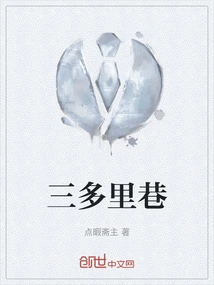
Sanduoli Lane
About This Novel
There is a sister chapter of Datang between Yangliuba and Liujiawan: a continuation of the study, life and work history of students such as Yongjia, Maotuo and Jiang Yun.
Official Sources
What Readers Think
Rating
Community(0)
Official(316)Scraped 1mo ago
Read Chapter 1 or 2 of "Sanduoli Lane": First Encounter with the Confusion of Growing Up and Intergenerational Differences The first chapter of "Sanduoli Alley" breaks the theme with "the day does not understand the darkness of the night", and borrows the poems about fighting against floods and Lao Huang's emotion of "don't tell lies, but write real facts" to pave the way for the speculative background of "Tao" and "skills". It also hints at the cognitive gap between young people and old people - the young people's writing is lofty but difficult to implement, while the old people value practicality but have to work hard to convey their ideas, which initially shows the proposition of "sharing the unknown together" in growth. The second chapter, "Young people don't have the spirit of the elderly," focuses on generational differences, with the topic "common people say that young people don't have the spirit of the elderly," echoing the setting of the first chapter that "the spirit of youth is different from that of the elderly." There is no direct fierce conflict in the chapter, but through the implicit contrast of concepts, it lays the groundwork for the subsequent cognitive collisions that Yongjia and other students will encounter in academics and the workplace, and the clues that "growth needs to overcome the cognitive gap between generations" begin to emerge.
After reading the first ten chapters of "Sanduoli Lane", it is like pushing open a mottled wooden door and suddenly falling into a modern marketplace written in classical Chinese. What fascinates me the most is the appearance of those little people standing in the smoke with books in their hands - the oil seller shaking the oil spoon while reciting "Essential Art for Elevating the People", the embroiderer spreading out "Tiangong Kaiwu" in front of the embroidery frame, and even the beggars at the alley carrying a shabby copy of "Jianghu Congtan". These pictures inexplicably remind me of the young people wandering in front of different bookshelves in the university library, each looking for their own secret book to pass the level. The demolition notice at the end of Chapter 10 is like a bolt of lightning, suddenly illuminating the fragments of knowledge slowly laid out in the first nine chapters. It turns out that reading "The Book of Songs" is not only for elegance, but also for reciting "The Feelings of the Motherland" at the negotiation table; calculating the business test questions is not only for the public examination, but also for calculating the fairest compensation plan. This kind of layout of grass and snakes and gray lines makes people unable to help but laugh: the so-called reading is never an isolated and elegant thing, but the wisdom of survival rooted in the soil of life. What touched me the most was actually the "down-and-out scholar" who was always laughed at by his neighbors. After he failed the postgraduate entrance examination for the fifth time, he squatted in the alley and wrote a sign for a barbecue restaurant in parallel prose, and used the principles of "Mengxi Bi Tan" to improve the incubator for a milk tea shop. Late one night, I watched him reading "Tokyo Menghua Lu" by a street lamp, and suddenly I understood what "knowledge comes to fruition" - not all knowledge must lead to temples, and some knowledge should blossom and bear fruit deep in the alleys. When I was reading about the old people in the alley taking out their local chronicles to fight against the bulldozers, I suddenly remembered the scene when my neighbor's grandfather tremblingly took out his family tree to demonstrate the historical value of the old well during the reconstruction of the old city in his hometown last year. I thought it was pedantic at the time, but now I understand that it was another version of "Sanduoli Lane". It turns out that in every alley that is about to disappear, there are precious texts written by life.
In "Day does not understand the darkness of night", Dianxuzhai unfolds a workplace speculation about "Tao" and "Skills" with quaint yet sharp words. The conversation between Lao Huang and Yongjia is like a stone thrown into still water. In the ripples of the words, deep thoughts about the level of thinking, workplace value and the nature of growth are revealed. The opening line, "It's hard to tell in the daytime, how deep the night is, and the flood peaks suddenly rise and break the embankments" uses poetic language to metaphorize the cognitive gap and the latent crisis. Lao Huang's admonition, "When a wise man does a foolish thing, he should not tell lies, but tell the truth" is like a silver needle, piercing the bubble of flashy words. In the details of PPT revision and report writing, his persistence in "clear logic" and "clear organization" is the ultimate polishing of "techniques" - this is the basic skill for settling down in the workplace and the only way to turn ideas into results. Those extravagant efforts regarding page adjustment and image insertion may appear to be technical refinements, but in fact they are training a kind of precise expression and systematic architectural ability, making "skills" a container for carrying ideas. But the author's writing style does not stop at the surface of "technique". When Yongjia was puzzled by the fact that "all literature is lofty and not practical," an inquiry about "Tao" began. Lao Huang emphasized that doctoral candidates must speak of "scientific significance," but Yongjia doubted their "usefulness" in technician positions. This is the most intuitive collision between "Tao" and "Technology." "Tao" refers to the height of thinking, the questioning of the essence of things and the grasp of laws; "skill" refers to the precision of execution and the skills to solve specific problems. Just like the incomprehensible lament about "phosphorus in the soil" in the article, "skills" may be able to improve it for a while, but "Tao" needs to explore its fundamental causes and systematic solutions. This difference is even more clear in the comparison of the scientific research thinking of masters and doctoral students: masters emphasize the "technique" of experimental operations, while doctoral students emphasize the "Tao" of scientific significance. The two are inherently in different cognitive dimensions.
The most touching thing about "Three Miles of Alleys" is never the grand narrative, but the details of life hidden among the bricks and tiles in the alleys. A familiar greeting between old residents, a tacit understanding of neighbors pooling money to help the elderly repair their roofs, and the laughter of children chasing each other in the alley. These small fragments turn the simple truth of "distant relatives are not as good as close neighbors" into the most touching human fireworks.
Looking at the first chapter, this conversation is like a real slice of career growth. Lao Huang's persistence in "Tao" and careful guidance to Yongjia hide the expectations of his predecessors for his younger generations to "think beyond technology and take root." Yongjia's self-effacement and confusion also reflect the collision between "pragmatism" and "pragmatism" when highly educated people first enter the workplace. There is no empty preaching, but full of specific experiences in PPT revision and report writing. On the contrary, it makes people understand: "Growth" in the workplace has always been the result of the willingness of seniors to "beat" and the willingness of juniors to "understand", slowly taking shape through logical sorting and cognitive calibration.
When the secular utility of "day" collides with the subtle thoughts of "night", when the pragmatism of "skill" encounters the value questioning of "Tao", "Day Does Not Know the Darkness of Night" uses a highly recognizable narrative style to tear open a speculative rift about cognition, value and existence in the dual fields of workplace gaming and flood mirror images. 1. Narrative experiment in the collision of ancient and modern times: Inquiry into modernity under the shell of classical Chinese The novel boldly uses classical Chinese sentences to construct the narrative. Dialogues such as "You often say, 'Smart people make stupid efforts', don't make false claims, but be realistic" and "You are a doctor, and a doctor should be pragmatic" create a strong tension between the ancient and elegant language form and the modern workplace and scientific research context. This tension is not simply a matter of stylistic brilliance, but the "defamiliarization" of language that forces readers to think: When "pragmatism" and "retreat", the execution of "skills" and the meaning of "Tao" collide fiercely in the modern workplace and academic fields, how should we define the authenticity of value? Lao Huang's insistence on "photographing materials realistically and not making flashy remarks", and Yongjia's confusion on "the purpose of the text is lofty, not practical, and I don't know what problems it can solve", is like an ideological dialogue that spans ancient and modern times - the ancients valued the "conveying the truth" of the text, while today's people seek the effect of "application". The conflict between the two is the literary projection of the anxiety of modernity. This kind of narrative experiment gives the trivial debates in the workplace and the pursuit of academic meaning a sense of history, and also gives the cognitive gap between "day" and "night" a more profound interpretive dimension. 2. The metaphorical system of double mirrors: intertextual thinking on the workplace and floods The novel cleverly sets up a double mirror image of "word game in the workplace" and "narrative of flood relief". In the workplace, the logic of PPT, the length of reports, and the debate between "pragmatism" and "religiousness" are "floods" in the office - opinions from all parties surge like a flood, and the "dam" of consensus is repeatedly facing collapse; but in real flood disaster scenes, "flood-fighting warriors guard the line of defense, and Taoism is indescribable, and the night deepens", which also links disasters in the physical world with "cognitive floods" in the spiritual world. This kind of intertextuality builds an exquisite metaphorical network: the attack and defense of words in the workplace is the flood of "literacy", and the guarding of the dam in the flood is the battlefield of "action". Both of them point to the "difficulty of understanding" and the "importance of perseverance". When Yongjia was confused about the difference between "Tao" and "Shu" when revising the text, and when the flood fighters stood on the edge of the embankment collapse in the night, "The day does not understand the darkness of the night" transcended simple cognitive differences and sublimated into a philosophical inquiry about "how individuals anchor value in a complex system." 3. Philosophical projection of existential dilemma: the spiritual breakthrough between "understanding" and "not understanding" "How difficult it is to put one's own thoughts into other people's heads!" This recurring sigh is the spiritual core of the novel. Whether it is Lao Huang's obsession with "realism" in writing, or Yongjia's doubts about "the purpose of writing is lofty but impractical", or the helplessness of "the Taoism is hard to describe" during the flood, they are all asking a fundamental question: Why is it so difficult for people to understand each other? Why is there always a cognitive time lag between the "night" of thought and the "day" of reality? The novel does not give a cheap answer, but spreads this dilemma in multiple dimensions: power relations in the workplace, anxiety about academic significance, the game of human nature in disasters... In the tug of "understanding" and "ununderstanding", the characters' spiritual struggles unfold like peeling off cocoons and spinning threads. Lao Huang's persistence, Yongjia's confusion, and the silence of the flood fighters together constitute a miniature landscape of modern people's survival dilemma - we are all trying to cross the cognitive river of "day" and "night", but we have been looking for the bridge called "understanding" throughout our lives. "Day Does Not Know the Darkness of Night" uses classical Chinese to encapsulate the core of modernity, and explores the darkness of existence from the dual perspectives of the workplace and floods. Hidden in the folds of the text is a sharp insight into cognition, value and human nature. Like a multi-prism, it reflects the spiritual dilemma of contemporary people between "pragmatism" and "religiousness", "understanding" and "estrangement". In the presentation of this dilemma, it quietly completes the literary exploration of "how thoughts break through walls".
The novel's language is alternately written in white and white, which not only retains the classical charm, but also incorporates modern academic terminology to form a unique narrative rhythm. It uses delicate strokes to open up the gap between academics and reality, and outlines a spiritual picture of young scientific researchers. Through the collision of ideas between Yongjia and her mentor Lao Huang, the eternal dialectic between "Tao" and "Technology" in the scientific research system is cleverly revealed - the "scientific significance" pursued by doctoral research is often questioned as "useless" at the practical level. Those trivial conversations about PPT revision and the torturous process of literature reading have become subtle footnotes to the master-disciple relationship in the inheritance of knowledge, reflecting the difficult balance between ideals and reality among contemporary scientific researchers.
"Sanduoli Lane" reflects the scientific research system of universities through the "patent signature" incident that Yongjia encountered. Using line drawing techniques, scenes such as scientific research project application, experimental data compilation, and paper signature disputes are shown in detail. The novel accurately grasps details such as laboratory instrument usage records and academic conference seating arrangements, creating a realistic and credible scientific research ecological picture. The narrative maintains objectivity and neutrality, presenting the full picture of the patent crisis through multiple perspectives and avoiding moral judgment on any character. This narrative method keeps the work objective and will not be biased.
Opening this book is like stepping into an alley hiding the old times, and you are greeted by the rich and mellow flavor of life. The author uses delicate and meticulous writing to lay out the daily trivial matters in Sanduoli Lane and the warmth and warmth of the neighbors one by one in front of the readers, constructing a vivid and real urban world. There is no grand narrative with ups and downs in the book, but more about the steaming heat of the breakfast stall in the alley in the morning, the quarrels between the old people under the big trees in the afternoon, and the laughter and play of the children returning home from school in the evening. These trivial daily life are full of warmth in the author's writing. Lao Zhang, the shoe repairman, has old tools but meticulous repairs. He treats every customer with sincerity and patience. From him, you can see the simplicity and perseverance of life; Aunt Li, the grocery store owner, has an excellent memory and understands the needs of the neighborhood. Her hospitality has become a warm bond in the alley. These ordinary people gather into the most moving fireworks in the alley. The writing is simple and plain but full of deep feelings, like a gurgling stream, moistening people's hearts inadvertently. The author captures the details of life, such as the moss on the old wall and the cobwebs under the eaves, which have become footnotes of time. Describing the mutual help and friction between neighbors, it truly shows the complexity of human nature and makes people empathize with it. This book is a tribute to life, allowing us to stop in our fast-paced era, savor the true nature of life, and feel the preciousness and beauty of ordinary days.
This book conveys real life in real society, is friendly to young people who are about to enter society, and provides experience.
Rating
Community(0)
Official(316)Scraped 1mo ago
Read Chapter 1 or 2 of "Sanduoli Lane": First Encounter with the Confusion of Growing Up and Intergenerational Differences The first chapter of "Sanduoli Alley" breaks the theme with "the day does not understand the darkness of the night", and borrows the poems about fighting against floods and Lao Huang's emotion of "don't tell lies, but write real facts" to pave the way for the speculative background of "Tao" and "skills". It also hints at the cognitive gap between young people and old people - the young people's writing is lofty but difficult to implement, while the old people value practicality but have to work hard to convey their ideas, which initially shows the proposition of "sharing the unknown together" in growth. The second chapter, "Young people don't have the spirit of the elderly," focuses on generational differences, with the topic "common people say that young people don't have the spirit of the elderly," echoing the setting of the first chapter that "the spirit of youth is different from that of the elderly." There is no direct fierce conflict in the chapter, but through the implicit contrast of concepts, it lays the groundwork for the subsequent cognitive collisions that Yongjia and other students will encounter in academics and the workplace, and the clues that "growth needs to overcome the cognitive gap between generations" begin to emerge.
After reading the first ten chapters of "Sanduoli Lane", it is like pushing open a mottled wooden door and suddenly falling into a modern marketplace written in classical Chinese. What fascinates me the most is the appearance of those little people standing in the smoke with books in their hands - the oil seller shaking the oil spoon while reciting "Essential Art for Elevating the People", the embroiderer spreading out "Tiangong Kaiwu" in front of the embroidery frame, and even the beggars at the alley carrying a shabby copy of "Jianghu Congtan". These pictures inexplicably remind me of the young people wandering in front of different bookshelves in the university library, each looking for their own secret book to pass the level. The demolition notice at the end of Chapter 10 is like a bolt of lightning, suddenly illuminating the fragments of knowledge slowly laid out in the first nine chapters. It turns out that reading "The Book of Songs" is not only for elegance, but also for reciting "The Feelings of the Motherland" at the negotiation table; calculating the business test questions is not only for the public examination, but also for calculating the fairest compensation plan. This kind of layout of grass and snakes and gray lines makes people unable to help but laugh: the so-called reading is never an isolated and elegant thing, but the wisdom of survival rooted in the soil of life. What touched me the most was actually the "down-and-out scholar" who was always laughed at by his neighbors. After he failed the postgraduate entrance examination for the fifth time, he squatted in the alley and wrote a sign for a barbecue restaurant in parallel prose, and used the principles of "Mengxi Bi Tan" to improve the incubator for a milk tea shop. Late one night, I watched him reading "Tokyo Menghua Lu" by a street lamp, and suddenly I understood what "knowledge comes to fruition" - not all knowledge must lead to temples, and some knowledge should blossom and bear fruit deep in the alleys. When I was reading about the old people in the alley taking out their local chronicles to fight against the bulldozers, I suddenly remembered the scene when my neighbor's grandfather tremblingly took out his family tree to demonstrate the historical value of the old well during the reconstruction of the old city in his hometown last year. I thought it was pedantic at the time, but now I understand that it was another version of "Sanduoli Lane". It turns out that in every alley that is about to disappear, there are precious texts written by life.
In "Day does not understand the darkness of night", Dianxuzhai unfolds a workplace speculation about "Tao" and "Skills" with quaint yet sharp words. The conversation between Lao Huang and Yongjia is like a stone thrown into still water. In the ripples of the words, deep thoughts about the level of thinking, workplace value and the nature of growth are revealed. The opening line, "It's hard to tell in the daytime, how deep the night is, and the flood peaks suddenly rise and break the embankments" uses poetic language to metaphorize the cognitive gap and the latent crisis. Lao Huang's admonition, "When a wise man does a foolish thing, he should not tell lies, but tell the truth" is like a silver needle, piercing the bubble of flashy words. In the details of PPT revision and report writing, his persistence in "clear logic" and "clear organization" is the ultimate polishing of "techniques" - this is the basic skill for settling down in the workplace and the only way to turn ideas into results. Those extravagant efforts regarding page adjustment and image insertion may appear to be technical refinements, but in fact they are training a kind of precise expression and systematic architectural ability, making "skills" a container for carrying ideas. But the author's writing style does not stop at the surface of "technique". When Yongjia was puzzled by the fact that "all literature is lofty and not practical," an inquiry about "Tao" began. Lao Huang emphasized that doctoral candidates must speak of "scientific significance," but Yongjia doubted their "usefulness" in technician positions. This is the most intuitive collision between "Tao" and "Technology." "Tao" refers to the height of thinking, the questioning of the essence of things and the grasp of laws; "skill" refers to the precision of execution and the skills to solve specific problems. Just like the incomprehensible lament about "phosphorus in the soil" in the article, "skills" may be able to improve it for a while, but "Tao" needs to explore its fundamental causes and systematic solutions. This difference is even more clear in the comparison of the scientific research thinking of masters and doctoral students: masters emphasize the "technique" of experimental operations, while doctoral students emphasize the "Tao" of scientific significance. The two are inherently in different cognitive dimensions.
The most touching thing about "Three Miles of Alleys" is never the grand narrative, but the details of life hidden among the bricks and tiles in the alleys. A familiar greeting between old residents, a tacit understanding of neighbors pooling money to help the elderly repair their roofs, and the laughter of children chasing each other in the alley. These small fragments turn the simple truth of "distant relatives are not as good as close neighbors" into the most touching human fireworks.
Looking at the first chapter, this conversation is like a real slice of career growth. Lao Huang's persistence in "Tao" and careful guidance to Yongjia hide the expectations of his predecessors for his younger generations to "think beyond technology and take root." Yongjia's self-effacement and confusion also reflect the collision between "pragmatism" and "pragmatism" when highly educated people first enter the workplace. There is no empty preaching, but full of specific experiences in PPT revision and report writing. On the contrary, it makes people understand: "Growth" in the workplace has always been the result of the willingness of seniors to "beat" and the willingness of juniors to "understand", slowly taking shape through logical sorting and cognitive calibration.
When the secular utility of "day" collides with the subtle thoughts of "night", when the pragmatism of "skill" encounters the value questioning of "Tao", "Day Does Not Know the Darkness of Night" uses a highly recognizable narrative style to tear open a speculative rift about cognition, value and existence in the dual fields of workplace gaming and flood mirror images. 1. Narrative experiment in the collision of ancient and modern times: Inquiry into modernity under the shell of classical Chinese The novel boldly uses classical Chinese sentences to construct the narrative. Dialogues such as "You often say, 'Smart people make stupid efforts', don't make false claims, but be realistic" and "You are a doctor, and a doctor should be pragmatic" create a strong tension between the ancient and elegant language form and the modern workplace and scientific research context. This tension is not simply a matter of stylistic brilliance, but the "defamiliarization" of language that forces readers to think: When "pragmatism" and "retreat", the execution of "skills" and the meaning of "Tao" collide fiercely in the modern workplace and academic fields, how should we define the authenticity of value? Lao Huang's insistence on "photographing materials realistically and not making flashy remarks", and Yongjia's confusion on "the purpose of the text is lofty, not practical, and I don't know what problems it can solve", is like an ideological dialogue that spans ancient and modern times - the ancients valued the "conveying the truth" of the text, while today's people seek the effect of "application". The conflict between the two is the literary projection of the anxiety of modernity. This kind of narrative experiment gives the trivial debates in the workplace and the pursuit of academic meaning a sense of history, and also gives the cognitive gap between "day" and "night" a more profound interpretive dimension. 2. The metaphorical system of double mirrors: intertextual thinking on the workplace and floods The novel cleverly sets up a double mirror image of "word game in the workplace" and "narrative of flood relief". In the workplace, the logic of PPT, the length of reports, and the debate between "pragmatism" and "religiousness" are "floods" in the office - opinions from all parties surge like a flood, and the "dam" of consensus is repeatedly facing collapse; but in real flood disaster scenes, "flood-fighting warriors guard the line of defense, and Taoism is indescribable, and the night deepens", which also links disasters in the physical world with "cognitive floods" in the spiritual world. This kind of intertextuality builds an exquisite metaphorical network: the attack and defense of words in the workplace is the flood of "literacy", and the guarding of the dam in the flood is the battlefield of "action". Both of them point to the "difficulty of understanding" and the "importance of perseverance". When Yongjia was confused about the difference between "Tao" and "Shu" when revising the text, and when the flood fighters stood on the edge of the embankment collapse in the night, "The day does not understand the darkness of the night" transcended simple cognitive differences and sublimated into a philosophical inquiry about "how individuals anchor value in a complex system." 3. Philosophical projection of existential dilemma: the spiritual breakthrough between "understanding" and "not understanding" "How difficult it is to put one's own thoughts into other people's heads!" This recurring sigh is the spiritual core of the novel. Whether it is Lao Huang's obsession with "realism" in writing, or Yongjia's doubts about "the purpose of writing is lofty but impractical", or the helplessness of "the Taoism is hard to describe" during the flood, they are all asking a fundamental question: Why is it so difficult for people to understand each other? Why is there always a cognitive time lag between the "night" of thought and the "day" of reality? The novel does not give a cheap answer, but spreads this dilemma in multiple dimensions: power relations in the workplace, anxiety about academic significance, the game of human nature in disasters... In the tug of "understanding" and "ununderstanding", the characters' spiritual struggles unfold like peeling off cocoons and spinning threads. Lao Huang's persistence, Yongjia's confusion, and the silence of the flood fighters together constitute a miniature landscape of modern people's survival dilemma - we are all trying to cross the cognitive river of "day" and "night", but we have been looking for the bridge called "understanding" throughout our lives. "Day Does Not Know the Darkness of Night" uses classical Chinese to encapsulate the core of modernity, and explores the darkness of existence from the dual perspectives of the workplace and floods. Hidden in the folds of the text is a sharp insight into cognition, value and human nature. Like a multi-prism, it reflects the spiritual dilemma of contemporary people between "pragmatism" and "religiousness", "understanding" and "estrangement". In the presentation of this dilemma, it quietly completes the literary exploration of "how thoughts break through walls".
The novel's language is alternately written in white and white, which not only retains the classical charm, but also incorporates modern academic terminology to form a unique narrative rhythm. It uses delicate strokes to open up the gap between academics and reality, and outlines a spiritual picture of young scientific researchers. Through the collision of ideas between Yongjia and her mentor Lao Huang, the eternal dialectic between "Tao" and "Technology" in the scientific research system is cleverly revealed - the "scientific significance" pursued by doctoral research is often questioned as "useless" at the practical level. Those trivial conversations about PPT revision and the torturous process of literature reading have become subtle footnotes to the master-disciple relationship in the inheritance of knowledge, reflecting the difficult balance between ideals and reality among contemporary scientific researchers.
"Sanduoli Lane" reflects the scientific research system of universities through the "patent signature" incident that Yongjia encountered. Using line drawing techniques, scenes such as scientific research project application, experimental data compilation, and paper signature disputes are shown in detail. The novel accurately grasps details such as laboratory instrument usage records and academic conference seating arrangements, creating a realistic and credible scientific research ecological picture. The narrative maintains objectivity and neutrality, presenting the full picture of the patent crisis through multiple perspectives and avoiding moral judgment on any character. This narrative method keeps the work objective and will not be biased.
Opening this book is like stepping into an alley hiding the old times, and you are greeted by the rich and mellow flavor of life. The author uses delicate and meticulous writing to lay out the daily trivial matters in Sanduoli Lane and the warmth and warmth of the neighbors one by one in front of the readers, constructing a vivid and real urban world. There is no grand narrative with ups and downs in the book, but more about the steaming heat of the breakfast stall in the alley in the morning, the quarrels between the old people under the big trees in the afternoon, and the laughter and play of the children returning home from school in the evening. These trivial daily life are full of warmth in the author's writing. Lao Zhang, the shoe repairman, has old tools but meticulous repairs. He treats every customer with sincerity and patience. From him, you can see the simplicity and perseverance of life; Aunt Li, the grocery store owner, has an excellent memory and understands the needs of the neighborhood. Her hospitality has become a warm bond in the alley. These ordinary people gather into the most moving fireworks in the alley. The writing is simple and plain but full of deep feelings, like a gurgling stream, moistening people's hearts inadvertently. The author captures the details of life, such as the moss on the old wall and the cobwebs under the eaves, which have become footnotes of time. Describing the mutual help and friction between neighbors, it truly shows the complexity of human nature and makes people empathize with it. This book is a tribute to life, allowing us to stop in our fast-paced era, savor the true nature of life, and feel the preciousness and beauty of ordinary days.
This book conveys real life in real society, is friendly to young people who are about to enter society, and provides experience.
You Might Also Like
My 1979
Arguing About Two Things
Reborn Female General
Qianshan Tea Guest

Great Country and Heavy Tank
Hero Of East China
Secret War Silent
Changfeng

1991start from the Core
Three Points Confused

Wandering in the Broad Daylight
Eyebrow Master Niang
Super Big Scam
Chang Shuxin
Bad Lawyer
Snow Reflects Red Plum Blossoms
All Things Hope
Eyebrow Master Niang

Ace Lawyer
Snow Reflects Red Plum Blossoms