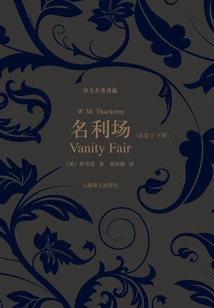
Vanity Fair (set of Volumes 1 and 2) (collection of Translated Classics)
by J
About This Novel
X
Official Sources
What Readers Think
Rating
Community(0)
Official(3)Scraped 1mo ago
The cold light cast in the glitz - a review of "Vanity Fair"
It is one of the rare masterpieces where I really wanted to hit the middle road while reading it - about one-third of the way through, there was no character in it that made me want to continue reading. I either hated the iron but not the steel, or I could understand it but didn't like it, or I didn't hate it or like it and was extremely indifferent... What really drove me crazy the most was that the author Thackeray would suddenly come out to express his opinions in the middle of the story from time to time. Thackeray, Thackeray, you really don't need to do it. What you describe is already very good. Needless to say, readers can understand it. On the contrary, saying more will destroy this kind of experience that readers and characters can understand in their hearts. (Seriously, joking with one hand on hips and pointing with one finger) ---------------------------------------------------------------Crap deadline This book not only depicts the glitz and allure of fame and fortune of the upper class, but also shows the cruelty of society and the sorrow of people of low status. 1. Rebecca (the sorrow of low status) No matter how capable and resourceful Rebecca is, and how willing she is to use her beauty and even her body, it will be difficult for her to truly enter the upper class society and truly gain a foothold in the vanity fair - because her background is too low. People without help are like duckweeds, and people without noble people are like weeds. This is Vanity Fair. For example, George might show good intentions to her and say that they would elope together, but it is more likely that he would choose Amelia in the end because they are a better match. For General Taft, Lord Stein, and others, Rebecca could be a lover or the spice of life, but she would never be a real wife, a person who would be married to a matchmaker and walk with them in an upright manner. This was destined to make it difficult for Rebecca to truly enter their world. 2. Emilia (the ignorance of female consciousness) Emilia was a typical female image in England at that time. She was kind, beautiful, gentle and innocent, almost the embodiment of an ideal (another ideal embodiment in the book is Duo Bing) - she loved her husband wholeheartedly, looked fragile and docile, and after the death of her husband George, she abided by chastity no matter how difficult it was (the three obediences and four virtues were the benchmark for us in ancient times). But from the perspective of people of our time, she is essentially a product of the patriarchal society's deliberate domestication - she goes to school to learn music, dance, and embroidery, all to cater to and satisfy her future husband and friends; she relies on and is attached to her wholeheartedly. Her husband turned a deaf ear to other things. He didn't care at all when his family went bankrupt or his parents' situation became miserable. He seemed to have lost his soul when her husband died. Doctors, assistants and many people around her said they were willing to sacrifice everything for her because they thought she was "docile". Each of these is actually the domestication and enslavement of women. From the moment you receive education, everyone around you is telling you that you must learn these things so that you can cater to your husband in the future; you must be virtuous, beautiful, gentle, and be a good wife; even if your husband cheats on you repeatedly, it is the fault of one or two or three other women and has nothing to do with the husband... In this environment, what will happen to you, or countless similar women? The most important one is job discrimination, that is, it is difficult to be economically independent and the upward path is blocked. Under such circumstances, two of the most typical and rebellious images emerged. One is Emilia, who is completely dependent on others and fate; the other is Rebecca who dares to resist and tries but fails.
The life of the upper class is full of fame and fortune.
masterpiece
The best English novel I have ever read, a masterpiece. The author's insight, peace, and observation of life are all amazing.
Rating
Community(0)
Official(3)Scraped 1mo ago
The cold light cast in the glitz - a review of "Vanity Fair"
It is one of the rare masterpieces where I really wanted to hit the middle road while reading it - about one-third of the way through, there was no character in it that made me want to continue reading. I either hated the iron but not the steel, or I could understand it but didn't like it, or I didn't hate it or like it and was extremely indifferent... What really drove me crazy the most was that the author Thackeray would suddenly come out to express his opinions in the middle of the story from time to time. Thackeray, Thackeray, you really don't need to do it. What you describe is already very good. Needless to say, readers can understand it. On the contrary, saying more will destroy this kind of experience that readers and characters can understand in their hearts. (Seriously, joking with one hand on hips and pointing with one finger) ---------------------------------------------------------------Crap deadline This book not only depicts the glitz and allure of fame and fortune of the upper class, but also shows the cruelty of society and the sorrow of people of low status. 1. Rebecca (the sorrow of low status) No matter how capable and resourceful Rebecca is, and how willing she is to use her beauty and even her body, it will be difficult for her to truly enter the upper class society and truly gain a foothold in the vanity fair - because her background is too low. People without help are like duckweeds, and people without noble people are like weeds. This is Vanity Fair. For example, George might show good intentions to her and say that they would elope together, but it is more likely that he would choose Amelia in the end because they are a better match. For General Taft, Lord Stein, and others, Rebecca could be a lover or the spice of life, but she would never be a real wife, a person who would be married to a matchmaker and walk with them in an upright manner. This was destined to make it difficult for Rebecca to truly enter their world. 2. Emilia (the ignorance of female consciousness) Emilia was a typical female image in England at that time. She was kind, beautiful, gentle and innocent, almost the embodiment of an ideal (another ideal embodiment in the book is Duo Bing) - she loved her husband wholeheartedly, looked fragile and docile, and after the death of her husband George, she abided by chastity no matter how difficult it was (the three obediences and four virtues were the benchmark for us in ancient times). But from the perspective of people of our time, she is essentially a product of the patriarchal society's deliberate domestication - she goes to school to learn music, dance, and embroidery, all to cater to and satisfy her future husband and friends; she relies on and is attached to her wholeheartedly. Her husband turned a deaf ear to other things. He didn't care at all when his family went bankrupt or his parents' situation became miserable. He seemed to have lost his soul when her husband died. Doctors, assistants and many people around her said they were willing to sacrifice everything for her because they thought she was "docile". Each of these is actually the domestication and enslavement of women. From the moment you receive education, everyone around you is telling you that you must learn these things so that you can cater to your husband in the future; you must be virtuous, beautiful, gentle, and be a good wife; even if your husband cheats on you repeatedly, it is the fault of one or two or three other women and has nothing to do with the husband... In this environment, what will happen to you, or countless similar women? The most important one is job discrimination, that is, it is difficult to be economically independent and the upward path is blocked. Under such circumstances, two of the most typical and rebellious images emerged. One is Emilia, who is completely dependent on others and fate; the other is Rebecca who dares to resist and tries but fails.
The life of the upper class is full of fame and fortune.
masterpiece
The best English novel I have ever read, a masterpiece. The author's insight, peace, and observation of life are all amazing.