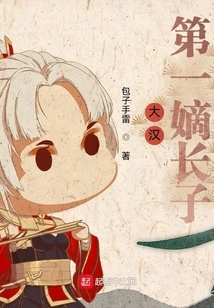
The First Eldest Son of Han Dynasty
by Bun Grenade
About This Novel
"Hanshu" records: In the first year of Yuanshuo, Emperor Wu got a prince on the 29th of the Spring and Autumn Period, and all the ministers were happy. Therefore, Gao Gao and Dongfang Shuo wrote "Ode to the Prince's Life" and "Blessings for the Establishment of the Prince". They did not follow the story and attached great importance to the prince.
Official Sources
What Readers Think
Rating
Community(0)
Official(16)Scraped 2mo ago
Liu Zhi's death was not unjust!
In fact, Liu Zhi's death was not unfair at all! To understand this issue, we have to start from the beginning. In 128 BC, the 29-year-old Emperor Wu of Han Dynasty Liu Che finally welcomed his first baby boy, his eldest son Liu Ju. For modern people, 29 years old is the age when they graduate from college and have just established a foothold in society. Getting married and having children seems a bit far away; however, for ancient people, 29 years old is already the age when they can be "upgraded" to become grandfathers. Therefore, Emperor Wu of the Han Dynasty valued this belated baby boy very much. On the day Liu Ju was born, Emperor Wu asked some of the most famous pen writers in the Han Empire to write poems and biographies praising this "big imperial event". Soon after, in order to enhance Liu Zheng's status, Emperor Wu of the Han Dynasty appointed Liu Zheng's biological mother, Wei Zifu, a former singer, as the mother of the Han Dynasty. The so-called "mother is valued by her son, and son is honored by her mother", is that just that? At the beginning, on the twenty-ninth day of the previous year, the crown prince was very happy and ordered Dongfang Shuo and Meigao to make the wedding ceremony. There is no doubt that the "start" of the eldest son Liu Zhi was quite good - at that time, his mother was in her prime and favored in the harem; his uncle Wei Qing was also beginning to show his prominence and was growing into a pillar of the empire. With the natural advantage of the eldest son, the strong support of his mother's family, and the unlimited expectations of his father, in 122 BC, Liu Zhi, who was only seven years old, was undoubtedly determined to be the successor of the Han Empire. If things continue like this, when future generations choose the most powerful crown prince in Chinese history, the first thing that comes to mind should be Liu Zhi, not Zhu Biao. Unfortunately, there is no if in history! As Liu Zheng grew up day by day, his relationship with his father, Emperor Wu of the Han Dynasty, gradually became distant and silent. Here's the thing: Because Liu Zheng was "benevolent, forgiving, gentle and cautious" by nature, he was completely opposite to the fierce and decisive imperial temperament of Emperor Wu of the Han Dynasty. Therefore, whenever Emperor Wu of the Han Dynasty stared at Liu Zhi, who was growing up day by day, he could not help but think of a question: Is this guy his biological child? As he grows older, he has a benevolent, tolerant and gentle nature, but his superiors think he has few talents and is not like himself. In addition, later on, Wei Zifu's love faded, Emperor Wu of the Han Dynasty had a new love, and there were other sons to choose as heirs, so it was inevitable that he would have a "cold" feeling towards Liu Shi. Of course, as a heroic leader of the generation, Emperor Wu of the Han Dynasty naturally knew that after going on an "extensive military campaign", choosing a "civilian ruler" to recuperate and recuperate was the long-lasting way for the empire to last for thousands of years. Therefore, once, Emperor Wu of the Han Dynasty specially summoned Wei Qing and asked him to comfort the prince, mother and son. The favor of the queen and the prince is declining, and they often feel uneasy. When the emperor was aware of it, he said to the general Qing: "The Han family created the common affairs and invaded China with the barbarians. If I don't change the system, future generations will be unable to do so. If I don't send out troops to conquer, the world will be uneasy. For this reason, I have to work hard for the people." If future generations do what I did, it will be a sign of attacking and destroying Qin. I hope that the Lord of Shouwen will be more virtuous than the Crown Prince! I heard that the queen and the prince were uneasy, how could this be wrong? You can understand it. Qing Shijun said: As an iron-blooded emperor, it is definitely quite interesting for Emperor Wu of the Han Dynasty to be able to put down his body and explain and comfort the prince who was "not from the same family" as him. On the other hand, the performance of Prince Liu Zhi was a bit ignorant - he regarded Emperor Wu of the Han Dynasty's relief to him as the emperor's "bowing his head and admitting his mistake"; Whenever Emperor Wu of the Han Dynasty asked the prince to supervise the country, Liu Zhi would go against his father's temper and specifically redress the "unjust prison" that Emperor Wu of the Han Dynasty had long recognized. He is strict in his usage of law and has been appointed as a senior official. The prince is generous and has been rehabilitated in many cases... We don't know what Emperor Wu of the Han Dynasty thought about Liu Zheng's actions; however, there are clear records in the history books about what the powerful people in the Han Dynasty and the ruthless officials who were employed by Emperor Wu of the Han Dynasty thought: Anyone who uses it harshly will destroy it (Liu Zhi). There are many evil ministers and parties, so the prince's reputation is less but his destruction is more. It is obvious: Liu Ju's reckless and insistent actions directly summoned a large number of "political opponents" to himself, who could have lived together peacefully. Moreover, from this matter, we can easily draw a conclusion, that is: as a prince, Liu Zhi did not understand politics at all, let alone maneuvering. Why do you say that? Because, in official circles, it is always important to "unify ideas" first and then implement them concretely. Just think about it: if the leader wants to do something, but there is opposition from below, how can he do it? Moreover, Emperor Wu of the Han Dynasty had long told Liu Zhi that he was "working hard" for the long-term stability of the Chinese nation and the prosperity of the Han Dynasty; your idea of "not fighting with the people" is the policy agenda of the next government. You can keep it, but please don't come out and cause trouble now! However, Liu Zhi did not realize this. He ignores the overall situation and insists on going his own way; he thinks that what he does is right; however, he does not know that this kind of behavior is taboo in the officialdom - both the first and second leaders openly sing the opposite, so what should the people below do? The answer is obvious: we must first unify our thoughts and let one of them get out of class! At this point, I think everyone can actually understand the fundamental reason why Emperor Wu of the Han Dynasty had most likely known that Liu Zhi was unjustly accused in the "Witch Gu Disaster", but still had an ambiguous attitude. Moreover, Liu Zheng's political "immaturity" showed many other manifestations: When Emperor Wu of Han's descendants gradually increased in number, Liu Zhi, one of them, did not realize at all that his brothers also had the right to inherit and were also objects that needed to be guarded against and suppressed. It is clearly recorded in the history books that Su Wen and Chang Rong, the eunuchs of the Xiaohuangmen, admittedly slandered the prince Liu Zhi in front of Emperor Wu of the Han Dynasty. When Wei Zifu suggested that his son "kill the chicken to scare the monkey", Liu Zhi said confidently: "If you are upright, you are not afraid of the shadow. The emperor is so smart, so he will not wrongly accuse me." Obviously: Liu Zhi has no idea that in the officialdom, if you don't show your fangs, no one will be afraid of your truth! The logic behind Liu Ju's move is that he, who had already participated in a life-and-death power struggle, took the initiative to hand over his right to survival into the hands of others! This~~~ So later, the villain Jiang Chong dared to slander Liu Zhi unscrupulously. Moreover, most of the people around Liu Zheng were scholars who could only "talk the talk". They were not able to lead the cruelty and complexity of the power struggle at all! In the end, when Wei Qing died, Liu Zhi had basically no threat at all in the court, and his downfall was actually already doomed! After Wei Qing passed away, his subordinates had no other family to rely on, and they all wanted to be the crown prince. Conclusion: Liu Zhi may have died unjustly due to the "innocent disaster", but looking at the various events in his life: He did not understand politics and openly opposed Emperor Wu of the Han Dynasty; His wife's kindness was not ruthless enough in dealing with villains who dared to frame her, and she did not stop the loss in time; He lacked the political literacy expected of an emperor and failed to properly build his own political team. When Wei Qing died, he was basically blind; All of these reveal to us the fact that as an heir to the empire, Liu Zhi's performance was too poor! In fact, his death was not unfair at all!
Come on!
I don't have any money, so I can't get a monthly ticket, so I can only vote for recommendations and support it.
It's really SB, don't read it, it's rubbish.
finally updated
I thought it was a eunuch, but it's not easy to finally update it.
The content is great, I like it very much, it's fascinating and makes people forget to come back.
A eunuch? ? ? Such a good book eunuch? ? ?
Write quickly, you don't know how to be a eunuch, do you? I need to update it, it's very well written.
It hasn't been updated yet, so it's no longer a eunuch, right? Need to write
Update the dead eunuch quickly
When did Huawei become necessary before last year?
Cut?
Is this a eunuch? This is too doggy, right?
Rating
Community(0)
Official(16)Scraped 2mo ago
Liu Zhi's death was not unjust!
In fact, Liu Zhi's death was not unfair at all! To understand this issue, we have to start from the beginning. In 128 BC, the 29-year-old Emperor Wu of Han Dynasty Liu Che finally welcomed his first baby boy, his eldest son Liu Ju. For modern people, 29 years old is the age when they graduate from college and have just established a foothold in society. Getting married and having children seems a bit far away; however, for ancient people, 29 years old is already the age when they can be "upgraded" to become grandfathers. Therefore, Emperor Wu of the Han Dynasty valued this belated baby boy very much. On the day Liu Ju was born, Emperor Wu asked some of the most famous pen writers in the Han Empire to write poems and biographies praising this "big imperial event". Soon after, in order to enhance Liu Zheng's status, Emperor Wu of the Han Dynasty appointed Liu Zheng's biological mother, Wei Zifu, a former singer, as the mother of the Han Dynasty. The so-called "mother is valued by her son, and son is honored by her mother", is that just that? At the beginning, on the twenty-ninth day of the previous year, the crown prince was very happy and ordered Dongfang Shuo and Meigao to make the wedding ceremony. There is no doubt that the "start" of the eldest son Liu Zhi was quite good - at that time, his mother was in her prime and favored in the harem; his uncle Wei Qing was also beginning to show his prominence and was growing into a pillar of the empire. With the natural advantage of the eldest son, the strong support of his mother's family, and the unlimited expectations of his father, in 122 BC, Liu Zhi, who was only seven years old, was undoubtedly determined to be the successor of the Han Empire. If things continue like this, when future generations choose the most powerful crown prince in Chinese history, the first thing that comes to mind should be Liu Zhi, not Zhu Biao. Unfortunately, there is no if in history! As Liu Zheng grew up day by day, his relationship with his father, Emperor Wu of the Han Dynasty, gradually became distant and silent. Here's the thing: Because Liu Zheng was "benevolent, forgiving, gentle and cautious" by nature, he was completely opposite to the fierce and decisive imperial temperament of Emperor Wu of the Han Dynasty. Therefore, whenever Emperor Wu of the Han Dynasty stared at Liu Zhi, who was growing up day by day, he could not help but think of a question: Is this guy his biological child? As he grows older, he has a benevolent, tolerant and gentle nature, but his superiors think he has few talents and is not like himself. In addition, later on, Wei Zifu's love faded, Emperor Wu of the Han Dynasty had a new love, and there were other sons to choose as heirs, so it was inevitable that he would have a "cold" feeling towards Liu Shi. Of course, as a heroic leader of the generation, Emperor Wu of the Han Dynasty naturally knew that after going on an "extensive military campaign", choosing a "civilian ruler" to recuperate and recuperate was the long-lasting way for the empire to last for thousands of years. Therefore, once, Emperor Wu of the Han Dynasty specially summoned Wei Qing and asked him to comfort the prince, mother and son. The favor of the queen and the prince is declining, and they often feel uneasy. When the emperor was aware of it, he said to the general Qing: "The Han family created the common affairs and invaded China with the barbarians. If I don't change the system, future generations will be unable to do so. If I don't send out troops to conquer, the world will be uneasy. For this reason, I have to work hard for the people." If future generations do what I did, it will be a sign of attacking and destroying Qin. I hope that the Lord of Shouwen will be more virtuous than the Crown Prince! I heard that the queen and the prince were uneasy, how could this be wrong? You can understand it. Qing Shijun said: As an iron-blooded emperor, it is definitely quite interesting for Emperor Wu of the Han Dynasty to be able to put down his body and explain and comfort the prince who was "not from the same family" as him. On the other hand, the performance of Prince Liu Zhi was a bit ignorant - he regarded Emperor Wu of the Han Dynasty's relief to him as the emperor's "bowing his head and admitting his mistake"; Whenever Emperor Wu of the Han Dynasty asked the prince to supervise the country, Liu Zhi would go against his father's temper and specifically redress the "unjust prison" that Emperor Wu of the Han Dynasty had long recognized. He is strict in his usage of law and has been appointed as a senior official. The prince is generous and has been rehabilitated in many cases... We don't know what Emperor Wu of the Han Dynasty thought about Liu Zheng's actions; however, there are clear records in the history books about what the powerful people in the Han Dynasty and the ruthless officials who were employed by Emperor Wu of the Han Dynasty thought: Anyone who uses it harshly will destroy it (Liu Zhi). There are many evil ministers and parties, so the prince's reputation is less but his destruction is more. It is obvious: Liu Ju's reckless and insistent actions directly summoned a large number of "political opponents" to himself, who could have lived together peacefully. Moreover, from this matter, we can easily draw a conclusion, that is: as a prince, Liu Zhi did not understand politics at all, let alone maneuvering. Why do you say that? Because, in official circles, it is always important to "unify ideas" first and then implement them concretely. Just think about it: if the leader wants to do something, but there is opposition from below, how can he do it? Moreover, Emperor Wu of the Han Dynasty had long told Liu Zhi that he was "working hard" for the long-term stability of the Chinese nation and the prosperity of the Han Dynasty; your idea of "not fighting with the people" is the policy agenda of the next government. You can keep it, but please don't come out and cause trouble now! However, Liu Zhi did not realize this. He ignores the overall situation and insists on going his own way; he thinks that what he does is right; however, he does not know that this kind of behavior is taboo in the officialdom - both the first and second leaders openly sing the opposite, so what should the people below do? The answer is obvious: we must first unify our thoughts and let one of them get out of class! At this point, I think everyone can actually understand the fundamental reason why Emperor Wu of the Han Dynasty had most likely known that Liu Zhi was unjustly accused in the "Witch Gu Disaster", but still had an ambiguous attitude. Moreover, Liu Zheng's political "immaturity" showed many other manifestations: When Emperor Wu of Han's descendants gradually increased in number, Liu Zhi, one of them, did not realize at all that his brothers also had the right to inherit and were also objects that needed to be guarded against and suppressed. It is clearly recorded in the history books that Su Wen and Chang Rong, the eunuchs of the Xiaohuangmen, admittedly slandered the prince Liu Zhi in front of Emperor Wu of the Han Dynasty. When Wei Zifu suggested that his son "kill the chicken to scare the monkey", Liu Zhi said confidently: "If you are upright, you are not afraid of the shadow. The emperor is so smart, so he will not wrongly accuse me." Obviously: Liu Zhi has no idea that in the officialdom, if you don't show your fangs, no one will be afraid of your truth! The logic behind Liu Ju's move is that he, who had already participated in a life-and-death power struggle, took the initiative to hand over his right to survival into the hands of others! This~~~ So later, the villain Jiang Chong dared to slander Liu Zhi unscrupulously. Moreover, most of the people around Liu Zheng were scholars who could only "talk the talk". They were not able to lead the cruelty and complexity of the power struggle at all! In the end, when Wei Qing died, Liu Zhi had basically no threat at all in the court, and his downfall was actually already doomed! After Wei Qing passed away, his subordinates had no other family to rely on, and they all wanted to be the crown prince. Conclusion: Liu Zhi may have died unjustly due to the "innocent disaster", but looking at the various events in his life: He did not understand politics and openly opposed Emperor Wu of the Han Dynasty; His wife's kindness was not ruthless enough in dealing with villains who dared to frame her, and she did not stop the loss in time; He lacked the political literacy expected of an emperor and failed to properly build his own political team. When Wei Qing died, he was basically blind; All of these reveal to us the fact that as an heir to the empire, Liu Zhi's performance was too poor! In fact, his death was not unfair at all!
Come on!
I don't have any money, so I can't get a monthly ticket, so I can only vote for recommendations and support it.
It's really SB, don't read it, it's rubbish.
finally updated
I thought it was a eunuch, but it's not easy to finally update it.
The content is great, I like it very much, it's fascinating and makes people forget to come back.
A eunuch? ? ? Such a good book eunuch? ? ?
Write quickly, you don't know how to be a eunuch, do you? I need to update it, it's very well written.
It hasn't been updated yet, so it's no longer a eunuch, right? Need to write
Update the dead eunuch quickly
When did Huawei become necessary before last year?
Cut?
Is this a eunuch? This is too doggy, right?
Featured in 1 Booklist
You Might Also Like

Reborn Female General
Qianshan Tea Guest
The First Prince of Ming Dynasty
Night Stars And Moon Language
The Evil Son of Ming Dynasty
Nanshan Hall
My Uncle's Name is Zhu Di
History Turns To Ashes
Jingtai Fengyun: the First Absurd Emperor of the Ming Dynasty
Empress Of The West Palace Jade Spirit Moon
Jingtai of the Ming Dynasty: I Am the Benevolent King of the Ages
Xiao Lanyi
Qin Yan
Bright Qin Shiyue
The Most Treacherous Minister in Jiajing, Ming Dynasty
Xingchenjiu
Prince of the Han Dynasty
Youth Cannot Be Brought Back
Ming Dynasty: Zhu Yuanzhang's Nephew Became Emperor
Lanma Tundra