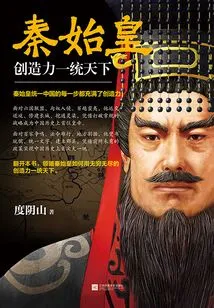
Qin Shihuang: Creativity Rules the World
About This Novel
The new biography of Du Yinshan, the author of the million-selling book "The Unity of Knowledge and Action" by Wang Yangming. Every step Qin Shihuang took to unify the world was full of creativity. In the face of the Six-Nation Alliance, the invasion of the Huns, and the barbarians of Baiyue, he made close contacts with distant enemies, built the Great Wall, and dug spiritual canals. He relied on unconventional strategies to become the first emperor in Chinese history. Faced with the contention of hundreds of schools of thought, the difficulty of enforcing laws, and local separatism, he burned books and harassed Confucian scholars, unified writing, established counties and counties, and achieved the first great unification in Chinese history with policies that no one before him had thought of. Open this book and appreciate the core secret of Qin Shihuang's unification of the world - creativity. In order to build a great Qin Empire that would last forever, Qin Shihuang formulated a series of systems and policies that his predecessors could not even imagine. Although his empire only lasted for 14 years, his systems became the objects of reference and imitation by all subsequent emperors, influencing ancient Chinese politics for 2,000 years. He is the founder of the unified dynasty; he is the founder of the title of emperor; he is the founder of centralization; he is the builder of the world's miracle, the Great Wall...
Official Sources
What Readers Think
Rating
Community(0)
Official(9)Scraped 2mo ago
The overall feeling is okay, but some parts are not so good, and it always feels a little bit worse.
Qin Shihuang, the Emperor of Eternity: A historical monument with great talent, strategy and controversy.
Qin Shi Huang Ying Zheng, as the first monarch in Chinese history to be called "Emperor", his life was full of legend. He unified the six countries with thunderous power, ended more than 500 years of division in the Spring and Autumn Period and the Warring States Period, and established the first unified dynasty in Chinese history. However, his harsh rule and many controversial actions during his reign also gave him mixed reviews from later generations. The merits and demerits of this emperor who stood at a turning point in history are still hotly debated today. 1. The epoch-making feat of unification Qin Shihuang's greatest achievement was to realize the political, economic and cultural unification of China. From 230 BC to 221 BC, he used the "remnants of Fen VI" to send generals such as Wang Jian and Wang Ben to successively destroy the six kingdoms of Han, Zhao, Wei, Chu, Yan, and Qi, using strategies such as distant friendship and close attack, and division and alienation. This ended the long-term feudal feudal situation and established a huge empire stretching from the East China Sea in the east, to Longxi in the west, to the South China Sea in the south, and to the Great Wall in the north. After unification, Qin Shihuang implemented a series of far-reaching institutional changes. He abolished the feudal system, implemented the county system throughout the country, brought local power to the central government, and realized a centralized political system. This system became the basic political framework of the feudal dynasty for more than two thousand years. He unified the writing system into Xiaozhuan, so that people from different regions can communicate without barriers. Local exchanges promoted the spread of culture and the formation of national identity; unified currency, weights and measures, and stipulated the use of round square hole half taels across the country, and unified length, capacity, and weight units, which greatly facilitated commercial trade and economic exchanges and promoted social and economic development. In addition, he also vigorously built Chidao and straight roads, built a huge transportation network, and strengthened the central government's control over local areas and the connections between various places. 2. The construction and development of Qianqiu During his reign, Qin Shihuang carried out a number of magnificent construction projects, showing extraordinary courage and foresight. He ordered the connection and repair of defense fortifications in various countries during the Warring States Period, forming the world-famous Great Wall, which effectively resisted the intrusion of nomadic tribes such as the Huns in the north, and provided guarantee for the stability and development of the Central Plains region; in the south, he sent Tu Sui and Zhao Tuo to lead an army of 500,000 to conquer Baiyue, and incorporated the Lingnan region into the Chinese territory , and dug the Ling Canal, connecting the Yangtze River water system and the Pearl River water system, promoting economic and cultural exchanges between the Lingnan region and the Central Plains; at the same time, he also built palaces and imperial mausoleums on a large scale. Although the Epang Palace was not completed, it was full of luxury. The Mausoleum of Qin Shihuang was even grander in scale. The discovery of the Terracotta Warriors shocked the world and can be called a miracle of human art and engineering. Although these projects consume a lot of manpower and material resources, in the long run, they are of great significance to consolidating unity and promoting the development of civilization. 3. Controversial means of governance However, Qin Shihuang's rule was also criticized for its harsh laws and brutal behavior. In order to strengthen his ideological control, he adopted Li Si's suggestion and ordered the burning of all books except Qin history, medicine, divination, and agricultural books, which was known as "book burning" in history. Later, because the alchemists Lu Sheng, Hou Sheng, and others slandered Qin Shihuang and fled, Qin Shihuang ordered the killing of more than 460 Confucian scholars and alchemists in Xianyang, which was known as "Burning Confucians." Although "burning books and entrapping Confucianism" maintained ideological unity to a certain extent, it also severely damaged cultural inheritance and triggered dissatisfaction and resistance among intellectuals. In addition, when Qin Shihuang was in power, corvées and taxes were heavy. The construction of large-scale projects such as the Great Wall, Epang Palace, and the Mausoleum of Qin Shihuang mobilized millions of laborers and forced a large number of young and middle-aged people to leave the land, resulting in serious impacts on agricultural production; heavy taxes made the people's lives difficult and destitute. He also implemented severe punishments and ruled the world with cruel officials. Anyone who violated the law would be severely punished. The people were under high-pressure rule for a long time, and dissatisfaction with the Qin Dynasty continued to accumulate. These measures also laid hidden dangers for the rapid demise of the Qin Dynasty. 4. Immortal status in the long history of history Although there are many controversies surrounding Qin Shihuang's rule, it is undeniable that he had a profound and irreplaceable impact on the development of Chinese history. The unified pattern and centralized power system he created established the basic pattern of China's feudal political system for more than two thousand years, and were inherited and developed by successive dynasties; the economic and cultural unification he promoted promoted the integration and unity of the Chinese nation, and enhanced national cohesion; his talent, strategy and pioneering spirit inspired countless emperors and politicians in later generations. Qin Shihuang is like a historical monument. His achievements and mistakes have become an indispensable part of the development of Chinese civilization and are worthy of continuous reflection and study by future generations.
Stop reading, it's a waste of time
Rubbish, very rubbish writing, all imaginary
Analysis from multiple angles makes people think...
After analyzing many things from multiple angles, I found that there is no so-called right or wrong. Well written and worth reading!
I really like this character. He was the first person in ancient times to unify a country.
In humorous and interesting language, it succinctly and clearly describes how Yingzheng established the Qin Empire and its demise. It does not elaborate on personal subjective thoughts, but uses objective evaluation to guide people to understand history and correctly evaluate the historical figure Qin Shihuang. Worth reading.
Overall it's pretty good
It allows people to understand Qin from many aspects
Good,,,,,,,,
A very good book, worth reading
Rating
Community(0)
Official(9)Scraped 2mo ago
The overall feeling is okay, but some parts are not so good, and it always feels a little bit worse.
Qin Shihuang, the Emperor of Eternity: A historical monument with great talent, strategy and controversy.
Qin Shi Huang Ying Zheng, as the first monarch in Chinese history to be called "Emperor", his life was full of legend. He unified the six countries with thunderous power, ended more than 500 years of division in the Spring and Autumn Period and the Warring States Period, and established the first unified dynasty in Chinese history. However, his harsh rule and many controversial actions during his reign also gave him mixed reviews from later generations. The merits and demerits of this emperor who stood at a turning point in history are still hotly debated today. 1. The epoch-making feat of unification Qin Shihuang's greatest achievement was to realize the political, economic and cultural unification of China. From 230 BC to 221 BC, he used the "remnants of Fen VI" to send generals such as Wang Jian and Wang Ben to successively destroy the six kingdoms of Han, Zhao, Wei, Chu, Yan, and Qi, using strategies such as distant friendship and close attack, and division and alienation. This ended the long-term feudal feudal situation and established a huge empire stretching from the East China Sea in the east, to Longxi in the west, to the South China Sea in the south, and to the Great Wall in the north. After unification, Qin Shihuang implemented a series of far-reaching institutional changes. He abolished the feudal system, implemented the county system throughout the country, brought local power to the central government, and realized a centralized political system. This system became the basic political framework of the feudal dynasty for more than two thousand years. He unified the writing system into Xiaozhuan, so that people from different regions can communicate without barriers. Local exchanges promoted the spread of culture and the formation of national identity; unified currency, weights and measures, and stipulated the use of round square hole half taels across the country, and unified length, capacity, and weight units, which greatly facilitated commercial trade and economic exchanges and promoted social and economic development. In addition, he also vigorously built Chidao and straight roads, built a huge transportation network, and strengthened the central government's control over local areas and the connections between various places. 2. The construction and development of Qianqiu During his reign, Qin Shihuang carried out a number of magnificent construction projects, showing extraordinary courage and foresight. He ordered the connection and repair of defense fortifications in various countries during the Warring States Period, forming the world-famous Great Wall, which effectively resisted the intrusion of nomadic tribes such as the Huns in the north, and provided guarantee for the stability and development of the Central Plains region; in the south, he sent Tu Sui and Zhao Tuo to lead an army of 500,000 to conquer Baiyue, and incorporated the Lingnan region into the Chinese territory , and dug the Ling Canal, connecting the Yangtze River water system and the Pearl River water system, promoting economic and cultural exchanges between the Lingnan region and the Central Plains; at the same time, he also built palaces and imperial mausoleums on a large scale. Although the Epang Palace was not completed, it was full of luxury. The Mausoleum of Qin Shihuang was even grander in scale. The discovery of the Terracotta Warriors shocked the world and can be called a miracle of human art and engineering. Although these projects consume a lot of manpower and material resources, in the long run, they are of great significance to consolidating unity and promoting the development of civilization. 3. Controversial means of governance However, Qin Shihuang's rule was also criticized for its harsh laws and brutal behavior. In order to strengthen his ideological control, he adopted Li Si's suggestion and ordered the burning of all books except Qin history, medicine, divination, and agricultural books, which was known as "book burning" in history. Later, because the alchemists Lu Sheng, Hou Sheng, and others slandered Qin Shihuang and fled, Qin Shihuang ordered the killing of more than 460 Confucian scholars and alchemists in Xianyang, which was known as "Burning Confucians." Although "burning books and entrapping Confucianism" maintained ideological unity to a certain extent, it also severely damaged cultural inheritance and triggered dissatisfaction and resistance among intellectuals. In addition, when Qin Shihuang was in power, corvées and taxes were heavy. The construction of large-scale projects such as the Great Wall, Epang Palace, and the Mausoleum of Qin Shihuang mobilized millions of laborers and forced a large number of young and middle-aged people to leave the land, resulting in serious impacts on agricultural production; heavy taxes made the people's lives difficult and destitute. He also implemented severe punishments and ruled the world with cruel officials. Anyone who violated the law would be severely punished. The people were under high-pressure rule for a long time, and dissatisfaction with the Qin Dynasty continued to accumulate. These measures also laid hidden dangers for the rapid demise of the Qin Dynasty. 4. Immortal status in the long history of history Although there are many controversies surrounding Qin Shihuang's rule, it is undeniable that he had a profound and irreplaceable impact on the development of Chinese history. The unified pattern and centralized power system he created established the basic pattern of China's feudal political system for more than two thousand years, and were inherited and developed by successive dynasties; the economic and cultural unification he promoted promoted the integration and unity of the Chinese nation, and enhanced national cohesion; his talent, strategy and pioneering spirit inspired countless emperors and politicians in later generations. Qin Shihuang is like a historical monument. His achievements and mistakes have become an indispensable part of the development of Chinese civilization and are worthy of continuous reflection and study by future generations.
Stop reading, it's a waste of time
Rubbish, very rubbish writing, all imaginary
Analysis from multiple angles makes people think...
After analyzing many things from multiple angles, I found that there is no so-called right or wrong. Well written and worth reading!
I really like this character. He was the first person in ancient times to unify a country.
In humorous and interesting language, it succinctly and clearly describes how Yingzheng established the Qin Empire and its demise. It does not elaborate on personal subjective thoughts, but uses objective evaluation to guide people to understand history and correctly evaluate the historical figure Qin Shihuang. Worth reading.
Overall it's pretty good
It allows people to understand Qin from many aspects
Good,,,,,,,,
A very good book, worth reading