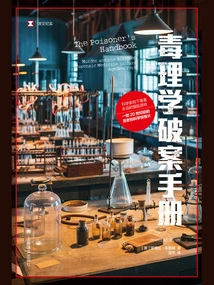
Toxicology Crime Solving Manual (translated Documentary)
About This Novel
"Toxicology Handbook of Solving Cases" tells a fascinating story about chemistry and criminal investigation, poisons and murder. The author is a lifelong consultant to the National Academy of Sciences and a Pulitzer Prize winner. Through the detection of 11 representative poisons and related famous cases, she briefly describes the birth of toxicology, a modern science, in the 1920s and its subsequent applications. In early 20th century New York, drugs provided a shortcut to the perfect crime. Because there was almost no way to detect poisonous substances in corpses, poisoners could get away with it after using poison to solve their troubles, so poisoning and murder became a boom. At that time, there was no place for scientific coroners; corruption was rampant, and death certificates were issued by the police. As long as they were bribed, the death of the deceased would be "natural" even if the body bleeds from the orifices. Ordinary people poisoned and killed for love and money, and what was even more terrifying was that the U. S. Government openly poisoned alcoholic beverages in order to ban alcohol... Fortunately, in 1918, a superb pathologist, Charles Norris, was hired against all odds and became New York's first trained drug tester. Then, the poisoning game changed forever. As soon as Norris took office, he recruited the talented chemist Alexander Gertler, and together the two founded and directed the city's first toxicology laboratory. With their efforts, toxicology has become a formidable science in the United States. Their pioneering scientific investigation work has not only made it possible for many poisoners to escape, but also made the judicial system look new. After the book was published, it became very popular in the United States. It was written by the author and made into a documentary of the same name.
Official Sources
What Readers Think
Rating
Community(0)
Rating
Community(0)