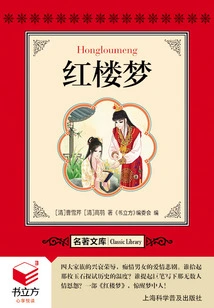
A Dream of Red Mansions (masterpiece Library)
by (qing Dynasty) Cao Xueqin, Gao E, Editor Of The Editorial Board Of "book Cube"
About This Novel
This book is China's most literary masterpiece of classical literature, the pinnacle of Chinese classical literature creation, and a cultural treasure for all mankind. The book takes the four major families of Jia, Shi, Wang, and Xue as the background, and takes the love tragedy of Jia Baoyu and Lin Daiyu as the main line. It focuses on describing the process of Jia Jiarong and Ning's two houses from prosperity to decline, and comprehensively describes the human nature and various irreconcilable contradictions in the last days of feudal society.
Official Sources
What Readers Think
Rating
Community(0)
Official(1)Scraped 2mo ago
The last forty chapters of "A Dream of Red Mansions" have been controversial since its publication. The issue of its artistic value and authorship has always been a core issue in the Red Mansions circle. 1. Plot logic: frequent flaws and broken foreshadowings 1. Sudden change in Jia Mu's attitude In the first eighty chapters, Jia's mother took great care of Daiyu, but in the last forty chapters, she suddenly became indifferent and even accused Daiyu of being "careful". This change lacked psychological foreshadowing and was criticized as "separating the complexity of the character." For example, in Chapter 96, Mother Jia's indifferent attitude toward Bao Dai is in sharp contrast to the previous image, and is accused of being a "utilitarian choice between power and family affection." 2. The logic of key plots collapses - The vulgarization of Miaoyu's abduction: in the first eighty chapters, Miaoyu is noble and aloof, but in the last forty chapters, she becomes a victim of robbery by bandits. The description is naked and vulgar, which weakens the literary beauty of the character. - Jia Yun's darkening and kidnapping of Qiaojie: Jia Yun suddenly "blackened" from a progressive young man and colluded with Uncle Xing to kidnap and kidnap Qiaojie. She lacked any motive and was ridiculed as "forcibly finding loopholes in the plot." - The dramatization of Daiyu's death: Daiyu died on hunger strike and burned her manuscript due to the "subcontracting scheme". The plot was too straightforward, contrary to the implicit tragic aesthetics of the first eighty chapters, and was accused of being "a tragedy rather than a tragedy." 3. Failure of foreshadowing and prophecy For example, the sentence of Tanchun, "Looking at the riverside with tears on the Qingming Festival, and a dream far away in the east wind thousands of miles away" indicates that he will marry overseas, but the next forty chapters are only hastily treated as "marriage far away", which does not reflect the desolation of "three thousand years of wind and rain"; the evil deeds of Jia Zhen and his son in Ningguo Mansion were not severely punished, which contradicts the understatement of the plot of confiscating the house. 2. Character creation: character fracture, dimensionality reduction processing 1. Alienation of core characters - Jia Mu: From an aesthetic master who "broke out of the old" to a moral defender, her "spreading away the remaining wisdom to enlighten the righteousness" is powerful, but it is separated from the hedonistic image of the first eighty chapters. - Wang Xifeng: From a pink hero who was "too smart for all the agencies" to a market woman with a mother-in-law, Sister Feng's poem "Returning Home in Rich Clothes" seriously does not match the character's personality. - Baoyu: In the last forty chapters, Baoyu participates in the imperial examination and worships his father as a filial piety. This is contrary to the image of a rebel in the first eighty chapters and is ridiculed as a "compromiser of worldly desires." 2. Toolization of supporting roles For example, Xiren changes from a "gentle and virtuous" person to a target of attack, while Miaoyu's experience lacks in-depth characterization and becomes a victim of plot advancement. The character arcs are broken and the complexity of the first eighty chapters is lost. 3. Theme expression: tragedy resolved, values inverted 1. Weakening of the core of tragedy The first eighty chapters use "the vast white earth is so clean" as the ultimate prophecy, but the last forty chapters end with "Lan Gui Qi Fang". The plots such as the revival of the Jia family and Baoyu's passing of the imperial examination went against the original sense of fate of "the decline of the four major families" and were criticized as "compromises under political correctness". 2. The separation of emotion and reason Bao Dai's love fell from soul resonance to a victim of secular ethics. Bao Yu's description of "boudoir happiness" with Bao Chai before becoming a monk was ridiculed as "comedy moral kidnapping", which is contrary to the philosophical core of "love without emotion". 4. Literary value: gains and losses in disputes 1. The affirmative's defense - Scholars such as Bai Xianyong and Wang Meng believe that the last forty chapters complete the climax of the tragedy, such as the scenes of Daiyu burning manuscripts and Baoyu becoming a monk, which have "the ultimate artistic conception of lyrical writing". - Some chapters (such as Jia's mother dispersing her remaining wealth and Yuanyang's martyrdom for her lord) are considered to retain the writing style of Cao Xueqin's original manuscript, and the language style is naturally connected with the first eighty chapters. 2. Negative criticism - Zhang Ailing, Hu Shi and others denounced it as "the dog's tail continues the mink", believing that the writing style of the last forty chapters is rough, the poetry is lacking, and the artistic level is far inferior to the first eighty chapters. - The psychological portrayal of the characters is weak, such as Daiyu's resentment against Baoyu before her death, Jia's mother chewing her tongue, etc., Which were criticized for "lack of human depth". 5. Metaphor controversy in history and politics 1. The fog of authorship Forty chapters after Hu Shi's textual research were continued by Gao E. However, scholars such as Zhou Shaoliang and Zheng Tiesheng argued that it contained Cao Xueqin's remaining manuscripts, and Cheng Weiyuan and Gao E only edited and repaired it. The focus of the controversy is: if it is a continuation, why can it accurately connect the foreshadowing of the first 80 chapters? If it is a incomplete manuscript, why are there logical flaws? 2. Compromise within the limitations of the times Some people believe that in order to avoid "literary prison", the last forty chapters were forced to rewrite the anti-Qing metaphors of the original work (such as the revival of the Jia family to symbolize the legitimacy of Qing rule) into the ending of "loyalty to the emperor and serving the country", resulting in a distortion of the theme. Conclusion: The beauty of incompleteness and the dilemma of continuation The last forty chapters of "A Dream of Red Mansions" are like a prism, reflecting the complex destiny of the classic text. It not only fills the narrative gaps of the first eighty chapters, but also exposes the limitations of the continuation writer with its "imperfection". If the dispute over authorship is stripped away, its value lies in: it allows readers to have a glimpse of Cao Xueqin's unfinished tragic blueprint, and it also forces us to reflect on the eternal contradiction between "integrity" and "literariness." As Lu Xun said: "Tragedy destroys the valuable things in life for people to see." The flaws in the last forty chapters are exactly the regret that the original work was not destroyed.
Rating
Community(0)
Official(1)Scraped 2mo ago
The last forty chapters of "A Dream of Red Mansions" have been controversial since its publication. The issue of its artistic value and authorship has always been a core issue in the Red Mansions circle. 1. Plot logic: frequent flaws and broken foreshadowings 1. Sudden change in Jia Mu's attitude In the first eighty chapters, Jia's mother took great care of Daiyu, but in the last forty chapters, she suddenly became indifferent and even accused Daiyu of being "careful". This change lacked psychological foreshadowing and was criticized as "separating the complexity of the character." For example, in Chapter 96, Mother Jia's indifferent attitude toward Bao Dai is in sharp contrast to the previous image, and is accused of being a "utilitarian choice between power and family affection." 2. The logic of key plots collapses - The vulgarization of Miaoyu's abduction: in the first eighty chapters, Miaoyu is noble and aloof, but in the last forty chapters, she becomes a victim of robbery by bandits. The description is naked and vulgar, which weakens the literary beauty of the character. - Jia Yun's darkening and kidnapping of Qiaojie: Jia Yun suddenly "blackened" from a progressive young man and colluded with Uncle Xing to kidnap and kidnap Qiaojie. She lacked any motive and was ridiculed as "forcibly finding loopholes in the plot." - The dramatization of Daiyu's death: Daiyu died on hunger strike and burned her manuscript due to the "subcontracting scheme". The plot was too straightforward, contrary to the implicit tragic aesthetics of the first eighty chapters, and was accused of being "a tragedy rather than a tragedy." 3. Failure of foreshadowing and prophecy For example, the sentence of Tanchun, "Looking at the riverside with tears on the Qingming Festival, and a dream far away in the east wind thousands of miles away" indicates that he will marry overseas, but the next forty chapters are only hastily treated as "marriage far away", which does not reflect the desolation of "three thousand years of wind and rain"; the evil deeds of Jia Zhen and his son in Ningguo Mansion were not severely punished, which contradicts the understatement of the plot of confiscating the house. 2. Character creation: character fracture, dimensionality reduction processing 1. Alienation of core characters - Jia Mu: From an aesthetic master who "broke out of the old" to a moral defender, her "spreading away the remaining wisdom to enlighten the righteousness" is powerful, but it is separated from the hedonistic image of the first eighty chapters. - Wang Xifeng: From a pink hero who was "too smart for all the agencies" to a market woman with a mother-in-law, Sister Feng's poem "Returning Home in Rich Clothes" seriously does not match the character's personality. - Baoyu: In the last forty chapters, Baoyu participates in the imperial examination and worships his father as a filial piety. This is contrary to the image of a rebel in the first eighty chapters and is ridiculed as a "compromiser of worldly desires." 2. Toolization of supporting roles For example, Xiren changes from a "gentle and virtuous" person to a target of attack, while Miaoyu's experience lacks in-depth characterization and becomes a victim of plot advancement. The character arcs are broken and the complexity of the first eighty chapters is lost. 3. Theme expression: tragedy resolved, values inverted 1. Weakening of the core of tragedy The first eighty chapters use "the vast white earth is so clean" as the ultimate prophecy, but the last forty chapters end with "Lan Gui Qi Fang". The plots such as the revival of the Jia family and Baoyu's passing of the imperial examination went against the original sense of fate of "the decline of the four major families" and were criticized as "compromises under political correctness". 2. The separation of emotion and reason Bao Dai's love fell from soul resonance to a victim of secular ethics. Bao Yu's description of "boudoir happiness" with Bao Chai before becoming a monk was ridiculed as "comedy moral kidnapping", which is contrary to the philosophical core of "love without emotion". 4. Literary value: gains and losses in disputes 1. The affirmative's defense - Scholars such as Bai Xianyong and Wang Meng believe that the last forty chapters complete the climax of the tragedy, such as the scenes of Daiyu burning manuscripts and Baoyu becoming a monk, which have "the ultimate artistic conception of lyrical writing". - Some chapters (such as Jia's mother dispersing her remaining wealth and Yuanyang's martyrdom for her lord) are considered to retain the writing style of Cao Xueqin's original manuscript, and the language style is naturally connected with the first eighty chapters. 2. Negative criticism - Zhang Ailing, Hu Shi and others denounced it as "the dog's tail continues the mink", believing that the writing style of the last forty chapters is rough, the poetry is lacking, and the artistic level is far inferior to the first eighty chapters. - The psychological portrayal of the characters is weak, such as Daiyu's resentment against Baoyu before her death, Jia's mother chewing her tongue, etc., Which were criticized for "lack of human depth". 5. Metaphor controversy in history and politics 1. The fog of authorship Forty chapters after Hu Shi's textual research were continued by Gao E. However, scholars such as Zhou Shaoliang and Zheng Tiesheng argued that it contained Cao Xueqin's remaining manuscripts, and Cheng Weiyuan and Gao E only edited and repaired it. The focus of the controversy is: if it is a continuation, why can it accurately connect the foreshadowing of the first 80 chapters? If it is a incomplete manuscript, why are there logical flaws? 2. Compromise within the limitations of the times Some people believe that in order to avoid "literary prison", the last forty chapters were forced to rewrite the anti-Qing metaphors of the original work (such as the revival of the Jia family to symbolize the legitimacy of Qing rule) into the ending of "loyalty to the emperor and serving the country", resulting in a distortion of the theme. Conclusion: The beauty of incompleteness and the dilemma of continuation The last forty chapters of "A Dream of Red Mansions" are like a prism, reflecting the complex destiny of the classic text. It not only fills the narrative gaps of the first eighty chapters, but also exposes the limitations of the continuation writer with its "imperfection". If the dispute over authorship is stripped away, its value lies in: it allows readers to have a glimpse of Cao Xueqin's unfinished tragic blueprint, and it also forces us to reflect on the eternal contradiction between "integrity" and "literariness." As Lu Xun said: "Tragedy destroys the valuable things in life for people to see." The flaws in the last forty chapters are exactly the regret that the original work was not destroyed.