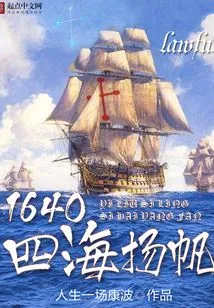
1640 Sailing All over the World
About This Novel
History is better than fiction. So I collected a lot of information and wrote the military history of Southern Ming Dynasty.
Official Sources
What Readers Think
Rating
Community(0)
Official(72)Scraped 1mo ago
I really can't stand it anymore. The novel is almost like a junior high school geography homework. It's completely putting the cart before the horse. There isn't much of a basic plot. Seven thousand of the ten thousand words are long-winded geographical data and descriptions. Why do readers need to know the elevation of mountains? There are so many addresses and rivers that I have no impression of. They are just filling the word count. I regret spending a lot of money to read the series.
The Calais galley is also outdated, right?
What is the significance of refitting the Hainan Navy's Calais galley? The limited offshore maneuverability advantage is far from being able to offset the large amount of manpower occupied. Considering the history of Nanyang, small and medium-sized sailboats with Western-style hulls and Chinese-style hard sails are the most cost-effective. And wouldn't it be better to just use the widely used translation of "Calais" instead of using an unpopular translation to make readers pretend to be aloof?
Zizhi Tongjian... In fact, Sima Guang has a lot of private goods... In modern times, there are still people who use Zizhi Tongjian, which even Sima Guang found untrustworthy, as an argument... Speaking of Song history, there are various records of Xixia's hundreds of thousands of troops, and the records of Xixia itself and Liao, Jin and Mongolia recorded a peak of less than 100,000... The history books of the Song Dynasty are just like that, very watery, and most of the so-called literati's character is just blowing up.
Can't sail merchant ships enter Macau?
In modern times, Guangzhou was the most important port in southern China, and merchant ships could sail directly to Haizhu Island.
Rotten tail?......
Not bad, give it a look
The chapter about being a pirate at the beginning of the book is very classic and very good. However, I gave up on it when I went to Asia. Personally, I feel it is a bit unrealistic. After all, there are very few people like Washington. The country is not a mainstream monarchy or a constitutional system. In addition, wandering around the country is too inconsistent. Of course, it only represents my personal opinion. Overall, it is not bad. I hope people who read it will like it.
Based on some of the previous remarks, it seems that the author is biased towards Tang Hei? The Uighur people whipping Prince Li and Tang mentioned in this chapter is unknown from an unofficial history. According to official history, only Ye Hu of Huihe knelt down and kissed the boots of the Tang Prince.
Marching bands and slash tactics are not imported. The military band has a complete system at least in the Tang Dynasty, and the slash tactic has its rudimentary records in the Spring and Autumn Period and the Warring States Period. As for Sun Tzu's Art of War, it is a very rational work. Your Excellency considers it vague and perceptual, which means you haven't understood it yet.
beg
Can the author do some popular science related to the work, such as relevant regional maps and pictures and descriptions of ship-shaped weapons and clothing? The obsessive-compulsive disorder Xiaobai said that he often goes to see Du Niang
It doesn't look good. The theme is unclear and the rhythm is confusing.
Rating
Community(0)
Official(72)Scraped 1mo ago
I really can't stand it anymore. The novel is almost like a junior high school geography homework. It's completely putting the cart before the horse. There isn't much of a basic plot. Seven thousand of the ten thousand words are long-winded geographical data and descriptions. Why do readers need to know the elevation of mountains? There are so many addresses and rivers that I have no impression of. They are just filling the word count. I regret spending a lot of money to read the series.
The Calais galley is also outdated, right?
What is the significance of refitting the Hainan Navy's Calais galley? The limited offshore maneuverability advantage is far from being able to offset the large amount of manpower occupied. Considering the history of Nanyang, small and medium-sized sailboats with Western-style hulls and Chinese-style hard sails are the most cost-effective. And wouldn't it be better to just use the widely used translation of "Calais" instead of using an unpopular translation to make readers pretend to be aloof?
Zizhi Tongjian... In fact, Sima Guang has a lot of private goods... In modern times, there are still people who use Zizhi Tongjian, which even Sima Guang found untrustworthy, as an argument... Speaking of Song history, there are various records of Xixia's hundreds of thousands of troops, and the records of Xixia itself and Liao, Jin and Mongolia recorded a peak of less than 100,000... The history books of the Song Dynasty are just like that, very watery, and most of the so-called literati's character is just blowing up.
Can't sail merchant ships enter Macau?
In modern times, Guangzhou was the most important port in southern China, and merchant ships could sail directly to Haizhu Island.
Rotten tail?......
Not bad, give it a look
The chapter about being a pirate at the beginning of the book is very classic and very good. However, I gave up on it when I went to Asia. Personally, I feel it is a bit unrealistic. After all, there are very few people like Washington. The country is not a mainstream monarchy or a constitutional system. In addition, wandering around the country is too inconsistent. Of course, it only represents my personal opinion. Overall, it is not bad. I hope people who read it will like it.
Based on some of the previous remarks, it seems that the author is biased towards Tang Hei? The Uighur people whipping Prince Li and Tang mentioned in this chapter is unknown from an unofficial history. According to official history, only Ye Hu of Huihe knelt down and kissed the boots of the Tang Prince.
Marching bands and slash tactics are not imported. The military band has a complete system at least in the Tang Dynasty, and the slash tactic has its rudimentary records in the Spring and Autumn Period and the Warring States Period. As for Sun Tzu's Art of War, it is a very rational work. Your Excellency considers it vague and perceptual, which means you haven't understood it yet.
beg
Can the author do some popular science related to the work, such as relevant regional maps and pictures and descriptions of ship-shaped weapons and clothing? The obsessive-compulsive disorder Xiaobai said that he often goes to see Du Niang
It doesn't look good. The theme is unclear and the rhythm is confusing.
Featured in 44 Booklists
Official(44)
I found this book by accident. I think it's pretty good. The protagonist starts from Pirates of the Caribbean. The word count is 1.1 Million. The updates are pretty stable and you can get into it.

Recommended by a book friend in the discussion forum. I have been busy recently, so I will read it when I have free time. The books I found today should be enough for you to read for a while.

Among all the online articles I have read, this is the only one that has examined the hydrological conditions of the Yangtze River. This book gets rid of the naive idea of "you can sail a ship if there is water" in previous online articles, and explains why the Yangtze River Estuary and Taiwan had a low status in the ancient shipping industry. The disadvantage is also that too much research makes the article less interesting. Generally speaking, it can be regarded as food and grass. It is a fairy grass for readers who value imagination and rationality, and vice versa.


The early version was the Chinese (travel) captain version of Pirates of the Caribbean, which in one word was cool... Then it was the founding of the South China Sea and the sweeping of thousands of armies version... The current one is about the protracted anti-Japanese war in which the Ming Dynasty was corrupted and foreign friends (the protagonist was already the lord of a foreign country) turned the tide... To be honest, the author writes the online article with the attitude of writing a physical book. Regarding the history involved in each chapter, he can cite several document excerpts or sources. While trying to restore the true face of history, the protagonist Kai Rui was able to defeat the Ming Dynasty and establish a state (the country has not yet been named Qing). I have nothing to say but admiration. The detailed descriptions of all aspects, including ships, pirates, national systems, and customs, are really wonderful and provide a sense of immersion... (﹡ˆoˆ﹡)



You Might Also Like

Reborn Female General
Qianshan Tea Guest

Fox of France
Bottle Fighter

Twenty-seven Years
Rongke

The Country's Surname is Qi Ming
People From Eastern Zhejiang

Americana: Vancouver 1619
Xu Jiuliu
Afterglow of the Ming Dynasty
Pinghai Of The Chinese Imperial Academy
Ximing Lihuo
Watching The Rain And Listening To The Bamboo
Anti-clearance
Proud And Iron-hearted
Lanfang
Yuyan
Australia 1671
Xu Jiuliu