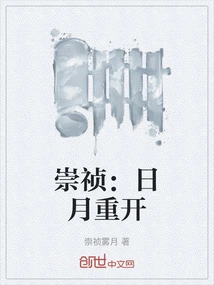
Chongzhen: the Sun and Moon Reopen
About This Novel
In the winter of the seventh year of Chongzhen, the young emperor Zhu Youjian had a bloody precognitive dream, in which he saw the end of the Ming Dynasty and his own hanging on Meishan Mountain. After waking up, his temperament changed drastically and he was determined to change his fate against the will of heaven. He rose up overnight to revive the deposed veteran Sun Chengzong, re-employed famous generals such as Lu Xiangsheng and Hong Chengchou, and launched a race against time to save the country. However, the reform was difficult: clearing the land of the father-in-law angered the feudal king, re-examining old cases triggered party disputes, and establishing a new school was besieged by conservatives. On the front line, Hong Chengchou fought hard against the bandits in Shaanxi; at the rear, the emperor fought a desperate game with interest groups in the court. At the same time, Li Zicheng, who had retreated into the mountains, was brewing a more terrifying revolutionary storm... This is a comprehensive redemption that runs through the court and the arena, thoughts and swords. See whether Chongzhen can turn the tide in nine years; see how the loyal ministers and brave generals of the Ming Dynasty can light the last spark in the apocalypse. The sun and the moon sink, but faith never dies.
Official Sources
What Readers Think
Rating
Community(0)
Official(1)Scraped 14d ago
what i want to say
Hello everyone, I am the author Chongzhen Wuyue. I originally wanted to make a short preface to the following content, but after thinking about it, in order not to delay everyone's reading, I decided to forget it and post it here. -- When I decided to write this book, I was staring out the window in a daze. Spread on the desk is the set of "Those Things in the Ming Dynasty" that has accompanied the author for many years. The author once read this two-million-word masterpiece in half a year in the first year of high school. It's interesting to say that this set of books has never been a neatly arranged historical material in the author's mind, but rather like a window that can be pushed open - open it and you can see the wind in the first year of Hongwu, the sea in Yongle, the green smoke in Jiajing, and the streets in Wanli. When Mingyue touched her pen, those names came out of the annals of history. They had warmth, temper, and obsessions that could be explained clearly and unexplained. But the story eventually comes to an end. When the last page was closed and Chongzhen's back disappeared into the dusk of Meishan Mountain, the author suddenly felt that those living people should not leave the scene like this. Could it be that the path they have walked, the things they have experienced, and the choices they have made only lead to that one end point? Did the ending written in black and white in the history books ever have other possibilities at a certain moment? This thought fell into my heart like a seed and quickly took root. It has grown quietly over the past two years. The author read "History of the Ming Dynasty", "Guoyan", and those yellowed manuscripts of memorials and literati's notes. Between the lines, the author often encounters "almosts" - a certain suggestion is almost adopted, a certain battle is almost won, a certain person is almost able to change something. These "almosts" are like faint flashes in the long river of history, fleeting, but they really existed. So the author began to think: What if these "almost" were given a chance? What if a certain memorial arrived one day early, if a certain march was made one step faster, if a key person said one more word or one less word? It's not about overthrowing and starting over, nor is it about creating miracles. I just want to see what kind of shore the ship will sail to if the wind direction is slightly biased at those real and existing historical nodes. That's what this book wants to do. It started in the seventh year of Chongzhen (1634). This year, the sky of Ming Dynasty has been covered with clouds, but the sun has not yet completely set. The war in Liaodong is tense and relaxed, drought locusts are coming one after another in the Central Plains, and the war smoke in the northwest has set off a prairie fire - but above the court, in the markets, and inside and outside the borders, there are still people thinking, working hard, and looking for a way out. What the author wants to write about is these people who are "looking for a way out." You will meet here the characters whose names have been recorded in history books: Emperor Chongzhen is still suspicious and anxious, Hong Chengchou is still calm and flexible, and Lu Xiangsheng is still strong and persistent. But one morning, Chongzhen might be a little more patient; in a certain camp, Hong Chengchou might make a slightly different judgment; on a certain post road, Lu Xiangsheng might hear some sounds that he had ignored before. This is not a subversion of history, but an affectionate look back at history. The author tries his best to follow the historical facts of all important events, regulations and systems, and historical background. It's just a matter of planting some "ifs" in the gaps that history has overlooked - if you had chosen that way at that time, would the road have gone a little longer? In the process of writing, the author often thinks of a sentence that Mingyue wrote in the book: "History is wonderful, but history is also very helpless." The wonderful thing is that it really happened, but the helpless thing is that the author can only know one ending. And this book wants to explore a little bit of possible excitement in this helplessness. Finally, let's talk about the writing itself. The author is in the senior year of high school - yes, the update speed of senior high school dogs will be very slow. What's more, in this era, it takes courage to write a long novel. There is never enough time, there is always endless information to check, and ideas are always changing. So the author made a decision: no longer wait for "ready", no longer seek "perfection". Just use the time you have, the information you can find, and the tools given by this era - including but not limited to paper and pen, AI and other technologies - to tell the story in your heart. The important thing is not to be perfect, but to start. At this moment, the sky outside the window has completely darkened, and the bustling traffic in Beijing is flowing again. The author seems to be able to hear the morning bells in Beijing in the seventh year of Chongzhen's reign, the sound of the wind at the top of Tongguan City, the sound of oars in the Jiangnan water town, and countless tiny yet tenacious voices gently ringing in the depths of time. They all say: the story can be told again from here. -- I would like to write this book to pay tribute to Mr. Mingyue. His words made the Ming Dynasty truly come alive in the author's heart. Also dedicated to all those who believe that history has more than one temperature.
Rating
Community(0)
Official(1)Scraped 14d ago
what i want to say
Hello everyone, I am the author Chongzhen Wuyue. I originally wanted to make a short preface to the following content, but after thinking about it, in order not to delay everyone's reading, I decided to forget it and post it here. -- When I decided to write this book, I was staring out the window in a daze. Spread on the desk is the set of "Those Things in the Ming Dynasty" that has accompanied the author for many years. The author once read this two-million-word masterpiece in half a year in the first year of high school. It's interesting to say that this set of books has never been a neatly arranged historical material in the author's mind, but rather like a window that can be pushed open - open it and you can see the wind in the first year of Hongwu, the sea in Yongle, the green smoke in Jiajing, and the streets in Wanli. When Mingyue touched her pen, those names came out of the annals of history. They had warmth, temper, and obsessions that could be explained clearly and unexplained. But the story eventually comes to an end. When the last page was closed and Chongzhen's back disappeared into the dusk of Meishan Mountain, the author suddenly felt that those living people should not leave the scene like this. Could it be that the path they have walked, the things they have experienced, and the choices they have made only lead to that one end point? Did the ending written in black and white in the history books ever have other possibilities at a certain moment? This thought fell into my heart like a seed and quickly took root. It has grown quietly over the past two years. The author read "History of the Ming Dynasty", "Guoyan", and those yellowed manuscripts of memorials and literati's notes. Between the lines, the author often encounters "almosts" - a certain suggestion is almost adopted, a certain battle is almost won, a certain person is almost able to change something. These "almosts" are like faint flashes in the long river of history, fleeting, but they really existed. So the author began to think: What if these "almost" were given a chance? What if a certain memorial arrived one day early, if a certain march was made one step faster, if a key person said one more word or one less word? It's not about overthrowing and starting over, nor is it about creating miracles. I just want to see what kind of shore the ship will sail to if the wind direction is slightly biased at those real and existing historical nodes. That's what this book wants to do. It started in the seventh year of Chongzhen (1634). This year, the sky of Ming Dynasty has been covered with clouds, but the sun has not yet completely set. The war in Liaodong is tense and relaxed, drought locusts are coming one after another in the Central Plains, and the war smoke in the northwest has set off a prairie fire - but above the court, in the markets, and inside and outside the borders, there are still people thinking, working hard, and looking for a way out. What the author wants to write about is these people who are "looking for a way out." You will meet here the characters whose names have been recorded in history books: Emperor Chongzhen is still suspicious and anxious, Hong Chengchou is still calm and flexible, and Lu Xiangsheng is still strong and persistent. But one morning, Chongzhen might be a little more patient; in a certain camp, Hong Chengchou might make a slightly different judgment; on a certain post road, Lu Xiangsheng might hear some sounds that he had ignored before. This is not a subversion of history, but an affectionate look back at history. The author tries his best to follow the historical facts of all important events, regulations and systems, and historical background. It's just a matter of planting some "ifs" in the gaps that history has overlooked - if you had chosen that way at that time, would the road have gone a little longer? In the process of writing, the author often thinks of a sentence that Mingyue wrote in the book: "History is wonderful, but history is also very helpless." The wonderful thing is that it really happened, but the helpless thing is that the author can only know one ending. And this book wants to explore a little bit of possible excitement in this helplessness. Finally, let's talk about the writing itself. The author is in the senior year of high school - yes, the update speed of senior high school dogs will be very slow. What's more, in this era, it takes courage to write a long novel. There is never enough time, there is always endless information to check, and ideas are always changing. So the author made a decision: no longer wait for "ready", no longer seek "perfection". Just use the time you have, the information you can find, and the tools given by this era - including but not limited to paper and pen, AI and other technologies - to tell the story in your heart. The important thing is not to be perfect, but to start. At this moment, the sky outside the window has completely darkened, and the bustling traffic in Beijing is flowing again. The author seems to be able to hear the morning bells in Beijing in the seventh year of Chongzhen's reign, the sound of the wind at the top of Tongguan City, the sound of oars in the Jiangnan water town, and countless tiny yet tenacious voices gently ringing in the depths of time. They all say: the story can be told again from here. -- I would like to write this book to pay tribute to Mr. Mingyue. His words made the Ming Dynasty truly come alive in the author's heart. Also dedicated to all those who believe that history has more than one temperature.
You Might Also Like
Possessed by Lu Bu
The King Is No More Than A Hegemon
Hanxiang
Jie And 2
The Poor Man's Two Thousand Years
Non-player Character
Reborn Female General
Qianshan Tea Guest
Tomorrow
Jie And 2
Shao Song
Grenades Are Afraid Of Water
I
Wang Zijun
The First Minister of the Ming Dynasty
History Turns To Ashes
The World's Heroes
Gao Yue
The Best Servant
Yuyan