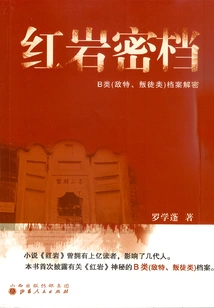
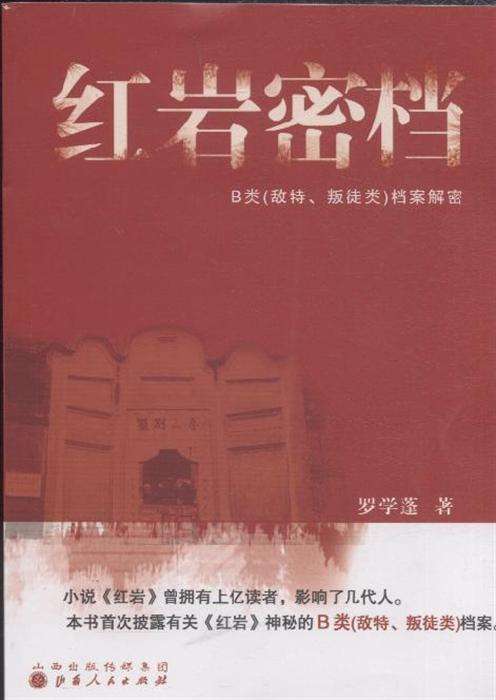
Red Rock Secret File
by J
About This Novel
Starting in 1939, the Kuomintang Military Command Bureau turned the beautiful Gele Mountain in Chongqing into a mysterious demon cave on earth, and set up military control concentration camps dedicated to detaining and interrogating revolutionary patriots. This place has witnessed countless heroic and heroic feats that shocked the world and moved the world. It also recorded the criminal acts of Xu Yuanju (the prototype of the great spy Xu Pengfei in "Red Rock"), Liao Zongze, Zhou Yanghao, Yang Jinxing and other military officials, spies, traitors, executioners, and guards. The arrest of every enemy agent, killer, and traitor is a wonderful and legendary story. For understandable reasons, Category B files have long been kept secret. Today, more than 70 years later, as the Category B (enemy agents and traitors) files of the Chongqing Revolutionary Martyrs Memorial Hall continue to be enriched and completed, many little-known historical facts have gradually surfaced. This book discloses for the first time the mysterious Category B files about "Red Rock".
Official Sources
What Readers Think
Rating
Community(0)
Official(49)Scraped 1mo ago
Annoyed
Regarding some book friends saying that such a lovely book is a pirated version, I really... Again, Red Rock is a novel, based on Red Rock Secret Files. If you don't understand, you can go to Baidu Encyclopedia.
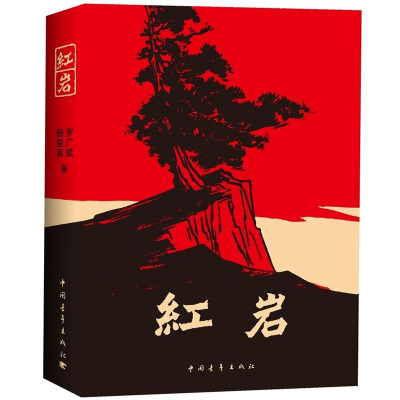
red rock
Keep in mind the history and the great achievements of the revolutionary martyrs, and strive to create and build a socialist society with Chinese characteristics.
Is there any genuine Hongyan?
Martyrs who have devoted their lives to the revolutionary cause, may you rest in peace in the land! Shameless people who are cruel and inhumane will be reviled by future generations!
Women are like flowers
Heroes live forever
I don't know if there is any genuine Hongyan.
Is this book genuine?
I have hundreds of millions of insights into this book. It's very long. Click to read it and give it a thumbs up! Thanks!
See the spirit in desperate situations, hear the thunder in the silent place - the dialectics of faith in "Red Rock" When Xu Yunfeng used his fingernails to dig out an escape tunnel in the damp dungeon, and when Sister Jiang said "bamboo sticks are made of bamboo, and the will of Communists is steel" in the face of bamboo stick torture, what "Red Rock" showed had already gone beyond a simple revolutionary narrative. This book, soaked in blood and fire, constructs a profound dialectics of faith in the fierce collision of life and death, surrender and perseverance, individual and collective, and provides an excellent model for contemporary young people to understand the nature of spiritual power. The strength of faith is often revealed in the concentration of despair. Zhazi Cave and the iron windows of Bai Mansion constitute the most extreme survival laboratory in human history - here, physical torture is systematized, mental torture is institutionalized, and even time is cut into frightening fragments. However, it is this desperate situation that becomes the touchstone of the purity of faith. When Cheng Gang wrote "My "Confession"" in prison, he was not unaware that the drop of the pen would be a death sentence, but he chose to use the cry of "One cannot lower his noble head" to complete the ultimate sacrifice of faith. Behind this choice is a profound understanding of "spiritual immortality": the body can be imprisoned and destroyed, but thoughts and beliefs can penetrate the prison walls and become the torch that illuminates the future. As it is written in the book: "Death is such a useless threat to a revolutionary." When survival itself becomes a luxury, faith is sublimated into a spiritual consciousness that transcends survival instinct. True faith never excludes human nature, but can illuminate the glory of human nature. The most moving power of "Red Rock" is that it breaks the stereotype of "revolutionaries with selfless emotions". When Sister Jiang received the news of her husband Peng Songtao's death, her "lips moved and tears blurred her vision." But in an instant, her personal grief was transformed into the collective will of "in order to avoid the suffering of the next generation, we are willing to sit through this prison." This transformation is not a suppression of human nature, but a sublimation of human nature: it is precisely because of deep love for relatives and cherishing happiness that we must fight to the death with the enemy to protect this beauty. Little Carrot Tou longed to "see the outside world" in prison, and the inmates folded little birds for him out of straw paper; the prisoners gave each other red stars ground from iron sheets during the New Year, conveying warmth in their songs - these details prove that faith never requires people to become cold machines, but can instead give birth to more fiery human warmth in the most cruel environment. The inheritance of faith is never a simple copy, but a creative transformation. Today we do not have to face the torture of the torture chamber, but the spirit of Red Rock can still provide answers to contemporary dilemmas. When "lying flat" and "involving" became popular words, Sister Jiang's determination to "live forever in the fire" reminded us that idealism always has value; when the trend of individualism gradually emerged, the friendship of "life and death" among comrades in prison showed the eternal significance of collective strength. This kind of inheritance does not require us to re-enact history, but to carve a path belonging to our generation on the rock wall of the times like Xu Yunfeng dug an escape passage; like Cheng Gang wrote "My "Confession"", use actions to write the footnotes of the new era for faith. Closing the page, the red plum blossoms in Zhazidong seem to bloom in front of your eyes. "Red Rock" teaches us not only to remember history, but also to understand: Faith is not an illusory slogan, but the spiritual backbone that supports people to make the right choices at critical moments; it is not a fantasy that is divorced from reality, but a link that connects individual lives with greater meaning. When we face a choice in life, we may ask ourselves: If it were Sister Jiang, how would she choose? If it were Xu Yunfeng, how would he persist? This is the power of Hongyan spirit to travel through time and space.
Well, it's so educational.
Harmony is precious, for the sake of peace
Rating
Community(0)
Official(49)Scraped 1mo ago
Annoyed
Regarding some book friends saying that such a lovely book is a pirated version, I really... Again, Red Rock is a novel, based on Red Rock Secret Files. If you don't understand, you can go to Baidu Encyclopedia.
red rock
Keep in mind the history and the great achievements of the revolutionary martyrs, and strive to create and build a socialist society with Chinese characteristics.
Is there any genuine Hongyan?
Martyrs who have devoted their lives to the revolutionary cause, may you rest in peace in the land! Shameless people who are cruel and inhumane will be reviled by future generations!
Women are like flowers
Heroes live forever
I don't know if there is any genuine Hongyan.
Is this book genuine?
I have hundreds of millions of insights into this book. It's very long. Click to read it and give it a thumbs up! Thanks!
See the spirit in desperate situations, hear the thunder in the silent place - the dialectics of faith in "Red Rock" When Xu Yunfeng used his fingernails to dig out an escape tunnel in the damp dungeon, and when Sister Jiang said "bamboo sticks are made of bamboo, and the will of Communists is steel" in the face of bamboo stick torture, what "Red Rock" showed had already gone beyond a simple revolutionary narrative. This book, soaked in blood and fire, constructs a profound dialectics of faith in the fierce collision of life and death, surrender and perseverance, individual and collective, and provides an excellent model for contemporary young people to understand the nature of spiritual power. The strength of faith is often revealed in the concentration of despair. Zhazi Cave and the iron windows of Bai Mansion constitute the most extreme survival laboratory in human history - here, physical torture is systematized, mental torture is institutionalized, and even time is cut into frightening fragments. However, it is this desperate situation that becomes the touchstone of the purity of faith. When Cheng Gang wrote "My "Confession"" in prison, he was not unaware that the drop of the pen would be a death sentence, but he chose to use the cry of "One cannot lower his noble head" to complete the ultimate sacrifice of faith. Behind this choice is a profound understanding of "spiritual immortality": the body can be imprisoned and destroyed, but thoughts and beliefs can penetrate the prison walls and become the torch that illuminates the future. As it is written in the book: "Death is such a useless threat to a revolutionary." When survival itself becomes a luxury, faith is sublimated into a spiritual consciousness that transcends survival instinct. True faith never excludes human nature, but can illuminate the glory of human nature. The most moving power of "Red Rock" is that it breaks the stereotype of "revolutionaries with selfless emotions". When Sister Jiang received the news of her husband Peng Songtao's death, her "lips moved and tears blurred her vision." But in an instant, her personal grief was transformed into the collective will of "in order to avoid the suffering of the next generation, we are willing to sit through this prison." This transformation is not a suppression of human nature, but a sublimation of human nature: it is precisely because of deep love for relatives and cherishing happiness that we must fight to the death with the enemy to protect this beauty. Little Carrot Tou longed to "see the outside world" in prison, and the inmates folded little birds for him out of straw paper; the prisoners gave each other red stars ground from iron sheets during the New Year, conveying warmth in their songs - these details prove that faith never requires people to become cold machines, but can instead give birth to more fiery human warmth in the most cruel environment. The inheritance of faith is never a simple copy, but a creative transformation. Today we do not have to face the torture of the torture chamber, but the spirit of Red Rock can still provide answers to contemporary dilemmas. When "lying flat" and "involving" became popular words, Sister Jiang's determination to "live forever in the fire" reminded us that idealism always has value; when the trend of individualism gradually emerged, the friendship of "life and death" among comrades in prison showed the eternal significance of collective strength. This kind of inheritance does not require us to re-enact history, but to carve a path belonging to our generation on the rock wall of the times like Xu Yunfeng dug an escape passage; like Cheng Gang wrote "My "Confession"", use actions to write the footnotes of the new era for faith. Closing the page, the red plum blossoms in Zhazidong seem to bloom in front of your eyes. "Red Rock" teaches us not only to remember history, but also to understand: Faith is not an illusory slogan, but the spiritual backbone that supports people to make the right choices at critical moments; it is not a fantasy that is divorced from reality, but a link that connects individual lives with greater meaning. When we face a choice in life, we may ask ourselves: If it were Sister Jiang, how would she choose? If it were Xu Yunfeng, how would he persist? This is the power of Hongyan spirit to travel through time and space.
Well, it's so educational.
Harmony is precious, for the sake of peace