Prehistoric: the Treasure Refined by Fire
About This Novel
This is a story about Chinese cultural relics and the ancient world. Huo Lian is a cultural relic lover. When he was reading "China's Most Influential Cultural Relics", he traveled through the prehistoric world, and the book he read became a companion spiritual treasure... "Lian Bao Lu". "Refining Treasures" is only a low-grade innate spiritual treasure. It has no attack, no defense, and no effect of suppressing luck, but it contains dozens of Chinese cultural relics. Each cultural relic illustration can be refined into a special spiritual treasure, such as: 1. Terracotta Warriors and Horses... Puppet Treasure 2. Simuwu Dafang Ding... The ultimate treasure of luck 3. Along the River During the Qingming Festival... A treasure of space 4. Zeng Houyi's chime bells... The most precious musical treasure 5. Yue King Goujian's Sword... Attacks the treasure 6. Horses trample flying swallows... The treasure of speed 7. The golden jade garment of Liu Sheng, Prince Jing of Zhongshan... A defensive treasure 8. Gilt silver pot with dancing horse's title and cup pattern...
Official Sources
What Readers Think
Rating
Community(0)
Official(16)Scraped 2mo ago
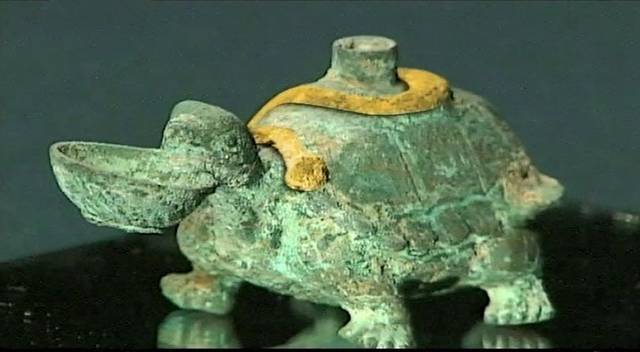
No. 46 Bronze Xuanwu Inkstone
Cultural relic name: Bronze Xuanwu inkstone Cultural relics period: Han Dynasty Excavated: 1992 Excavated location: Unearthed from the Han Dynasty Tomb in Gaozhai, Huzhu, Qinghai Utensil size: 15 cm in length Collection unit: Qinghai Provincial Museum The inkstone is made of bronze and is made of a snake lying on the back of a turtle. The turtle and snake are combined, and the turtle's legs are upright, making it stand. The turtle's neck is stretched forward, its head is erect, its eyes are wide open, and there is a small hole in the mouth, holding an ear cup. The ear cup has a shallow belly and a flat bottom. The cast marks on the tortoise shell are clear, and the patterns engraved on the carapace are clear and regular, and the image is lifelike. There is a long snake lying on the back of the turtle, with the snake's head bent on the right side of the turtle's neck. The patterns are dotted on the snake's body, which is vivid and natural. Exquisitely cast and vivid in image, it is a high-quality practical bronze vessel.
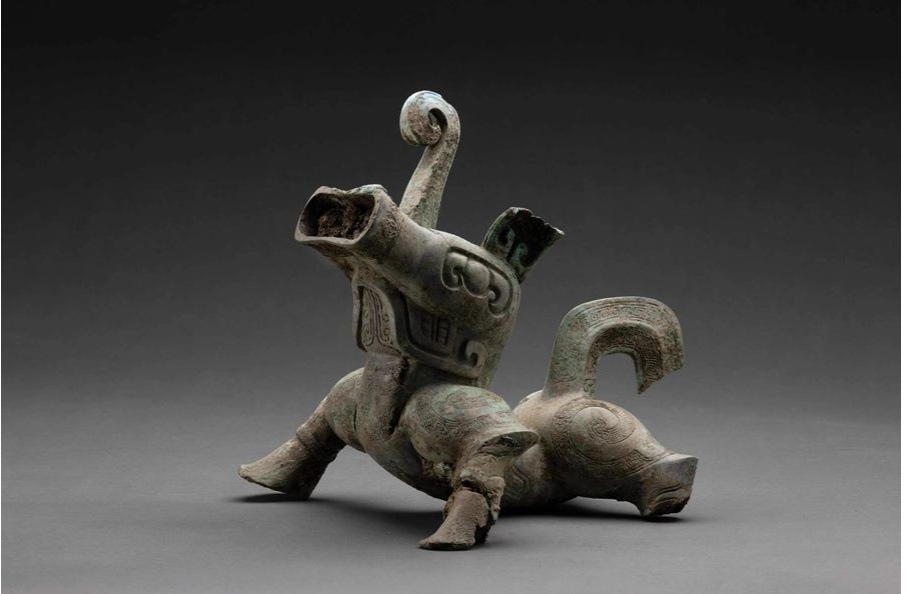
Sanxingdui Bronze Beast
It was unearthed at the bottom of pit No. 3 In the sacrificial area of the Sanxingdui site, near the west wall. The length is 28.5 Cm, the height is 26.4 Cm, and the width is 23 cm. The whole object is in the shape of an animal with its head held high and its chest crouched on the ground. Its hind limbs are missing, and its ears, tail and other parts are damaged. The mythical beast has a corner on its head with the word "Chen", an oblong wide mouth, a short neck, a slender torso, a tall chest, a slumped waist, splayed limbs, hoofed feet, an upturned tail, and a body surface decorated with cloud and thunder stripes. The overall shape is strong and powerful, and it looks quite similar to the "robot dog" in science fiction movies.
I've been practicing the Acquired Treasure since the beginning. It's awesome. The Golden Immortal level is worthless. What level am I awesome?
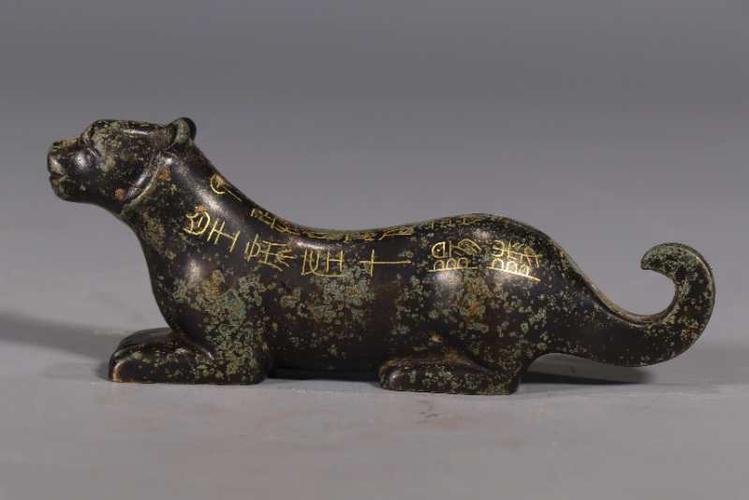
Qin Yangling Tiger Talisman No. 45
Chinese name: Qin Yangling Tiger Talisman Collection location: National Museum of China Era: Qin Category: Bronze Place of discovery: Lincheng, Zaozhuang City, Shandong Province (according to legend) The Qin Yangling Tiger Talisman is 8.9 Cm long, 2.1 Cm wide, and 3.4 Cm high. It is in the shape of a crouching tiger and can be divided into two parts. The left and right necks of the tiger each have the same 12-word inscription in gold seal script: "The Talisman of Armor and Soldiers, the right is for the emperor, and the left is for Yangling." Due to the age, the joints have become rusty and cannot be separated.
I've read a book with the beginning of your book, but that one is from another world, not the prehistoric era.
The writing is so childish, a lot of nonsense
Read more from other authors
.
I have read a book similar to yours before, but I really like the one-millimeter terracotta warriors and horses in it. The result is still piles of giants.
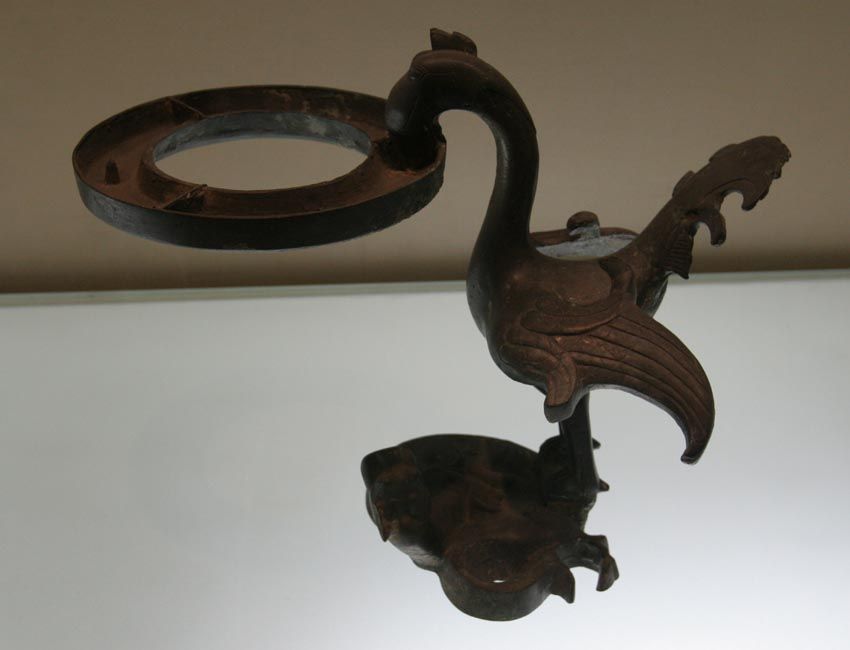
No. 47: Copper Suzaku Lamp
Introduction [Name]: Bronze Suzaku Lamp [Category]: Bronze [Era]: Western Han Dynasty (206 BC - 8 AD) [Original belonging of cultural relics]: Palace utensils [Current Situation of Cultural Relics]: Now in the Hebei Provincial Museum [Time of Unearth]: Unearthed from the tomb of Dou Wan in Mancheng County, Hebei Province in 1968. The overall height is 30 cm and the plate diameter is 19 cm.
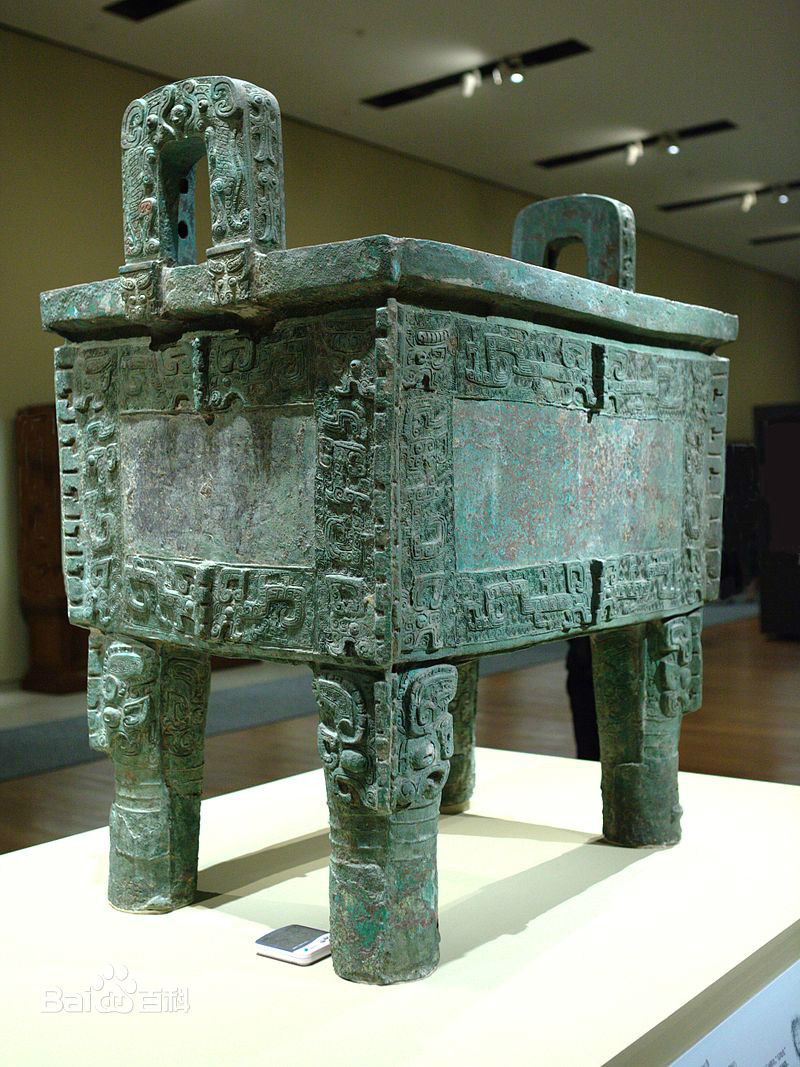
Simuwu Dafang Ding
The Shang Hou Mu Wu Ding, also known as Simu Wu Ding and Simu Wu Ding Ding, was cast in the late Shang Dynasty (about 14th century BC to 11th century BC). It was unearthed in Wuguan Village, Anyang City, Henan Province in 1939 and is now stored in the "Ancient China" basic exhibition hall of the National Museum of China [1]. The Shang Houmuwu Ding is 133 cm high, 110 cm long, 79 cm wide, and weighs 832.84 Kg. It has thick ears, folded edges, a rectangular abdomen, and four pillars.[1] The four corners of the belly, the middle of the upper and lower edges, and the upper part of the feet are all equipped with door edges. "The body and four legs of the Shang Empress Muwu Ding are cast as a whole, and the tripod ears are molded and cast after the body of the tripod is cast [1]. The Shang Empress Muwu Ding is huge in shape, majestic and solemn [1], and has exquisite craftsmanship; the body of the tripod is surrounded by exquisite coiled dragon patterns and gluttonous patterns, which adds It embodies the majestic and solemn feeling of the cultural relic [2]. The pattern of the cicada on the feet represents the body of the cicada, with clear lines [2]. The three characters "Hou Mu Wu" are cast on the inner wall of the abdomen. The Shang Empress Muwu Ding is the heaviest bronze known in ancient China; the casting of the Shang Empress Muwu Ding fully demonstrates that the bronze casting in the late Shang Dynasty was not only large-scale, but also well-organized and meticulous in division of labor, which is enough to represent the highly developed Shang Dynasty bronze culture [1]; On January 18, 2002, it was included in the "Catalogue of the First Batch of Cultural Relics Prohibited from Export Exhibition" by the State Administration of Cultural Heritage as a national first-class cultural relic [4].
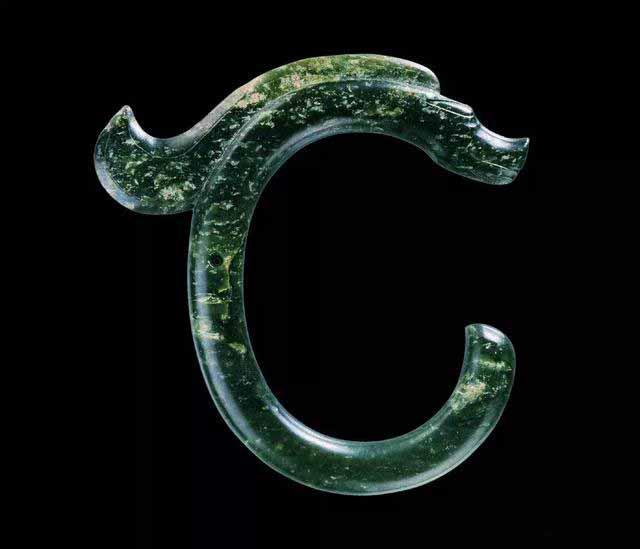
No. 48: Red Mountain Jade Dragon
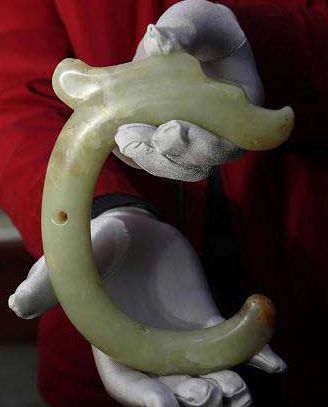
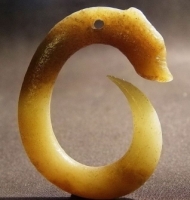
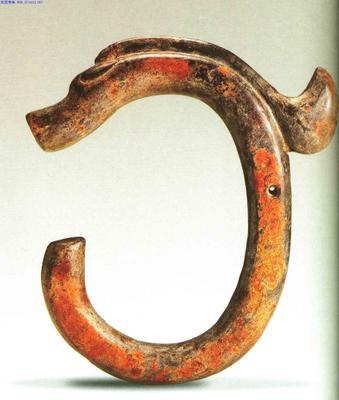
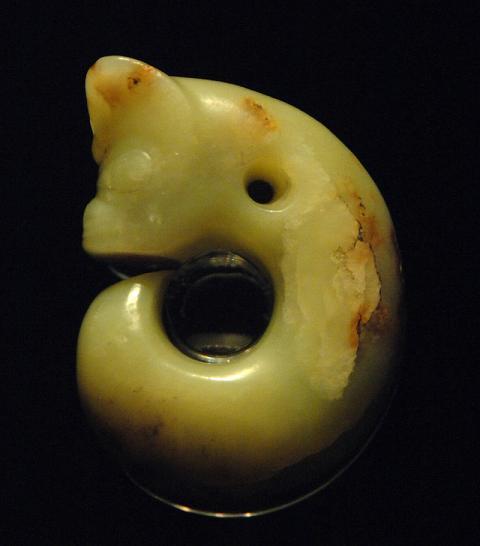
The dark green jade dragon is 26 centimeters high, intact, with a curled body in a C shape. The snout is extended forward, slightly curved upward, the mouth is tightly closed, there are symmetrical double nostrils, the eyes are protruding in the shape of a prism, and there are hyenas. There are four animal characteristics: deer eyes, snake body, pig nose, and horse mane, which proves that the ancestors of Hongshan Culture had imagination and creativity. There is a single hole drilled on the back of the dragon. After testing, this hole is used for hanging. The head and tail of the dragon are exactly on the same level. Also known as jade carving dragon, curled body jade dragon.
Rating
Community(0)
Official(16)Scraped 2mo ago
No. 46 Bronze Xuanwu Inkstone
Cultural relic name: Bronze Xuanwu inkstone Cultural relics period: Han Dynasty Excavated: 1992 Excavated location: Unearthed from the Han Dynasty Tomb in Gaozhai, Huzhu, Qinghai Utensil size: 15 cm in length Collection unit: Qinghai Provincial Museum The inkstone is made of bronze and is made of a snake lying on the back of a turtle. The turtle and snake are combined, and the turtle's legs are upright, making it stand. The turtle's neck is stretched forward, its head is erect, its eyes are wide open, and there is a small hole in the mouth, holding an ear cup. The ear cup has a shallow belly and a flat bottom. The cast marks on the tortoise shell are clear, and the patterns engraved on the carapace are clear and regular, and the image is lifelike. There is a long snake lying on the back of the turtle, with the snake's head bent on the right side of the turtle's neck. The patterns are dotted on the snake's body, which is vivid and natural. Exquisitely cast and vivid in image, it is a high-quality practical bronze vessel.
Sanxingdui Bronze Beast
It was unearthed at the bottom of pit No. 3 In the sacrificial area of the Sanxingdui site, near the west wall. The length is 28.5 Cm, the height is 26.4 Cm, and the width is 23 cm. The whole object is in the shape of an animal with its head held high and its chest crouched on the ground. Its hind limbs are missing, and its ears, tail and other parts are damaged. The mythical beast has a corner on its head with the word "Chen", an oblong wide mouth, a short neck, a slender torso, a tall chest, a slumped waist, splayed limbs, hoofed feet, an upturned tail, and a body surface decorated with cloud and thunder stripes. The overall shape is strong and powerful, and it looks quite similar to the "robot dog" in science fiction movies.
I've been practicing the Acquired Treasure since the beginning. It's awesome. The Golden Immortal level is worthless. What level am I awesome?
Qin Yangling Tiger Talisman No. 45
Chinese name: Qin Yangling Tiger Talisman Collection location: National Museum of China Era: Qin Category: Bronze Place of discovery: Lincheng, Zaozhuang City, Shandong Province (according to legend) The Qin Yangling Tiger Talisman is 8.9 Cm long, 2.1 Cm wide, and 3.4 Cm high. It is in the shape of a crouching tiger and can be divided into two parts. The left and right necks of the tiger each have the same 12-word inscription in gold seal script: "The Talisman of Armor and Soldiers, the right is for the emperor, and the left is for Yangling." Due to the age, the joints have become rusty and cannot be separated.
I've read a book with the beginning of your book, but that one is from another world, not the prehistoric era.
The writing is so childish, a lot of nonsense
Read more from other authors
.
I have read a book similar to yours before, but I really like the one-millimeter terracotta warriors and horses in it. The result is still piles of giants.
No. 47: Copper Suzaku Lamp
Introduction [Name]: Bronze Suzaku Lamp [Category]: Bronze [Era]: Western Han Dynasty (206 BC - 8 AD) [Original belonging of cultural relics]: Palace utensils [Current Situation of Cultural Relics]: Now in the Hebei Provincial Museum [Time of Unearth]: Unearthed from the tomb of Dou Wan in Mancheng County, Hebei Province in 1968. The overall height is 30 cm and the plate diameter is 19 cm.
Simuwu Dafang Ding
The Shang Hou Mu Wu Ding, also known as Simu Wu Ding and Simu Wu Ding Ding, was cast in the late Shang Dynasty (about 14th century BC to 11th century BC). It was unearthed in Wuguan Village, Anyang City, Henan Province in 1939 and is now stored in the "Ancient China" basic exhibition hall of the National Museum of China [1]. The Shang Houmuwu Ding is 133 cm high, 110 cm long, 79 cm wide, and weighs 832.84 Kg. It has thick ears, folded edges, a rectangular abdomen, and four pillars.[1] The four corners of the belly, the middle of the upper and lower edges, and the upper part of the feet are all equipped with door edges. "The body and four legs of the Shang Empress Muwu Ding are cast as a whole, and the tripod ears are molded and cast after the body of the tripod is cast [1]. The Shang Empress Muwu Ding is huge in shape, majestic and solemn [1], and has exquisite craftsmanship; the body of the tripod is surrounded by exquisite coiled dragon patterns and gluttonous patterns, which adds It embodies the majestic and solemn feeling of the cultural relic [2]. The pattern of the cicada on the feet represents the body of the cicada, with clear lines [2]. The three characters "Hou Mu Wu" are cast on the inner wall of the abdomen. The Shang Empress Muwu Ding is the heaviest bronze known in ancient China; the casting of the Shang Empress Muwu Ding fully demonstrates that the bronze casting in the late Shang Dynasty was not only large-scale, but also well-organized and meticulous in division of labor, which is enough to represent the highly developed Shang Dynasty bronze culture [1]; On January 18, 2002, it was included in the "Catalogue of the First Batch of Cultural Relics Prohibited from Export Exhibition" by the State Administration of Cultural Heritage as a national first-class cultural relic [4].
No. 48: Red Mountain Jade Dragon
The dark green jade dragon is 26 centimeters high, intact, with a curled body in a C shape. The snout is extended forward, slightly curved upward, the mouth is tightly closed, there are symmetrical double nostrils, the eyes are protruding in the shape of a prism, and there are hyenas. There are four animal characteristics: deer eyes, snake body, pig nose, and horse mane, which proves that the ancestors of Hongshan Culture had imagination and creativity. There is a single hole drilled on the back of the dragon. After testing, this hole is used for hanging. The head and tail of the dragon are exactly on the same level. Also known as jade carving dragon, curled body jade dragon.
You Might Also Like
Reborn Female General
Qianshan Tea Guest
I Am Xiao Sheng
Demon Sky
People Are Becoming Gods: I Have Risen from the Beginning, I Am the God of Wealth
Braised Duck
Journey to the West: I Am Monk Sha
A Dreamy Slacker
Rebirth in the Wild: I Am the Ancestor of the Five Elements
Meat-loving Brat
The Human Race Mixed Among the Great Witches
Outstanding Figures In The World
Prehistoric: Refining the First Saint
Ice Flavored Water
Prehistoric: Reborn as a Qi Immortal, Practice Steadily
Hunyuan Demon Saint
Journey to the West: Eighty-one Difficulties of Being Bald
One Leaf Loses Autumn 1
Journey to the West: Start with the Lost Money
Unnamed August