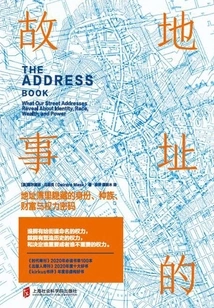
The Story of Addresses: the Codes of Identity, Race, Wealth and Power Hidden in Address Books
About This Novel
What is a street address used for? It's a question that few people think about, and when they do, most think that the role of street addresses is to ensure accurate delivery of mail, to allow people to receive packages, or to prevent travelers from getting lost. "The Story of Address" tells us that addresses have played a deeper and more complex role in history: the practice of numbering individual houses began in Vienna in the 18th century, when Maria Theresa, the leader of the Habsburg Empire, ordered this not to help her subjects find their way in the city, but to collect taxes and recruit soldiers; in London in the 19th century, Dr. John Snow used the city's newly created house numbers to identify the source of a cholera epidemic and The author also examines place names in India, Korea, and Ireland, tracing the different ways in which these countries created, commemorated, and in some cases banned the use of street names... This book starts with a simple question: "Why are street addresses so important?" To answer this question, the author visited and collected information in more than a dozen important, world-famous and influential cities to study how people describe the places where they live, and what this description says. These fascinating characters and histories reveal how street names and house numbers are related to people's identity, class and race, why they are most closely related to power, why they are related to the power of naming, the power of concealment and the power of deciding who matters and who does not matter, and why.
Official Sources
What Readers Think
Rating
Community(0)
Rating
Community(0)
