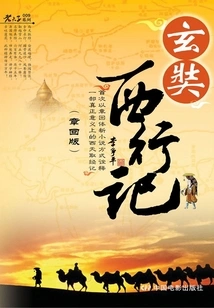
Xuanzang's Journey to the West
by Li Zhengping
About This Novel
About 1,300 years ago, in the first year of Zhenguan (627) of Emperor Taizong of the Tang Dynasty, Xuanzang, a 25-year-old young monk, left the capital Chang'an and went to Tianzhu (India) to study alone. After setting off from Chang'an, he passed through Central Asia, Afghanistan, and Pakistan, going through many hardships and obstacles, and finally arrived in India. He studied there for more than two years and was a keynote speaker at a large-scale debate on Buddhist scriptures, where he received praise. In the 19th year of Zhenguan (645), Xuanzang returned to Chang'an and brought back 657 Buddhist scriptures. His journey to the West for Buddhist scriptures lasted for nineteen years and covered tens of thousands of miles. It was a legendary Long March that caused a sensation. Later, Xuanzang's oral account of his journey to the West was compiled into twelve volumes of "The Records of the Western Regions of the Tang Dynasty" by his disciple Bianji. But this book mainly tells the history, geography and transportation of the countries seen on the road, without any stories. When his disciples Huili and Yan Cong wrote the "Biography of Master Tripitaka of the Great Ci'en Temple of the Tang Dynasty", it added a lot of mythological color to Xuanzang's experience. From then on, the story of Tang Monk's Buddhist scriptures began to be widely circulated among the people. The Southern Song Dynasty has "The Tripitaka of the Tang Dynasty Searching for Buddhist Scriptures", the Jin Dynasty version has "The Tripitaka of the Tang Dynasty" and "The Peach Club", etc., And the Yuan dramas include Wu Changling's "The Tripitaka of the Tang Dynasty Searching for Buddhist Scriptures from the West", and the Anonymous' "Erlang God Locks the Great Sage of Qi", etc. These all laid the foundation for the creation of "Journey to the West". It was on the basis of folk legends, scripts and operas that Wu Cheng'en went through painstaking re-creation and completed this great novel that the Chinese nation is proud of.
Official Sources
What Readers Think
Rating
Community(0)
Rating
Community(0)