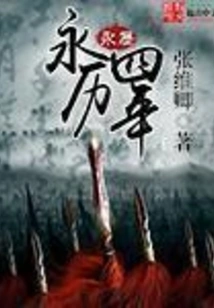
Yongli Four Years
About This Novel
In September of the fourth year of Yongli, in order to completely defeat the Ming army of the Lu Jianguo system entrenched in the Zhoushan Islands, the Qing army first encircled and suppressed the anti-Qing armed forces in Siming Mountain, which were in the same position as them. In this battle, the Qing army carried out a bloody mountain washing operation after defeating the main force of the local Ming army. Since then, the population of the Siming Mountain area, which had once surged due to the ethnic oppression of the Manchus, was no longer able to organize large-scale anti-Qing forces. The fall of Siming Mountain also directly led to the isolation of the Ming army of the Lu Supervisor System in the Battle of Zhoushan a year later, and the complete destruction of the overall anti-Qing situation in Zhejiang. In July of the fourth year of Yongli, the time traveler Chen Wen unexpectedly appeared here. On this land where the famous anti-Japanese general Qi Jiguang once protected his wings, in the name of rebuilding the Qi Army, he reopened the path of China's military modernization that was forcibly interrupted decades ago. Since then, we have turned the tide before it fell, supported the building before it collapsed, driven out the Tartars, restored China, saved the people of Sri Lanka, and rebuilt Chinese civilization! Book club group: 519264778
Official Sources
What Readers Think
Rating
Community(0)
Official(409)Scraped 1mo ago
The author updates very quickly. When I read the articles I saved last time today, I realized that I had fallen behind a lot. I'm going to take advantage of today to make up for it!
The title of the book is concise and easy to understand. I really like this feeling. In fact, sometimes, too complicated book titles are more cumbersome. I like your book, five stars!
The author's novel explains things very clearly, and the writing is very detailed and fluent. Now that I have fallen into the trap, I have no intention of giving up. Great support for the author. Looking forward to updates
In the Ming Dynasty, Yan Song was killed and the hypocrite Xu Jie came up. Economic collapse. Chongzhen killed Wei Zhongxian, and the military collapsed. The warlord leaders everywhere were like Chen Wen. In fact, how could the army become the king if it belonged to one's own family? Therefore, after the founding of New China, generals had management rights but no power to deploy troops, and local governments were not allowed to use provincial and municipal fiscal revenue to support the local army, which effectively prevented warlord separatism. Chen Wen's way out is actually either Han Xin. Either Cao Cao, relying on the idea of modern people traveling through time, and the protagonist is also in charge of civil affairs, must have borrowed the Ming Dynasty to drive away foreigners, and then proclaimed himself emperor. This type of book is good to read, but it is also cliche and overestimates the people's loyalty to the emperor. It is not easy for soldiers to fight businessmen, and the influence of the scholar group is not weak. The people's loyalty to the emperor would not allow Chen Wen to proclaim himself emperor easily. Of the three parties: ideological, military, and civil affairs, only the military is not good enough. If he can fight, then Wu Sangui will succeed. As for letting that idiot Kangxi be beaten to death?
The idea of "military landowner" is very new, but if a veteran's family has hundreds of acres of land, will he still fight? So this idea is good, but there is a saying in American gangsters that you should never give your subordinate too little, otherwise he will rebel. Don't give your subordinate too much, otherwise he won't need you. In this regard, the Eighth Route Army adopted the method of dividing the land among farmers and developing soldiers, and then military merit was not calculated based on land. There is no need to calculate with money, but to carry out ideological transformation.
The ending is not so good
The plot and story are pretty good, but some of the content is a little watery. In the ending, I thought the protagonist would either have a successful ending like Yi Yin Huoguang, or a tragic ending like Li Mu Yuefei (or Han Xin after unification?), Or become a king like the Five Hegemons of the Spring and Autumn Period like Jin Wengong, but I didn't expect that he usurped the throne. Although it was written about abdication, I still think of Cao Pi, Sima Yan, etc.
advocating foreignness and beauty
The moon in foreign countries is rounder than the moon in China, right?
The author is too verbose
The writing is too wordy, it should be more concise. Concise text is pleasurable to read, and it also brings a sense of picture. The author has to repeat a point like this over and over again for fear that readers will not understand it. I don't know whether it is because he has no confidence in his writing skills or in the readers' reading ability.
The most detailed restoration of historical details I have ever read.
The author has obviously put in a lot of effort in collecting historical documents. He has restored the military, politics, people's livelihood, and characters of the late Ming Dynasty very well, and it is more suitable to set off the butterfly effect of time-travelers. Just kidding, it is a serious historical time-travel novel. Readable, watchable, thinkable, and sighable.
I saw that the protagonist talked about ancient times in Chapter 26 and talked about the dynasty of Emperor Chongzhen. Did the protagonist travel through the Chongzhen Dynasty? Isn't the title of the book Wanli? , Is it really good to talk about the events of the Chongzhen period during the Wanli period? Watching the protagonist talk about ancient times feels a bit like trying to make up the word count. We readers don't want to watch the protagonist talk about ancient times.
Rating
Community(0)
Official(409)Scraped 1mo ago
The author updates very quickly. When I read the articles I saved last time today, I realized that I had fallen behind a lot. I'm going to take advantage of today to make up for it!
The title of the book is concise and easy to understand. I really like this feeling. In fact, sometimes, too complicated book titles are more cumbersome. I like your book, five stars!
The author's novel explains things very clearly, and the writing is very detailed and fluent. Now that I have fallen into the trap, I have no intention of giving up. Great support for the author. Looking forward to updates
In the Ming Dynasty, Yan Song was killed and the hypocrite Xu Jie came up. Economic collapse. Chongzhen killed Wei Zhongxian, and the military collapsed. The warlord leaders everywhere were like Chen Wen. In fact, how could the army become the king if it belonged to one's own family? Therefore, after the founding of New China, generals had management rights but no power to deploy troops, and local governments were not allowed to use provincial and municipal fiscal revenue to support the local army, which effectively prevented warlord separatism. Chen Wen's way out is actually either Han Xin. Either Cao Cao, relying on the idea of modern people traveling through time, and the protagonist is also in charge of civil affairs, must have borrowed the Ming Dynasty to drive away foreigners, and then proclaimed himself emperor. This type of book is good to read, but it is also cliche and overestimates the people's loyalty to the emperor. It is not easy for soldiers to fight businessmen, and the influence of the scholar group is not weak. The people's loyalty to the emperor would not allow Chen Wen to proclaim himself emperor easily. Of the three parties: ideological, military, and civil affairs, only the military is not good enough. If he can fight, then Wu Sangui will succeed. As for letting that idiot Kangxi be beaten to death?
The idea of "military landowner" is very new, but if a veteran's family has hundreds of acres of land, will he still fight? So this idea is good, but there is a saying in American gangsters that you should never give your subordinate too little, otherwise he will rebel. Don't give your subordinate too much, otherwise he won't need you. In this regard, the Eighth Route Army adopted the method of dividing the land among farmers and developing soldiers, and then military merit was not calculated based on land. There is no need to calculate with money, but to carry out ideological transformation.
The ending is not so good
The plot and story are pretty good, but some of the content is a little watery. In the ending, I thought the protagonist would either have a successful ending like Yi Yin Huoguang, or a tragic ending like Li Mu Yuefei (or Han Xin after unification?), Or become a king like the Five Hegemons of the Spring and Autumn Period like Jin Wengong, but I didn't expect that he usurped the throne. Although it was written about abdication, I still think of Cao Pi, Sima Yan, etc.
advocating foreignness and beauty
The moon in foreign countries is rounder than the moon in China, right?
The author is too verbose
The writing is too wordy, it should be more concise. Concise text is pleasurable to read, and it also brings a sense of picture. The author has to repeat a point like this over and over again for fear that readers will not understand it. I don't know whether it is because he has no confidence in his writing skills or in the readers' reading ability.
The most detailed restoration of historical details I have ever read.
The author has obviously put in a lot of effort in collecting historical documents. He has restored the military, politics, people's livelihood, and characters of the late Ming Dynasty very well, and it is more suitable to set off the butterfly effect of time-travelers. Just kidding, it is a serious historical time-travel novel. Readable, watchable, thinkable, and sighable.
I saw that the protagonist talked about ancient times in Chapter 26 and talked about the dynasty of Emperor Chongzhen. Did the protagonist travel through the Chongzhen Dynasty? Isn't the title of the book Wanli? , Is it really good to talk about the events of the Chongzhen period during the Wanli period? Watching the protagonist talk about ancient times feels a bit like trying to make up the word count. We readers don't want to watch the protagonist talk about ancient times.
Featured in 38 Booklists
Official(38)
There are a lot of private goods, and the young man is seriously ill, as long as he can see it

After reading the entire book, Chen Wen, a master of explosives, is really impressive. The traditional training of troops, fighting small monsters, farming, exploding troops, fighting big monsters... Especially the ruthlessness against the Tatars and the 3,600-sword Lingchi against the traitors are particularly satisfying. The sons and daughters of the Han family were entangled in the internal strife of a bunch of rotten scholars and mediocre officials, and were repeatedly given to the Tatars as knife and fish meat. The great anti-Qing pattern was repeatedly delayed and destroyed... I really hope that there will be a true story to kill all the Tatars and traitors in the world, just like this.
Book lovers who don't dislike historical texts can read it. Recommend
The writing was jerky in the early stages and the plot lacked design, but it got better in the later stages but fell into a routine. Overall, it was average. However, in view of the exquisiteness of historical records, it is difficult to write in a serious way, so a special section was added, which was upgraded from reading for reference to reading. Current rating: Enter the game
You Might Also Like
Reborn Female General
Qianshan Tea Guest
Why Did the Emperor Rebel?
Yue Qilin
I
Wang Zijun
1635 Han Style Returns
Chongqing Old Q
Sweep Yuan
Savages
Hengdao Sixteen Kingdoms
Fish Of The Sky
Anti-clearance
Proud And Iron-hearted
Anti-qing: Starting from the Reincarnation of the Ming Dynasty
Listen To The Wind And Cook The Rainy Night
Storm in Late Ming Dynasty
Saint Morning Thunder
Entrepreneurship in the Late Tang Dynasty
Crazy Chen