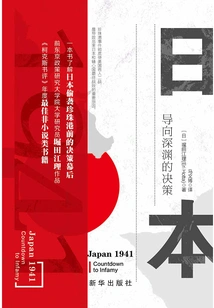
Japan 1941: Decisions Leading to the Abyss
About This Novel
"Japan 1941: Decisions Leading to the Abyss" focuses on the eight months before the outbreak of the Pearl Harbor incident from April to December 1941. It examines the decision-making process of the entire plan from a domestic perspective in Japan, focusing on the historical details at that time. The author unearths a wealth of rare first-hand Japanese materials and raises important questions that have been ignored by many historians for many years, such as: Why did soldiers, civilian officials, diplomats, and emperors lead their countries and people down a dangerous path? Why did they make the wrong decision from the start? Contrary to the accepted view, this book argues that Japan's leaders actually recognized that launching this war would bring destruction and self-destruction, and even in the months before launching the attack, Japan's leaders could have avoided this confrontation. But on the one hand, Japan's protracted war against China had a great impact on Japan's domestic production and life, and it faced economic difficulties due to resource shortages; on the other hand, Japan's continuous expansion of its power in the Pacific region aroused dissatisfaction with traditional Western powers, and trade restrictions on Japan continued to strengthen, and Japan faced diplomatic difficulties; thirdly, the special relationship between the Japanese military and the government and the contradictory cabinet created a special political decision-making mechanism, coupled with the habitual gambler mentality of Japanese militants, which ultimately prompted Japan to make a desperate move and take reckless actions, leading to the outbreak of war. In addition to direct attention to historical events, the author also focuses on the relationship between Japan and China, Japan and the West, and reconstructs our understanding of the Pacific battlefield.
Official Sources
What Readers Think
Rating
Community(0)
Rating
Community(0)
