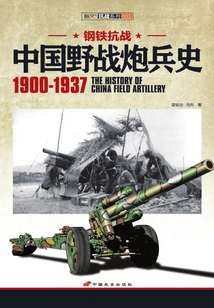
Steel War of Resistance: a History of Chinese Field Artillery: 1900-1937
About This Novel
After entering the 20th century, the Chinese army began to move towards the process of modernization. After being influenced by modern Western military thinking, the Chinese army tried to equip itself with suitable long-range firepower. Under this premise, the birth of the modern field artillery force was promoted. At the beginning of its birth, due to the constraints of national power, it was not only unable to produce artillery equipment, but also encountered many difficulties in selecting specific models. It was not until it formally decided to select a country as a reference for its creation that the development of China's field artillery force was on the right track. By 1937, the Chinese field artillery force had established a complete system that could train qualified personnel according to its own needs. This book comprehensively and systematically tells the development process of China's field artillery force before 1937.
Official Sources
What Readers Think
Rating
Community(0)
Official(1)Scraped 1mo ago
The opening scene is bloody and tragic. A masterpiece on the history of Chinese artillery during the War of Resistance and worth reading. However, the discussion of Article 21 in the book says that Yuan rejected most of the provisions of Article 21, which is a glorification of Yuan Shikai and is inconsistent with historical facts. It is unknown whether there are such statements in the book that deviate from historical facts based on the author's subjective views.
Rating
Community(0)
Official(1)Scraped 1mo ago
The opening scene is bloody and tragic. A masterpiece on the history of Chinese artillery during the War of Resistance and worth reading. However, the discussion of Article 21 in the book says that Yuan rejected most of the provisions of Article 21, which is a glorification of Yuan Shikai and is inconsistent with historical facts. It is unknown whether there are such statements in the book that deviate from historical facts based on the author's subjective views.
