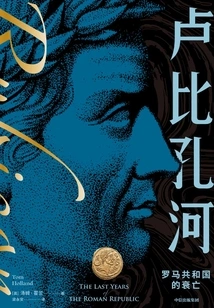
The Rubicon: the Decline and Fall of the Roman Republic (2nd Edition)
About This Novel
At the beginning of the 1st century BC, Rome had become the hegemonic country in the Mediterranean. Carthage was destroyed, the Greek states surrendered, and Spain, Gaul, and Pergamon returned to Rome. Expansion brought wealth and glory to Rome, but it also sown the seeds of violence and corruption. The power of the provincial governor expanded, and the soldiers who followed the governor in battle increasingly became the governor's "private soldiers", and the governor became a military giant of the separatist party. The wealth, beauty, and political culture from the Eastern Provinces also eroded the foundation of the Republic. At the same time, class divisions in Rome became increasingly serious. Aristocrats live in villas equipped with "sky baths" and feast on oysters, while many civilians live in shared apartment buildings and struggle to survive. The class struggle became intense. All parties to the struggle continue to break through the political bottom line. This book takes Caesar's crossing of the Rubicon as the starting point and depicts the magnificent and bloody history of the last century of the Roman Republic. This is a great era of political transformation, full of power struggles, political intrigues, class struggles and brutal civil wars. There are many characters in the book, including not only political giants such as Sulla, Caesar, Pompey, Cicero, Antony, and Octavian, but also political clowns who dress up as women, frustrated politicians who sit by the fish pond and "lie down" while fishing, and assassins who sacrifice their lives for the sake of the Republic. Together they played a variation on the path to empire.
Official Sources
What Readers Think
Rating
Community(0)
Rating
Community(0)