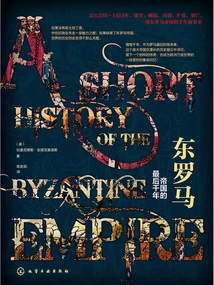
Eastern Rome: the Last Thousand Years of the Empire
by (uk) Dionysius Stackopoulos
About This Novel
In the history of the world, the Eastern Roman Empire is impressive. Its rule lasted for 1,100 years. Even after the fall of the Western Rome, the Eastern Rome still inherited the civilization and glory of the former Roman Empire and maintained its strong vitality. Since then, it has also had a profound influence on the culture of European countries. From the establishment of the new capital Constantinople by Constantine I in 330 AD to its conquest by the Ottomans in 1453 AD, the Eastern Roman Empire, later known as the Byzantine Empire, became the "world center" of literature, art, law, and scholarship during that period. In this book, Dionysius shatters the stereotype of Eastern Rome as an unchanging theocracy, using new research to explore its political, economic, social, and cultural history. Combining recent archaeological research and historical documents, and following a clear chronological context, he gave a popular interpretation of key figures in different historical stages and their salient features in politics, economy, culture and other aspects. This book adds to our wonderful collective memory, and its rich legacy remains today, whether it is the gilt bronze horses that once played in the arena, the mosaic illustrations that decorated the walls and ceilings of the churches, or the word "Byzantium" itself, like an immortal story that is still being circulated today. The book is divided into 9 chapters, arranged in chronological order. The first eight chapters describe in detail the internal reforms and external expansion strategies of the empire from the period of the division of Rome and the establishment of the Eastern Roman Empire, to the domination of the Mediterranean and the entry of dynastic rule into the "golden age", to the impact of Western forces, and the ups and downs of the empire's fate of splitting, being conquered, and rebuilding, until it finally fell. The book introduces each chapter. The main events and main characters of this period, as well as the political changes and territorial changes of the Byzantine Empire, and discuss the economic foundation, important architectural and cultural achievements of the empire in each period; Chapter 9 introduces the history after the fall of Constantinople in 1453 AD, and the value of Byzantium in the study of today's world. The thousand-year history of the Eastern Roman Empire is full of twists and turns, but also has strong continuity. It has certain significance for exploring the past, today and the future.
Official Sources
What Readers Think
Rating
Community(0)
Rating
Community(0)