N
by H
About This Novel
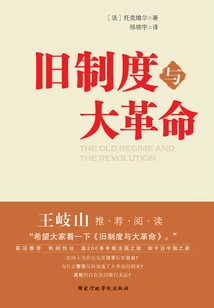
"The Old Regime and the Great Revolution" is a work by the French historian Tocqueville. Through the analysis of a large number of historical facts, it reveals the intrinsic connection between the Old Regime and the French Revolution. This book explores the collapse of the original feudal system due to corruption and unpopularity during the French Revolution. However, the social unrest did not bring about the results expected by the revolutionary party. Both the rulers and the people were ultimately swallowed up by mutual anger. It is a must-read for studying the history of the French Revolution.
Official Sources
What Readers Think
Rating
Community(0)
Official(11)Scraped 1mo ago
1793, a tragedy
Before the Great Revolution, France had already shed the veil of feudalism from the 13th to 16th centuries and was a typical centralized country. Beginning with Louis XIV, the king began to gradually deprive the nobility of their power. The three-level local assemblies were in name only. Administrative power was determined by the governor appointed by the king. Important judicial decisions were also concentrated in the royal court. Although the nobles still enjoyed taxes, they gradually broke away from the feudal peasants and moved into the cities. The emerging bourgeoisie also wanted to gain a certain political status at this time, and were keen on buying offices (although many of them were false posts). They were very disdainful of the nobles who stood in the way, but the nobles also regarded these people as uncultivated nouveau riche. The peasant class has been severely neglected. The peasants are breathless under the heavy military tax and other taxes. The peasants are basically isolated from other classes and are full of hatred for the upper class. At this time, writers led by Rousseau, Montesquieu, and Voltaire began to vigorously promote natural human rights and freedom and equality, which was very attractive to people in Paris. During the Louis XVI period, the king began to relax the oppression on the peasants and reduce the tax burden, thinking that not only would the people thank him, but it would also be an opportunity to contain the aristocracy and the bourgeoisie. However, in fact, the peasants took this opportunity to see more clearly how deep the previous oppression was, and their hatred not only did not weaken, but also deepened. The bourgeoisie is vigorously promoting the theory of freedom and equality, hoping to awaken the lower class people and win a better political status for themselves. The aristocrats also regarded the doctrines of the Enlightenment purely as a literary pastime. In fact, the aristocrats at that time also funded many writers of the Enlightenment period, a typical example of which was Voltaire's close friendship with the aristocrats of various countries. In other words, these three classes all believe that they are doing things that are beneficial to social development, and imagine themselves as saviors who save the lower classes. Later facts showed that they were digging graves for themselves one by one, and digging deeper and deeper until they finally found that they could no longer climb out. The basic motivation has almost been explained clearly, but what is missing now is a trigger, which also emerged after the Seven Years' War between Britain and France: a sharp surge in military expenditures coupled with a sharp drop in agricultural tax revenue caused by natural disasters before 1793, resulting in a serious fiscal crisis. The king had to raise taxes, and conflicts were about to break out, culminating in the riots at the Bastille. Both the aristocracy and the bourgeoisie thought that the people were their teammates fighting side by side, but gradually they discovered that the unorganized mob regarded all classes as enemies and demanded a complete revolution. At this time, the mob did not have freedom and equality in their hearts, but only naked hatred. This is why violent acts like Robespierre appeared. King Louis XVI and a large number of nobles were killed, and the bourgeoisie was forced to cooperate, causing France to lose the best opportunity to establish a constitutional monarchy. Although there is nothing wrong with freedom and equality, such a violent implementation would cause great harm to society, so that France continued to have restorations and regime changes in the next seventy years.
There was a huge difference in influence between Chinese Enlightenment thinkers and European Enlightenment thinkers during the same period.
When the Enlightenment Movement was vigorously launched in Europe, the Enlightenment thought was also sprouting in China at the same time. Why did the European Enlightenment Movement eventually trigger the Great Revolution but China was stillborn? I think it had a lot to do with the mobility of social classes at that time. Through this book, I learned that the French people were seriously disconnected from the upper class of society at that time. The separation between the people and the people's distrust of the government's changing policies. For a combination of reasons, the people had relatively little understanding of the government and were relatively "bewitched" by Enlightenment thinkers. In China, due to the implementation of the imperial examination system and other related systems that are conducive to social class mobility, the people's understanding of government recognition is higher than that of the French people, so the possibility of being "bewitched" by Enlightenment thinkers is small.
The book is very good.
Book
Books books books books.
This book aims to conduct a study of the French Revolution.
The book is very good.
Really worth reading
So well written! It is a very comprehensive and in-depth understanding of the causes of the French Revolution and the system of its feudal dynasty. It is a good historical treatise.
⊙▽⊙
Much like our society, the reality is complicated.
Rating
Community(0)
Official(11)Scraped 1mo ago
1793, a tragedy
Before the Great Revolution, France had already shed the veil of feudalism from the 13th to 16th centuries and was a typical centralized country. Beginning with Louis XIV, the king began to gradually deprive the nobility of their power. The three-level local assemblies were in name only. Administrative power was determined by the governor appointed by the king. Important judicial decisions were also concentrated in the royal court. Although the nobles still enjoyed taxes, they gradually broke away from the feudal peasants and moved into the cities. The emerging bourgeoisie also wanted to gain a certain political status at this time, and were keen on buying offices (although many of them were false posts). They were very disdainful of the nobles who stood in the way, but the nobles also regarded these people as uncultivated nouveau riche. The peasant class has been severely neglected. The peasants are breathless under the heavy military tax and other taxes. The peasants are basically isolated from other classes and are full of hatred for the upper class. At this time, writers led by Rousseau, Montesquieu, and Voltaire began to vigorously promote natural human rights and freedom and equality, which was very attractive to people in Paris. During the Louis XVI period, the king began to relax the oppression on the peasants and reduce the tax burden, thinking that not only would the people thank him, but it would also be an opportunity to contain the aristocracy and the bourgeoisie. However, in fact, the peasants took this opportunity to see more clearly how deep the previous oppression was, and their hatred not only did not weaken, but also deepened. The bourgeoisie is vigorously promoting the theory of freedom and equality, hoping to awaken the lower class people and win a better political status for themselves. The aristocrats also regarded the doctrines of the Enlightenment purely as a literary pastime. In fact, the aristocrats at that time also funded many writers of the Enlightenment period, a typical example of which was Voltaire's close friendship with the aristocrats of various countries. In other words, these three classes all believe that they are doing things that are beneficial to social development, and imagine themselves as saviors who save the lower classes. Later facts showed that they were digging graves for themselves one by one, and digging deeper and deeper until they finally found that they could no longer climb out. The basic motivation has almost been explained clearly, but what is missing now is a trigger, which also emerged after the Seven Years' War between Britain and France: a sharp surge in military expenditures coupled with a sharp drop in agricultural tax revenue caused by natural disasters before 1793, resulting in a serious fiscal crisis. The king had to raise taxes, and conflicts were about to break out, culminating in the riots at the Bastille. Both the aristocracy and the bourgeoisie thought that the people were their teammates fighting side by side, but gradually they discovered that the unorganized mob regarded all classes as enemies and demanded a complete revolution. At this time, the mob did not have freedom and equality in their hearts, but only naked hatred. This is why violent acts like Robespierre appeared. King Louis XVI and a large number of nobles were killed, and the bourgeoisie was forced to cooperate, causing France to lose the best opportunity to establish a constitutional monarchy. Although there is nothing wrong with freedom and equality, such a violent implementation would cause great harm to society, so that France continued to have restorations and regime changes in the next seventy years.
There was a huge difference in influence between Chinese Enlightenment thinkers and European Enlightenment thinkers during the same period.
When the Enlightenment Movement was vigorously launched in Europe, the Enlightenment thought was also sprouting in China at the same time. Why did the European Enlightenment Movement eventually trigger the Great Revolution but China was stillborn? I think it had a lot to do with the mobility of social classes at that time. Through this book, I learned that the French people were seriously disconnected from the upper class of society at that time. The separation between the people and the people's distrust of the government's changing policies. For a combination of reasons, the people had relatively little understanding of the government and were relatively "bewitched" by Enlightenment thinkers. In China, due to the implementation of the imperial examination system and other related systems that are conducive to social class mobility, the people's understanding of government recognition is higher than that of the French people, so the possibility of being "bewitched" by Enlightenment thinkers is small.
The book is very good.
Book
Books books books books.
This book aims to conduct a study of the French Revolution.
The book is very good.
Really worth reading
So well written! It is a very comprehensive and in-depth understanding of the causes of the French Revolution and the system of its feudal dynasty. It is a good historical treatise.
⊙▽⊙
Much like our society, the reality is complicated.
