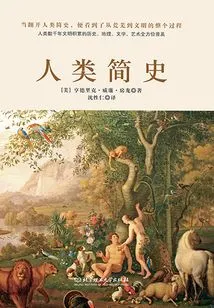
A Brief History of Mankind
by H
About This Novel
"A Brief History of Humanity" is one of the classic works by the famous science popularization master Fang Long. It tells the entire process of human beings from desolation to civilization. The origin of mankind, the origin of ancient civilizations, hieroglyphics, the medieval world, the Renaissance, the rise of religion and war, and the revolutions of great powers such as Britain, the United States, France, and Russia. It can be said that this is a book that comprehensively popularizes the history, geography, literature, and art accumulated by human civilization over thousands of years. In addition to showing the major events in the development of human civilization, it also shows the sparkling wisdom and limitations of human beings in a specific era, allowing us to fully understand the history of mankind. Fang Long, a master of "humanism", uses humorous writing style, novel viewpoints and easy-to-understand narrative methods to turn the long history of mankind into pillow reading that everyone can understand. History does not have to be heavy and boring, but can be a more exciting story than a novel; history is not a dead past, but a living past. The housekeeper dragon talks about human history and foresees the future.
Official Sources
What Readers Think
Rating
Community(0)
Official(4)Scraped 2mo ago
Although I don't understand, I came here on recommendation
Forehead. . . . . Writing something that is both obvious and taboo...
Overall, it is very good. The most appropriate materials are selected to describe the corresponding era. Except for a few parts that are too subjective and deliberately avoid some facts, there are few criticisms.
Great, telling boring history in an interesting way. For example, when talking about the difference between early Islam and Christianity, the author uses a metaphor of sheep without shepherds to look after Islam, which is very vivid.
Rating
Community(0)
Official(4)Scraped 2mo ago
Although I don't understand, I came here on recommendation
Forehead. . . . . Writing something that is both obvious and taboo...
Overall, it is very good. The most appropriate materials are selected to describe the corresponding era. Except for a few parts that are too subjective and deliberately avoid some facts, there are few criticisms.
Great, telling boring history in an interesting way. For example, when talking about the difference between early Islam and Christianity, the author uses a metaphor of sheep without shepherds to look after Islam, which is very vivid.
